
Africa is advancing efforts to establish a more integrated and competitive automotive industry, with the African Export-Import Bank (Afreximbank) and its partners pushing for increased investment, local manufacturing and stronger regional supply chains. At the Africa Automotive Investment Forum, held alongside the Alamein Africa Forum in El Alamein, Egypt, industry leaders called for coordinated policies and commercially viable partnerships to transform the continent’s automotive potential into industrial growth.
The two-day forum brought together policymakers, original equipment manufacturers (OEMs), Africa-based component manufacturers and other private-sector stakeholders. Organised by Afreximbank in partnership with the African Association of Automotive Manufacturers (AAAM), the African Continental Free Trade Area (AfCFTA) Secretariat, Egypt’s Ministry of Trade and Investment, and South Africa’s Department of Trade and Industry, the gathering focused on attracting investment, facilitating joint ventures and identifying the reforms needed to expand automotive production across African markets.
Afreximbank has committed US$1 billion to financing Africa’s automotive sector, reflecting its ambition to support manufacturing, industrial development and intra-African trade. The bank sees automotive production as a strategic pathway towards economic diversification, higher-skilled employment and reduced dependence on imported vehicles.
For a continent with a growing population and expanding demand for mobility, the automotive sector offers opportunities that extend well beyond assembling finished vehicles. A stronger African industry could create regional networks for producing components, processing raw materials, developing technical expertise and supplying vehicles and automotive products to markets across the continent.
Kanayo Awani, Afreximbank’s Executive Vice President for Intra-African Trade and Export Development, described automotive manufacturing as a critical pillar of Africa’s industrialisation and structural transformation. She highlighted the sector’s potential to deepen regional value chains, generate skilled employment, strengthen manufacturing capabilities and reduce the continent’s reliance on vehicle imports.
Awani also pointed to opportunities in component manufacturing and the use of Africa’s substantial mineral and industrial resources, including lithium, cobalt, manganese, nickel, copper, iron and steel. Developing these resources into higher-value products within Africa could help countries capture more economic benefits from their natural wealth while supporting the growth of automotive manufacturing and emerging mobility technologies.
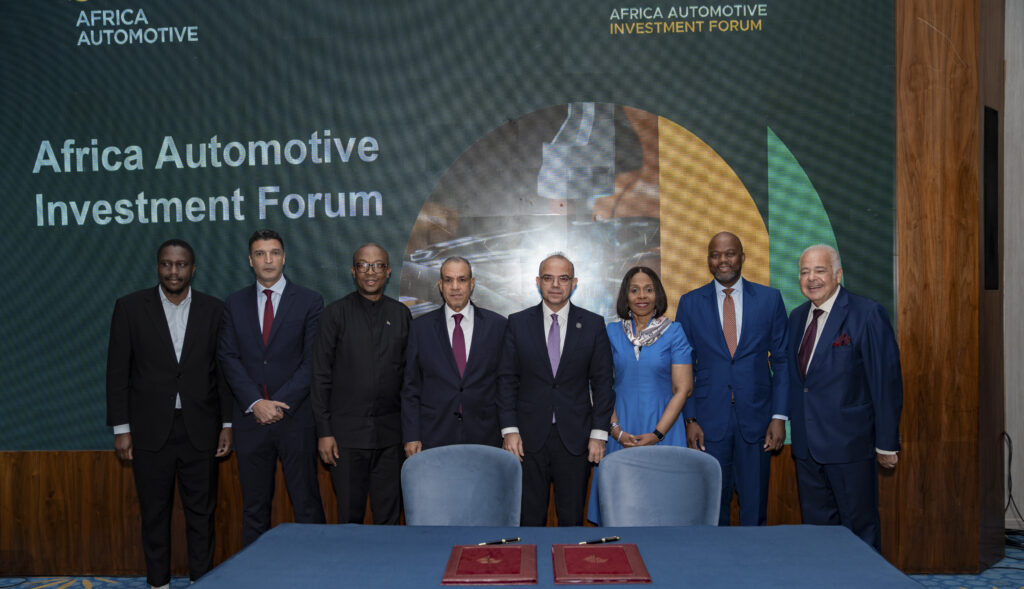
A central objective of the forum was to move from policy discussions towards practical commercial agreements. One of the key outcomes was the signing of a joint venture agreement between South Africa’s Malben Engineering and Egypt’s El Araby Group to establish a platform for manufacturing automotive components for Egyptian, South African and wider African markets.
The partnership combines El Araby Group’s industrial, engineering and technological capabilities with Malben Engineering’s more than 50 years of experience in manufacturing and forming metal automotive components. The initiative demonstrates how cooperation between African businesses can strengthen local production capacity, expand supplier networks and support the development of a more integrated continental automotive industry.
Such partnerships are important because a competitive automotive sector depends on an ecosystem of suppliers, component manufacturers, technical specialists and logistics providers. Building these capabilities across multiple countries could help African manufacturers increase local content, reduce supply-chain vulnerabilities and participate more effectively in regional and global markets.
The African Association of Automotive Manufacturers emphasised the importance of translating the AfCFTA framework into tangible industrial outcomes. Its president, Tarek Mosaad, said that agreement on automotive Rules of Origin provides a foundation for greater integration, but the next stage must focus on establishing factories, strengthening supplier ecosystems, creating employment and increasing intra-African trade.
The association identified three priorities: expanding local content through regional value chains, making it easier to move automotive products across borders, and ensuring that Africa plays a meaningful role in shaping the future of mobility. The underlying ambition is to encourage investors to view the continent as an integrated production opportunity rather than a collection of separate national markets.
Wamkele Mene, Secretary-General of the AfCFTA Secretariat, similarly stressed the need to develop investment-ready projects, establish competitive production locations, strengthen regional suppliers and deepen localisation. He called for commercially viable regional production systems capable of attracting capital and connecting manufacturers across African economies.
In a further step towards coordinated development, the AfCFTA Secretariat and AAAM signed a memorandum of understanding to strengthen cooperation on the implementation of the Strategy for the African Automotive Sector under the AfCFTA framework.
The agreement establishes a basis for collaboration on automotive Rules of Origin, customs procedures, trade facilitation, policy and standards, capacity building, regional supplier development, mineral beneficiation, investment mobilisation and emerging automotive technologies. It is also intended to support ongoing efforts by the AfCFTA Secretariat and Afreximbank to advance the AfCFTA Automotive Investment Plan and develop competitive regional production networks.
The agreement reflects the importance of aligning national industrial policies with continental trade rules. Consistent standards, predictable customs procedures and clear origin requirements can help manufacturers plan production across borders and enable automotive components to move more efficiently between suppliers and assembly plants.
Egypt and South Africa also advanced bilateral economic cooperation through the establishment of a joint business council. Designed to develop trade and investment projects between the two countries, the council will focus on priority areas including automotive manufacturing, mining and mineral resources, renewable energy, agriculture and food production, pharmaceuticals, transport and logistics infrastructure.
Cooperation in logistics is particularly relevant to the development of continental value chains. By leveraging the Suez Canal and ports in both countries, businesses could strengthen connections between northern and southern African markets and improve the movement of goods across regional production networks.
Beyond negotiations and agreements, forum delegates visited manufacturing facilities operated by Nissan Motor Corporation, General Motors Egypt, Al Mansour Automotive and automotive component manufacturer Mobica in 6th of October City. The visits provided direct exposure to Egypt’s automotive industrial base, from vehicle assembly and localisation to component production and supplier development.
The visits also illustrated the potential for investment and technology transfer to support manufacturing capabilities that serve markets beyond national borders. Greater cooperation between vehicle manufacturers and African suppliers could help build the technical expertise, industrial capacity and production scale required to compete in a changing global automotive market.
The transition towards new energy vehicles adds another dimension to Africa’s automotive ambitions. As global manufacturers invest in new technologies, African countries have opportunities to develop local capabilities linked to batteries, components, mineral processing and other parts of the emerging mobility ecosystem. However, capturing these opportunities will depend on investment in infrastructure, skills, research, reliable energy and supportive industrial policies.
Affordability will also be decisive. Industry stakeholders at the forum highlighted the importance of appropriate policy incentives and accessible financing to stimulate demand and encourage capital investment. Building production capacity alone will not guarantee a sustainable industry; manufacturers also need viable markets, competitive operating conditions and customers who can afford the vehicles being produced.
The forum’s discussions took place against expectations that African vehicle demand could reach five million units by 2035. If supported by effective policies and investment, this growth could create a stronger foundation for regional manufacturing, although the extent of the opportunity will depend on market conditions, purchasing power and the development of competitive local production.
For Africa, the automotive industry represents more than a vehicle manufacturing opportunity. It offers a route to industrial diversification, technical skills development, regional economic cooperation and greater participation in international value chains. The continent’s natural resources, expanding markets and growing workforce provide important foundations, but these advantages must be supported by coordinated action and commercially sustainable projects.

The outcomes of the Alamein Africa Forum signal a continued effort to translate the AfCFTA’s promise of continental integration into industrial partnerships and investment. Afreximbank’s financing commitment, the Malben Engineering–El Araby Group joint venture, the AfCFTA–AAAM memorandum of understanding and the Egypt–South Africa Business Council provide practical mechanisms for advancing that agenda.
The next challenge will be implementation: converting agreements into operational factories, stronger supplier networks, skilled jobs and products that can compete across African markets. If these efforts succeed, the automotive sector could become an important driver of Africa’s industrial transformation, helping the continent move from dependence on imported vehicles towards a more integrated manufacturing ecosystem built on African investment, expertise and regional cooperation.