
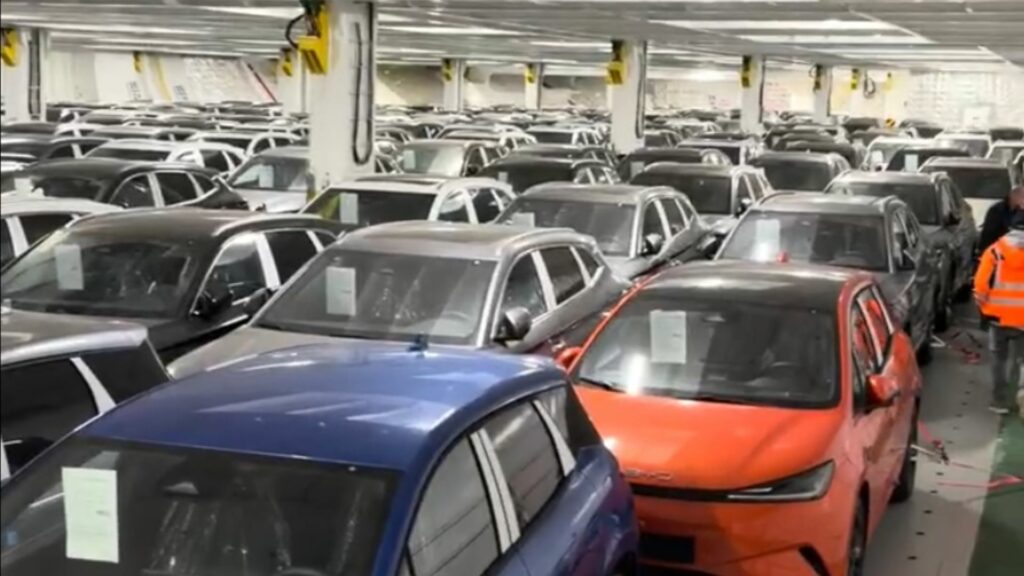
A cargo ship carrying 4,898 Chinese-made new energy vehicles has placed the relatively quiet Greek port of Astakos in the spotlight, marking the launch of a direct maritime connection between China and Europe that could reshape vehicle distribution and create new opportunities for regional trade.
The vessel, Yuan He Kou, departed from Shenzhen on November 3 and is making its first European stop at Astakos, on Greece’s western coast. Its arrival represents a significant development for the port, which has long operated below its potential despite its strategic geographical position and available capacity.
The new shipping connection is expected to provide Chinese automotive manufacturers with a more direct and efficient route into European markets. According to COSCO, the service could reduce shipping times by nearly a third, allowing vehicles to reach European destinations more quickly.
The Money Game Has Changed: Valencia’s Investment Ecosystem Maps the Future of Capital at FIT 2026
Astakos was selected partly because of its location and potential to serve as a distribution point for goods entering Europe. George Xiradakis, Vice President of the Hellenic-Chinese Chamber of Commerce, said the port’s geographical advantages made it an attractive choice for the new maritime connection.“Astakos was specifically selected primarily because it enjoys the advantage of being strategically positioned toward Europe,” Xiradakis said.
Following their arrival in Greece, the vehicles are expected to continue by sea to Belgium, Slovenia and Spain, extending the route’s reach into several European markets. Beyond its importance for vehicle transportation, the development could create wider economic opportunities for western Greece. Increased shipping activity may attract investment, support employment and encourage improvements to port infrastructure and logistics facilities.
Xiradakis expressed optimism about the potential benefits for surrounding communities, pointing to the possibility of job creation and further investment linked to COSCO’s involvement. “I believe local communities will benefit enormously, as many jobs will be created,” he said.
However, the long-term impact will depend on whether the new route develops into a regular commercial service. Sustained demand, efficient port operations and reliable logistics infrastructure will be important factors in determining whether Astakos can establish itself as a permanent distribution hub.
For Chinese automakers seeking to expand their presence across Europe, the route offers another potential channel for moving vehicles into the region. For Greece, it presents an opportunity to strengthen its maritime trade infrastructure and attract greater international shipping activity beyond its established ports.

The arrival of the Yuan He Kou and its nearly 5,000 vehicles could therefore represent more than a single shipment. If the connection proves commercially sustainable, Astakos could take on a larger role in China-Europe trade, bringing new investment and economic activity to western Greece.