
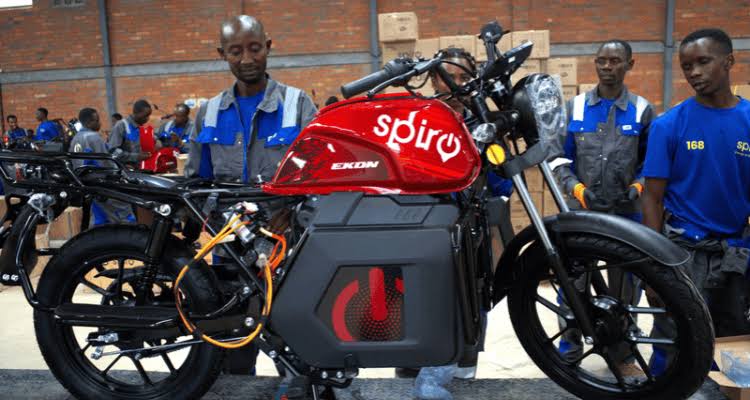
Spiro, Africa’s largest electric mobility company, has officially launched its first 100 electric motorcycles in Ghana, marking a new milestone in its pan-African expansion and bringing its battery-swapping model to one of West Africa’s growing two-wheeler markets. Announced in Accra on 20 October 2026, the launch introduces the Ekon 450 M1 V3 electric motorcycle alongside an integrated battery-swapping solution designed to reduce operating costs and minimise downtime for riders.
Lesotho’s Malerato Khoeli Honoured Among FAO’s First 100 Women Heroes in Agriculture
The launch, held under the theme “The First 100: Powering a New Era of Mobility in Ghana,” featured a symbolic handover of keys to the first ten riders, followed by a convoy of 100 electric motorcycles through Accra. The event concluded at Accra Mall, where visitors could explore the motorcycles, participate in test rides and watch demonstrations of the company’s battery-swapping technology.
Spiro says its electric motorcycles can help riders save up to US$2 per day compared with petrol-powered alternatives. Instead of waiting for a vehicle to recharge, riders can exchange a depleted battery for a fully charged one at a Spiro swapping station in approximately two minutes. The model is particularly relevant for commercial motorcycle operators and delivery fleets, where fuel costs and time spent off the road directly affect daily earnings.
Kaushik Burman, CEO-Mobility of Spiro, described Ghana as a major opportunity for electric mobility, pointing to the country’s growing two-wheeler market and demand from commercial riders and delivery services. He said the company’s initial deployment marks the beginning of its ambition to make electric mobility accessible at scale across Ghana, addressing two key barriers to adoption: operating expenses and access to charging infrastructure.
Maxwell Dodd, Managing Director of Spiro Ghana, said the introduction of the first 100 Ekon 450 M1 V3 motorcycles demonstrates that cleaner and more affordable transport is becoming a practical option for riders in the country. Following the launch, Spiro plans to continue engaging prospective customers through test rides and product demonstrations across Greater Accra, supporting the gradual adoption of electric motorcycles.
The Ghana launch forms part of a wider expansion strategy backed by a recent US$270 million equity funding round and an additional US$18 million in debt financing from the Africa Go Green Fund. Spiro aims to establish a presence in 20 African markets and is preparing to enter Ethiopia, Malawi, Mali and the Democratic Republic of Congo.
The company currently operates in seven African countries and reports a fleet of more than 156,000 electric motorcycles, over 2,500 battery-swapping stations and more than 57 million battery swaps completed to date. It also reports over 3.1 billion kilometres travelled through its low-carbon mobility network. Its regional production and assembly operations include facilities in Uganda, Kenya, Nigeria and Rwanda.
Spiro’s expansion reflects a wider opportunity for African markets to develop transport systems that reduce dependence on imported fossil fuels while supporting more affordable mobility for workers, entrepreneurs and businesses. Electric motorcycles can be especially important for commercial riders, for whom predictable operating costs and reduced vehicle downtime can influence productivity and income.
However, the long-term impact of electric mobility will depend on the availability of reliable battery-swapping infrastructure, affordability for riders, sustained investment and the ability of operators to scale services beyond initial launch markets. In Ghana, Spiro’s first 100 motorcycles mark the beginning of that process, introducing a new transport option while the company works to expand its network and customer base.

As Spiro pursues its goal of reaching 20 African markets, its Ghana entry strengthens the company’s presence in West Africa and adds momentum to the development of an African electric mobility ecosystem built around locally assembled vehicles, battery infrastructure and more sustainable transport solutions.