
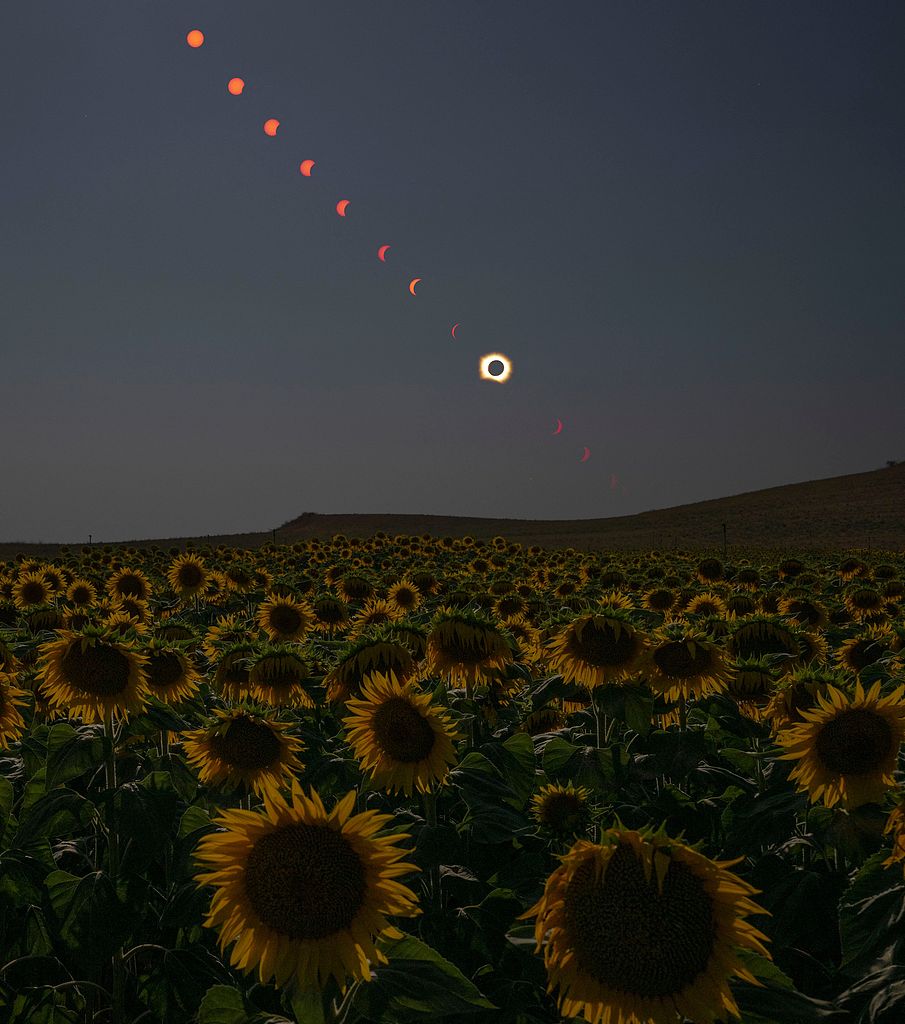
Millions of spectators across Europe witnessed a rare total solar eclipse on Wednesday, August 12, as the Moon passed directly between Earth and the Sun, creating a dramatic period of darkness across parts of the continent.
The eclipse was the first total solar eclipse visible from Europe in 27 years, following the previous event in August 1999. The path of totality crossed Greenland, Iceland, Spain and a small part of Portugal before extending over the Mediterranean.
Brussels Workshop Tackles Online Challenges Facing Africa’s Youth
During totality, the Moon completely covered the Sun, allowing the Sun’s outer atmosphere, known as the corona, to become visible. In some locations, darkness lasted for more than two minutes, creating a striking contrast as daytime skies suddenly became dark.
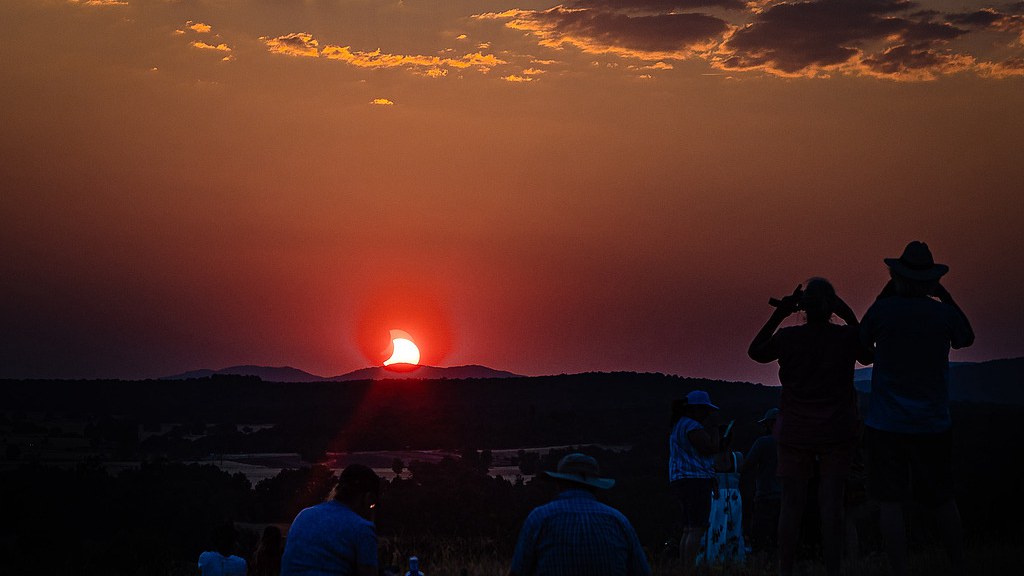
Spain was one of the main destinations for eclipse watchers, with the path of totality crossing northern and central parts of the country before reaching the Balearic Islands. Viewing events attracted residents, tourists and astronomy enthusiasts, with groups gathering in locations across the country to experience the phenomenon.
In Molina de Aragón, nearly 100 visitors gathered to watch the eclipse, including tourists from Germany, Poland and Italy. As the Moon moved across the Sun, spectators cheered and recorded the event before sunlight gradually returned.Madrid also attracted large numbers of viewers, many of whom described the sudden transition from daylight to darkness as an extraordinary experience.
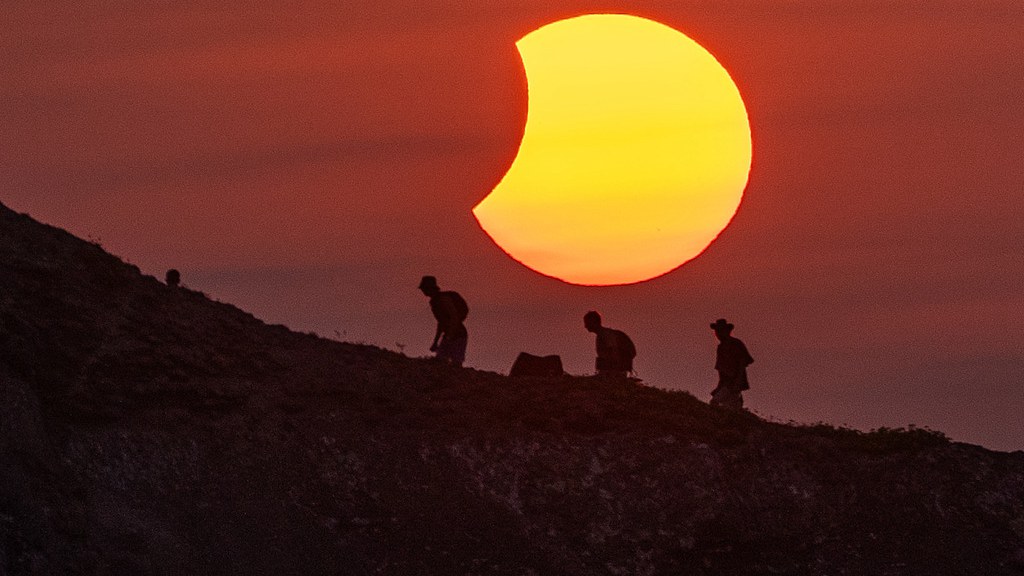
Portugal experienced totality across a narrow area in the northeastern municipality of Bragança, where thousands gathered to observe the event. Other parts of the country experienced a partial eclipse, with spectators watching from locations including Lisbon.
Iceland also experienced totality despite cloudy weather in some areas. Brief breaks in the clouds allowed some observers along the western coast to see the darkened sky, with totality lasting approximately two minutes and 13 seconds.
A partial solar eclipse was visible in several other European countries, including France, the United Kingdom, Germany and Croatia, attracting spectators who gathered at public viewing locations and landmarks.
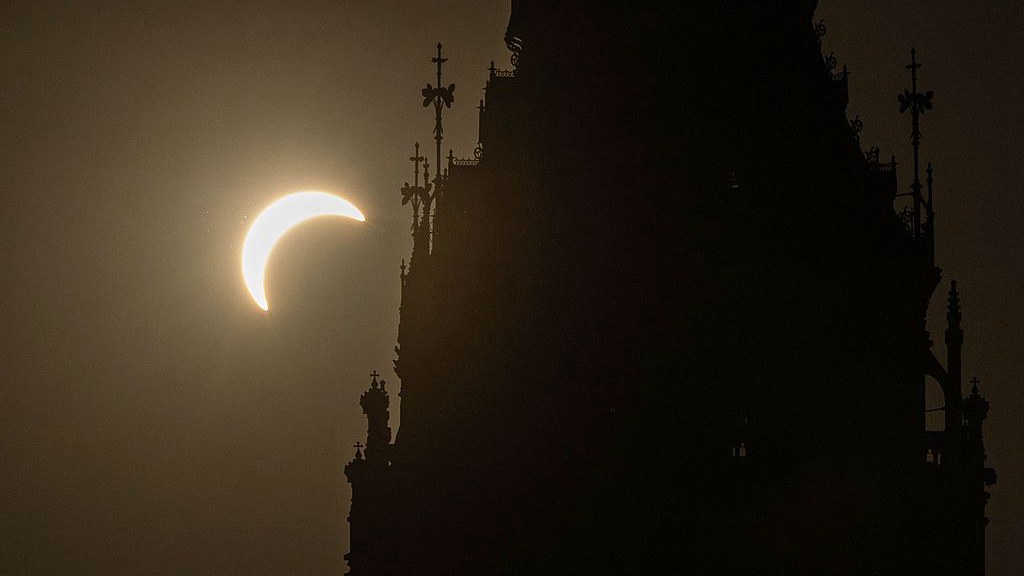
A solar eclipse occurs when the Moon moves between the Sun and Earth. A total solar eclipse takes place when the three bodies align closely enough for the Moon to completely cover the Sun from the perspective of observers on Earth. During a partial eclipse, the alignment is incomplete and only part of the Sun is obscured.
Astronomers also used the event as an opportunity for scientific research. Research teams supported by NASA planned observations using high-altitude aircraft and scientific balloons to study the Sun’s corona and examine how the temporary reduction in sunlight affects Earth’s atmosphere.
Total solar eclipses provide researchers with a rare opportunity to observe the solar corona, which is normally difficult to study because the brightness of the Sun’s surface overwhelms it. Scientists use these moments to improve understanding of solar activity and its potential effects on satellites, astronauts and technological systems on Earth.

Observers were reminded to use certified eclipse glasses when viewing the Sun, as direct exposure to sunlight can cause serious eye damage. The eclipse brought together science, tourism and public interest across Europe, turning cities, coastal areas and rural communities into temporary observation points for one of nature’s most spectacular astronomical events.