
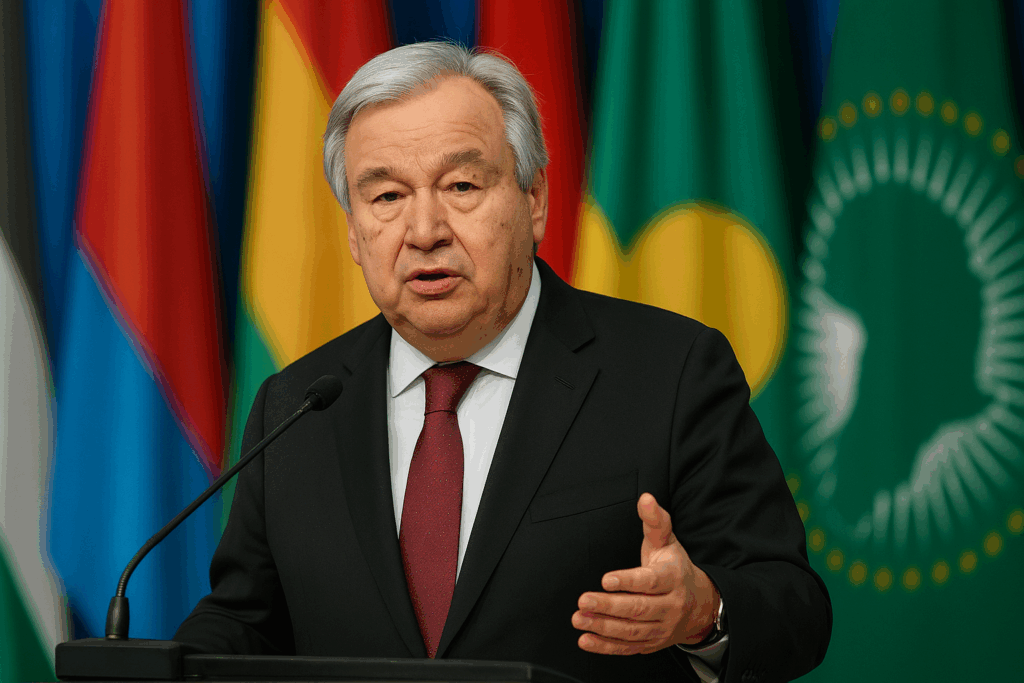
The UN Secretary-General, António Guterres, has recently underlined the urgent need to implement effective, long-term policies to ensure sustainable development in Africa. According to Guterres, the continent’s future depends on adopting comprehensive strategies for sustainable development in Africa that not only promote inclusive economic growth but also strengthen social equity and environmental resilience. These strategies require stronger international cooperation, strategic investments, and profound structural reforms across multiple sectors.
Guterres highlights the importance of investing in modern, sustainable infrastructure as the cornerstone of Africa’s transformation. Many nations face persistent challenges related to energy access, transportation, and natural resource management. Prioritizing large-scale green infrastructure projects — from renewable energy plants to sustainable transport systems — would allow Africa to reduce its environmental footprint, create millions of jobs, and enhance regional integration. Implementing these strategies for sustainable development in Africa ensures that current progress does not compromise the needs of future generations.
GABI 2025: La revolución africana que conectará tecnología y mercados
Education, meanwhile, remains a decisive factor in unlocking Africa’s potential. Guterres points out that investing in quality education, advanced technical training, and digital literacy will empower Africa’s youth to lead innovation and technological advancement. With the world’s youngest population, the continent’s greatest asset is its human capital. Expanding vocational programs and ensuring equal access to technology will prepare Africa’s workforce for emerging global industries while driving inclusive growth and ensuring no community is left behind.
Good governance is equally central to success. Guterres stresses that fighting corruption and establishing robust accountability mechanisms are vital to ensure the efficient use of resources and to build trust between citizens, governments, and investors. Strong institutions encourage foreign investment and guarantee that funds dedicated to sustainable projects deliver tangible results. Transparent governance is therefore a pillar of the wider strategies for sustainable development in Africa.
At the same time, Guterres underlines the importance of promoting local innovation and entrepreneurship. Africa is experiencing a technological awakening, with startups transforming agriculture, energy, and healthcare. Supporting local entrepreneurs, easing access to investment, and creating favorable policies will allow African solutions to address African challenges, driving growth from within. Encouraging regional hubs for innovation and fostering collaboration among local tech ecosystems are vital to position Africa as a global leader in creative problem-solving.

Gender equality also stands out as a catalyst for transformation. Guterres highlights that enabling women to participate fully in political, economic, and social life is not just a matter of justice but a powerful driver of sustainable development. Policies that promote female entrepreneurship, support women in leadership, and improve access to education and healthcare for girls have profound impacts on families, communities, and economies. Empowering women is therefore an essential part of Guterres’ broader strategies for sustainable development in Africa.
Finally, Guterres emphasizes that Africa cannot face global challenges in isolation. Strengthening international cooperation and forging strategic partnerships with global organizations, allied nations, and private investors are key to mobilizing resources and implementing reforms effectively. Collaborative frameworks enable knowledge exchange, encourage investment in priority sectors, and ensure Africa’s integration into the global economy. These alliances form the backbone of the proposed strategies for sustainable development in Africa and are indispensable to securing long-term prosperity.
Guterres’ six transformative and impactful strategies represent a comprehensive roadmap to drive sustainable development in Africa. From green infrastructure and educational reform to empowering women, fostering innovation, and strengthening partnerships, these measures aim to unlock the continent’s full economic and social potential. Implementing these strategies for sustainable development in Africa will not only improve living standards today but also lay the foundation for a prosperous, inclusive, and resilient future for generations to come.