
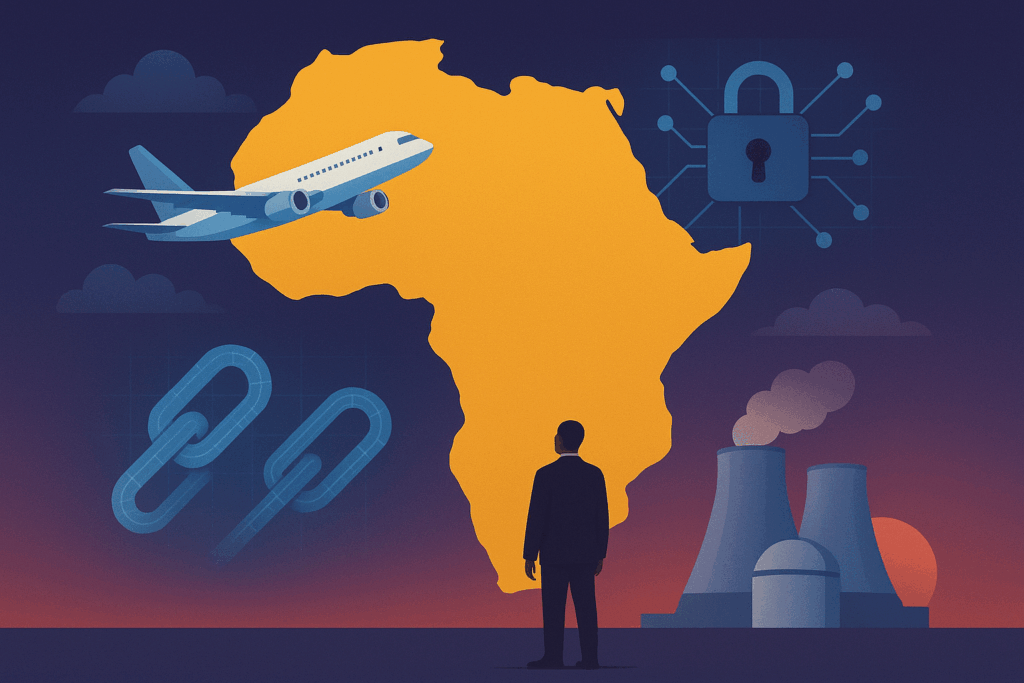
In a world where innovation accelerates daily, the conversation around technological safety is no longer abstract—it is urgent. Africa, a continent brimming with opportunity yet historically underserved by global tech infrastructure, stands to gain immensely from adopting the world’s safest technologies. These are not theoretical concepts; they are tested systems that safeguard lives, data, and economies. The question is no longer if Africa should adopt them, but how fast it can integrate them into its growth story.
Commercial aviation remains the benchmark for safety across industries. Modern aircraft such as the Airbus A350 and Boeing 787 operate with multiple layers of redundancy, automated fly-by-wire controls, and rigorous international standards. For African nations, expanding access to such aviation safety is more than a convenience—it is an economic accelerator. Safer skies translate into stronger regional connectivity, expanded tourism, and more robust trade networks, particularly in regions where road infrastructure is unreliable or sparse.
Equatorial Guinea: Africa Oil to Participate in the 3rd Annual Supply Chain & Logistics Summit
In the digital domain, quantum cryptography and advanced cybersecurity protocols are redefining what it means to be “secure.” Quantum Key Distribution (QKD) ensures that communications cannot be intercepted, while AES-256 encryption remains the global standard for sensitive data protection. For Africa, this could revolutionize governance, finance, and critical infrastructure. Imagine government systems, power grids, and mobile banking networks fortified against the cyberattacks that plague both developed and developing nations. Digital sovereignty becomes achievable, and with it, the trust needed for a flourishing digital economy.
Blockchain, often associated with cryptocurrency, is proving its worth far beyond financial speculation. Its immutable, auditable ledger can provide transparency in governance, certify the origin of commodities and agricultural goods, and secure land ownership—a long-standing challenge across the continent. For African economies, where corruption and informal markets can hinder growth, blockchain is a tool that fosters accountability, efficiency, and investor confidence.
Energy security also stands to be transformed by the safest emerging technologies. Fourth-generation nuclear reactors, with passive safety systems and inherent fail-safes, dramatically reduce the risk of accidents. In a continent where electricity access remains uneven, these reactors could provide reliable, clean, and scalable energy. The implications are profound: industrial growth, local job creation, and a reduction in reliance on fossil fuels.

Artificial intelligence, often criticized as a “black box,” is also evolving toward safety and accountability. Explainable AI ensures that decision-making processes are transparent, auditable, and aligned with human oversight. In Africa, this could revolutionize rural healthcare diagnostics, optimize agriculture through predictive analytics, and modernize logistics. Automation is no longer a threat; when responsibly applied, it is a lever for development.
The adoption of these technologies is not just about minimizing risk—it is about creating opportunities that leapfrog decades of infrastructural delay. Africa can bypass outdated models and move directly to global standards of safety and efficiency. Yet, implementation requires vision: local training programs, robust regulatory frameworks, and strategies that center human capacity as the ultimate safeguard. Technological safety is, in essence, empowerment. It is the foundation upon which resilient economies, sustainable development, and inclusive societies can be built. For Africa, embracing these innovations is not optional—it is a mandate for a future where the continent leads, rather than follows, in the global technological race.