
Airtel Africa has reported significant progress in its sustainability agenda after reducing diesel consumption by 9.1 million litres and achieving a 94 percent waste recycling rate during the 2025/26 financial year, reinforcing the company’s commitment to environmental stewardship while continuing to expand digital connectivity and financial inclusion across the African continent.
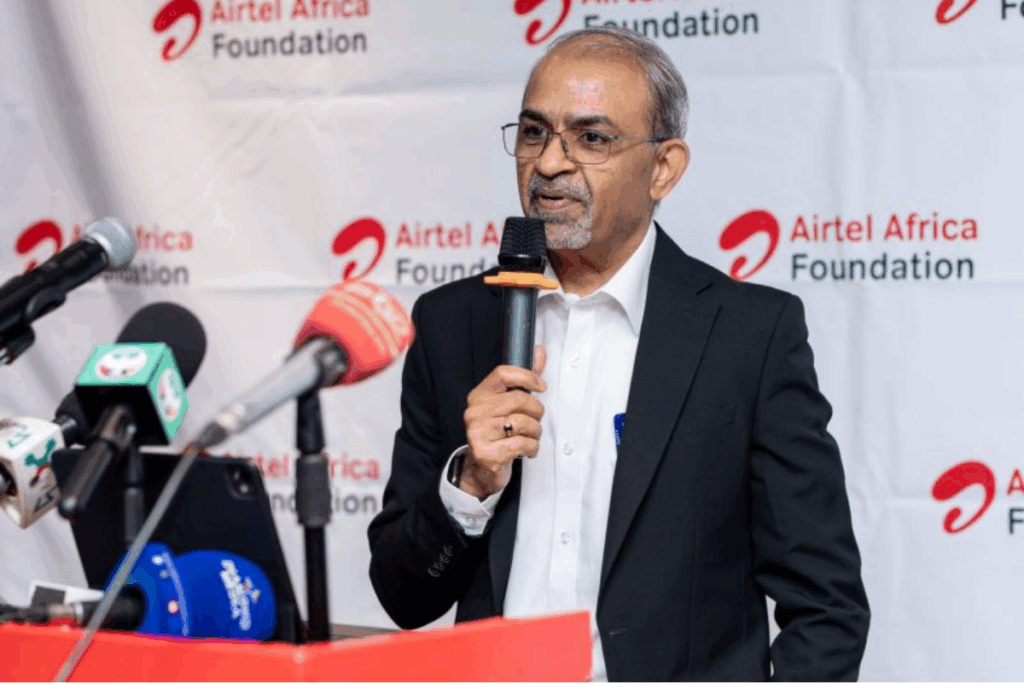
The achievements were presented during a media roundtable in Lusaka, where Airtel Africa Chief Executive Officer Sunil Taldar unveiled the company’s latest Sustainability Scorecard, outlining progress in environmental management, telecommunications infrastructure, digital inclusion, financial services, education, innovation, and community development.
Gabon’s Naila Opiangah Emerges as a Powerful Voice in Global Contemporary Art
The report highlights Airtel Africa’s strategy of integrating sustainability into its core business operations while supporting Africa’s digital transformation and contributing to the United Nations Sustainable Development Goals (SDGs). According to the company, the reduction of 9.1 million litres of diesel consumption resulted from continued investments in energy-efficient technologies, network optimization, and cleaner operational practices across its markets. These measures have helped lower operational emissions while improving energy efficiency throughout its telecommunications infrastructure.
The company also achieved a 94 percent waste recycling rate, demonstrating significant progress in responsible waste management and the adoption of circular economy principles. Airtel Africa noted that environmental sustainability remains a central component of its long-term business strategy as it seeks to reduce its ecological footprint while meeting growing demand for digital services.
Alongside its environmental achievements, Airtel Africa continued expanding its telecommunications network across the continent. The company’s infrastructure now reaches approximately 81.9 percent of Africa’s population, providing mobile connectivity to individuals, businesses, educational institutions, healthcare providers, and government services.
The operator currently serves 183.5 million customers across its 14 African markets, including 84.2 million active data subscribers, reflecting the rapid growth of internet usage and digital services throughout the continent.
The continued expansion of network coverage has enabled more communities, particularly those in underserved and rural areas, to access mobile communications, digital services, online education, and financial technology solutions.
Mobile financial services remain one of Airtel Africa’s fastest-growing business segments. Airtel Money now serves 54.1 million customers through a network of approximately 2.4 million agents, making it one of Africa’s largest digital financial platforms.
The company highlighted that women account for 44.1 percent of Airtel Money users, reflecting ongoing efforts to promote financial inclusion and expand access to secure digital financial services among traditionally underserved populations.
As digital payments continue gaining momentum across Africa, Airtel Money has become an important tool for facilitating everyday transactions, supporting small businesses, expanding access to banking services, and encouraging greater participation in the formal economy. Education remains another key pillar of Airtel Africa’s sustainability strategy.
In Zambia, the company has strengthened its partnership with UNICEF Zambia by connecting 300 schools to the internet, benefiting more than 292,000 learners and providing over 5,189 teachers with access to digital learning resources and educational platforms. By improving internet access in schools, Airtel Africa aims to bridge the digital divide, enhance learning outcomes, and equip students with the digital skills increasingly required in today’s knowledge-based economy.
The company’s School Adoption Programme has further strengthened educational infrastructure by investing in classroom construction and rehabilitation, computer laboratories, broadband connectivity, sanitation facilities, and other essential resources in schools across Chipata, Solwezi, Mufulira, Mansa, and Mongu.
These investments contribute to creating safer, more inclusive, and technology-enabled learning environments while supporting Zambia’s broader education and digital transformation objectives.
Innovation and entrepreneurship have also become central to Airtel Africa’s community development efforts.
Through the Zambia Information and Communications Technology Authority (ZICTA) Innovation Challenge, Airtel Zambia has trained more than 500 innovators, supported the commercialization of over 30 technology startups, and contributed to the creation of more than 200 direct jobs.
The initiative provides entrepreneurs with mentorship, technical support, business development opportunities, and access to networks that enable innovative ideas to grow into sustainable enterprises capable of contributing to Zambia’s digital economy.
The company has also continued promoting gender inclusion through its Tech for Her Programme, which has provided digital and entrepreneurial skills training to more than 300 women and young people.
The initiative includes specialized digital technology training for 200 women alongside entrepreneurship and business management programmes for 100 young people, helping participants develop practical skills that improve employability, foster innovation, and create new income-generating opportunities.
According to Airtel Africa, empowering women and young entrepreneurs remains essential to achieving inclusive economic growth and ensuring that the benefits of digital transformation are shared more broadly across society. Speaking during the presentation of the Sustainability Scorecard, Sunil Taldar reaffirmed the company’s commitment to creating long-term value through responsible business practices that balance commercial growth with environmental protection and social impact.
He noted that expanding digital connectivity, reducing environmental impacts, investing in education, promoting innovation, and increasing access to financial services remain central to Airtel Africa’s long-term vision of building a more connected, inclusive, and sustainable Africa.
Industry analysts note that Airtel Africa’s latest sustainability results demonstrate how telecommunications companies are increasingly playing a broader developmental role beyond providing connectivity. Investments in digital infrastructure, fintech, education, renewable technologies, and entrepreneurship are helping accelerate economic growth while supporting governments’ national digital transformation strategies.
As Africa continues experiencing rapid urbanization, rising smartphone adoption, and expanding digital economies, Airtel Africa’s continued investments in sustainable infrastructure, financial technology, digital education, and community empowerment position the company among the continent’s leading contributors to inclusive and sustainable development.

The company’s latest Sustainability Scorecard reflects a growing understanding that long-term business success is closely linked to environmental responsibility, innovation, and social investment, creating lasting value for customers, communities, shareholders, and the wider African economy.