
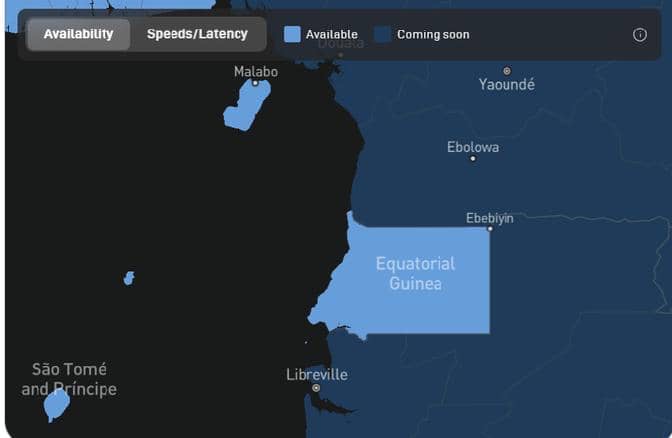
Equatorial Guinea has joined the growing list of markets where Starlink, the satellite internet service operated by SpaceX, is available. The announcement marks a significant development for the country’s connectivity landscape, particularly for areas where conventional broadband infrastructure remains limited.
Elon Musk confirmed the development on August 29, 2026, through his official account on X, stating that Starlink’s high-speed, low-latency internet is now available in Equatorial Guinea. Starlink also publicized the availability through its official channels, directing users to the company’s service platform.
ThriveAgric Raises $3.93M to Expand Nigeria’s Agricultural Supply Chain
Starlink provides internet connectivity through a constellation of satellites in low Earth orbit, allowing users to access broadband services without relying exclusively on terrestrial fibre-optic or conventional wireless infrastructure. The company says its service can provide high-speed connectivity in locations where traditional broadband is unavailable, unreliable or difficult to deploy.
The arrival of Starlink could have implications for Equatorial Guinea’s digital economy, particularly for businesses, remote communities, offshore operations, schools and households seeking additional connectivity options. The service could also provide an alternative or complementary connection for users who require reliable internet access in areas outside major urban centres.
The development follows earlier engagement between the Equatorial Guinean government and Starlink. In March 2026, authorities reportedly opened discussions with the company as part of the country’s broader digital transformation efforts.
The government had also previously explored the use of Starlink technology as a connectivity backup for specific activities. In April, authorities announced plans involving Starlink connectivity during the visit of Pope Leo XIV, while in July the government authorized American oil companies operating offshore to use the technology under temporary arrangements.
Starlink’s expansion into Equatorial Guinea comes as satellite internet becomes increasingly important across Africa. The technology can help overcome some of the geographical and infrastructure challenges associated with expanding traditional broadband networks, particularly in remote and offshore locations.
For consumers and businesses, however, actual service availability, equipment requirements, subscription plans and network capacity can vary by location and regulatory conditions. Starlink itself notes that service plans are determined according to factors including network capacity, regulatory approval and local demand.

The company’s official support information also states that Starlink services are provided in countries and territories where the service has received the necessary authorization, underscoring the importance of regulatory approval in each market.
With the confirmation of availability, Starlink now adds another option to Guinea Equatorial’s telecommunications ecosystem. The development could strengthen connectivity for households and businesses while supporting the country’s wider ambitions in digital services, technology and economic diversification.