
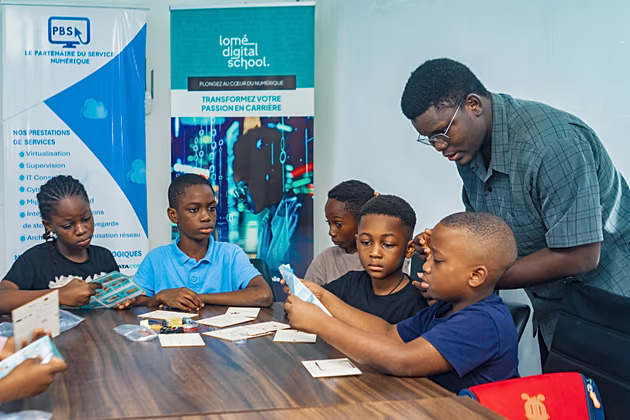
Inside a classroom filled with electronic circuits, computer screens and the sounds of curious young minds at work, children in Togo’s capital are spending their summer building robots, writing code and exploring artificial intelligence instead of following a traditional holiday routine. The Digital School Summer Camp in Lomé is giving participants practical experience with emerging technologies while nurturing the skills needed for tomorrow’s digital economy.
Mozambique and Angola Sign Landmark Digital Cooperation Agreement
Among the students is 14-year-old Winner Koudjra, who is assembling a robotic hand using motors, pincers and electronic components. The project is more than a classroom exercise—it is an introduction to engineering, critical thinking and innovation. After completing robotics sessions, students move to programming classes where they learn to modify web pages, understand the basics of artificial intelligence and develop their own digital projects. Winner says the experience has expanded her understanding of technology and inspired her ambition to create her own website in the future.
The initiative reflects a broader effort to prepare African youth for careers in science and technology at a time when digital skills are becoming increasingly essential. Rather than limiting lessons to theory, the programme encourages experimentation, teamwork and problem-solving through hands-on activities that help children understand how modern technologies are designed and built.
A key focus of the summer camp is increasing the participation of girls in science, technology, engineering and mathematics (STEM). UNESCO estimates that women represent only 35 percent of STEM graduates worldwide and just 26 percent of professionals working in data and artificial intelligence. To help close that gap, the Digital School actively encourages girls to participate and provides scholarships for children from low-income families, ensuring that financial barriers do not prevent talented young learners from accessing digital education.
According to the school’s director, Got’liebe Bataba, introducing children especially girls to technology from an early age is essential to building a more inclusive digital future. Beyond teaching coding or robotics, the programme aims to strengthen creativity, analytical thinking and confidence, equipping students with the mindset needed to solve real-world challenges through innovation.

Parents have welcomed the initiative as an investment in their children’s future. Many believe early exposure to technology gives young people a competitive advantage in an increasingly digital world while opening pathways to careers that were once out of reach. As students continue to design robots, write software and explore artificial intelligence, the Digital School Summer Camp is demonstrating how practical technology education can inspire the next generation of African innovators and contribute to a more skilled, inclusive and digitally empowered future.