
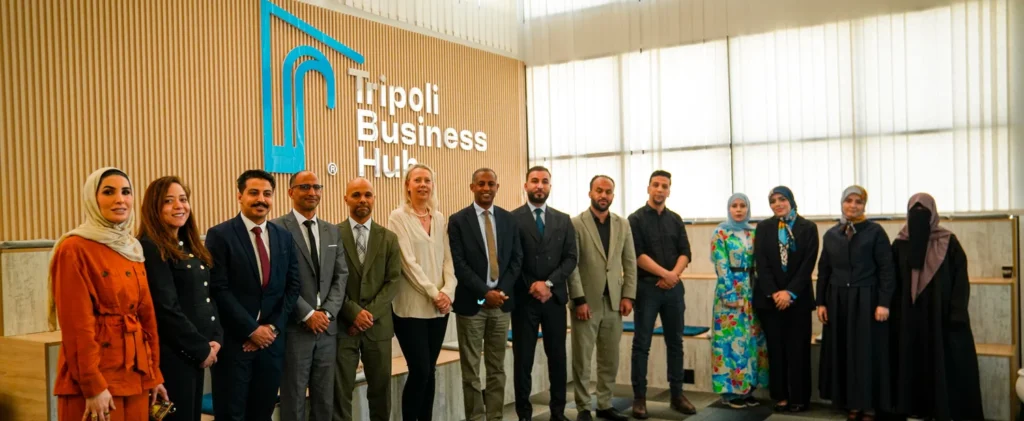
Young entrepreneurs in Libya are increasingly transforming innovative ideas into formal businesses with support from the African Development Bank Group, as a new generation of start-ups begins reshaping the country’s private sector landscape.
During a recent visit to the Tripoli Business Hub, African Development Bank officials met with entrepreneurs benefiting from the Enabling Environment Towards Youth Entrepreneurship Support and Positive Migration Governance project, widely known as EEYES. The initiative, approved in 2021 and operational since 2022, focuses on strengthening Libya’s entrepreneurial ecosystem by supporting youth-led enterprises and improving business sustainability.
Sawe Breaks 2-Hour Marathon Barrier in Historic London Triumph
The delegation was led by Malinne Blomberg, Deputy Director General for North Africa and Country Manager for Libya, who engaged directly with young business owners to assess the project’s impact and discuss opportunities for expanding entrepreneurship nationwide.
Entrepreneurs participating in the programme described how financial and technical support from the initiative helped them formalise operations, strengthen business models, and scale services in sectors ranging from healthcare to food services and vocational training.
Among the beneficiaries is Al Reaya Al Tebeya for Medical Services, a home-based healthcare company founded in Benghazi in 2023 by medical doctor Mohamed Al Warad. The company seeks to improve access to quality healthcare services for communities by delivering medical care directly to patients in their homes.
“Our objective is to bring quality medical services closer to people and contribute to improving healthcare accessibility in Libya,” Al Warad said, adding that the company plans to expand into additional regions to meet growing demand for home healthcare services across the country.
Another entrepreneur benefiting from the programme is Nouran Ramadan, founder of catering business Matabekh Al Zahera. After relocating to Tripoli to continue her studies, Ramadan rebuilt her business with support from the initiative. Her company now provides homemade meals and is operated by two women.
“The support I received helped me restart my business and regain confidence in the future,” Ramadan said. She added that she hopes to expand by opening a women-led coffee shop that will also showcase homemade chocolate and other locally produced goods.
The EEYES project contributes to wider entrepreneurship programmes implemented by the United Nations Development Programme, including the DERAYA and ROWWAD initiatives. So far, more than 1,000 people have benefited from awareness campaigns, while 60 start-ups have received training and mentorship. Twenty-nine businesses, including 16 women-led enterprises, have secured funding support.
The African Development Bank finances the initiative through its Youth Entrepreneurship and Innovation Multi-donor Trust Fund in collaboration with national institutions and the European Union. Blomberg said the Bank remains committed to empowering Libya’s youth through programmes that encourage innovation, strengthen skills, and create sustainable jobs. She praised the resilience and creativity demonstrated by the country’s young entrepreneurs, particularly women-led businesses contributing to Libya’s economic recovery and future growth.

The mission also provided an opportunity for discussions on Libya’s proposed National Entrepreneurship Policy Paper and broader strategies to strengthen support for micro, small, and medium-sized enterprises. Stakeholders emphasised the importance of coordination between universities, incubators, government institutions, development partners, and the private sector to unlock greater economic opportunities for Libyan youth.
As Libya continues rebuilding its economy, initiatives focused on entrepreneurship, innovation, and skills development are increasingly viewed as essential tools for promoting private-sector-led growth and creating long-term opportunities for the country’s next generation.