
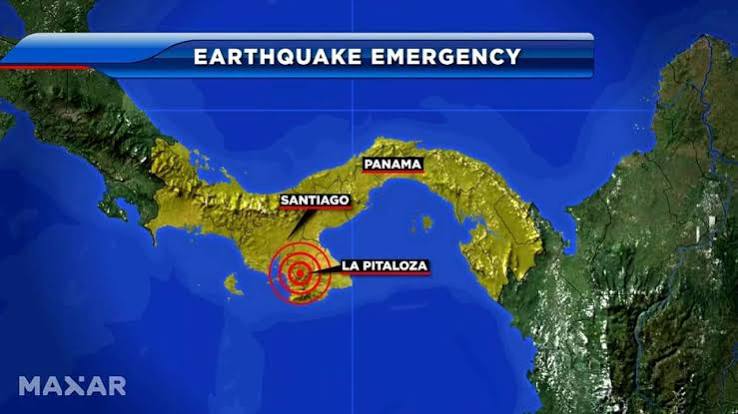
A powerful earthquake struck Panama on Friday, October 9, raising concerns across Central America and prompting emergency protocols over the possibility of a tsunami along parts of the Pacific coastline.
The earthquake was initially reported at magnitude 8.0 before the United States Geological Survey (USGS) revised it to magnitude 7.7. The seismic event occurred near Pitaloza Arriba in Panama’s Herrera Province, with the revised USGS data indicating a depth of approximately 12.6 kilometres.


Six African Startups Win $400,000 to Scale Solutions Across Underserved Communities
The powerful tremor triggered tsunami alerts for several Pacific coastal areas, prompting authorities to assess potential risks and coordinate precautionary measures. The initial warnings covered areas in Central and South America, including Panama, Colombia, Ecuador, Nicaragua and Guatemala, among other countries.
Reports also indicated damage to infrastructure and buildings in parts of Panama, particularly in the provinces of Herrera, Veraguas and Los Santos. Emergency services were tasked with assessing affected areas, inspecting structures and monitoring aftershocks.
Following an assessment of the available information, the Pacific Tsunami Warning Center announced that the tsunami threat had passed. Its subsequent bulletin confirmed that no tsunami warning, advisory or watch remained in effect in connection with the earthquake.
Although the cancellation of the alert reduced immediate concerns about tsunami-related impacts, authorities still faced the task of evaluating earthquake damage and monitoring potential aftershocks. Residents were encouraged to follow official guidance and rely on verified information as emergency assessments continued.
The incident highlights the vulnerability of coastal communities to major seismic events and the importance of reliable early-warning systems. In situations involving potential tsunamis, coordination between seismological agencies, tsunami monitoring centres and national emergency authorities is essential to communicate risks quickly and support timely protective action.
For countries bordering the Pacific Ocean, the earthquake is another reminder of the need to maintain emergency preparedness, strengthen public awareness and ensure that communities understand evacuation procedures. Even when a tsunami alert is cancelled, local authorities must continue assessing structural damage and addressing the needs of affected residents.

The event also underscores the importance of clear communication during rapidly evolving emergencies. Initial seismic measurements can be revised as additional data becomes available, while tsunami warnings may change as monitoring centres analyse sea-level observations and other evidence.
As assessments continue, the priority remains protecting affected communities, verifying infrastructure safety and ensuring that recovery efforts are guided by reliable information.