
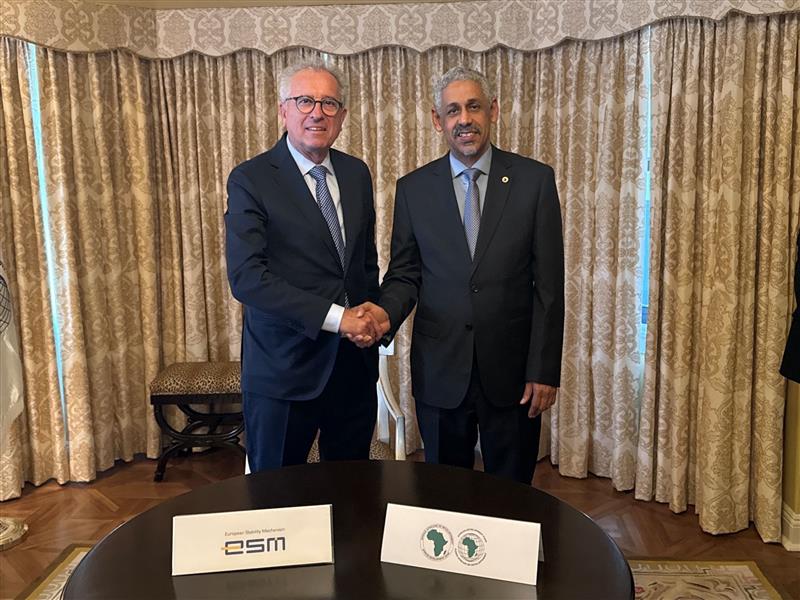
In a move that underscores Africa’s growing determination to strengthen its financial architecture, the African Development Bank Group has signed a strategic cooperation agreement with the European Stability Mechanism, marking a significant step toward building a more resilient and self-reliant economic future for the continent.
The Memorandum of Understanding, signed on the sidelines of the IMF World Bank Spring Meetings 2026, reflects a broader shift in Africa’s approach to financial stability ,one that prioritizes preparedness, institutional capacity and global collaboration in an increasingly volatile economic environment.
Seminar on Standardization and Certifications Highlights Push for Global Competitiveness
At the heart of the agreement is a commitment to deepen cooperation in areas critical to economic resilience, including capacity building, knowledge sharing and applied research. The partnership will also facilitate technical dialogue, joint seminars and closer institutional exchanges, allowing African policymakers and financial experts to draw on global best practices in governance, market funding and crisis response.
For Africa, where economies have historically been vulnerable to external shocks ranging from commodity price fluctuations to global financial crises, the agreement represents more than a technical arrangement. It signals a strategic effort to close a longstanding gap: the absence of a dedicated continental financial stability mechanism.
Sidi Ould Tah emphasized that the partnership aligns with ongoing efforts to establish an African Financial Stability Mechanism, a priority endorsed by heads of state across the continent. Such a framework, he noted, would serve as a critical safeguard, enabling African economies to respond more effectively to financial disruptions while strengthening investor confidence.
His counterpart, Pierre Gramegna, highlighted the importance of cooperation in a world increasingly defined by uncertainty. By sharing Europe’s experience in crisis prevention and financial governance, he said, the agreement creates a structured platform for practical collaboration that can enhance preparedness on both sides.

The timing of the agreement is notable. As geopolitical tensions, tightening global financial conditions and shifting development finance flows reshape the global economy, African institutions are seeking to build stronger internal buffers while maintaining strategic international partnerships.
Analysts view the agreement as part of a broader evolution in Africa’s financial strategy — one that moves beyond dependency toward greater coordination, institutional strengthening and proactive risk management.
While the impact of the partnership will unfold over time, its immediate significance lies in the message it sends: Africa is not only responding to global economic challenges but actively shaping the frameworks needed to navigate them. In a world of increasing uncertainty, the continent is positioning itself not as a passive participant, but as a proactive architect of its own financial stability.