
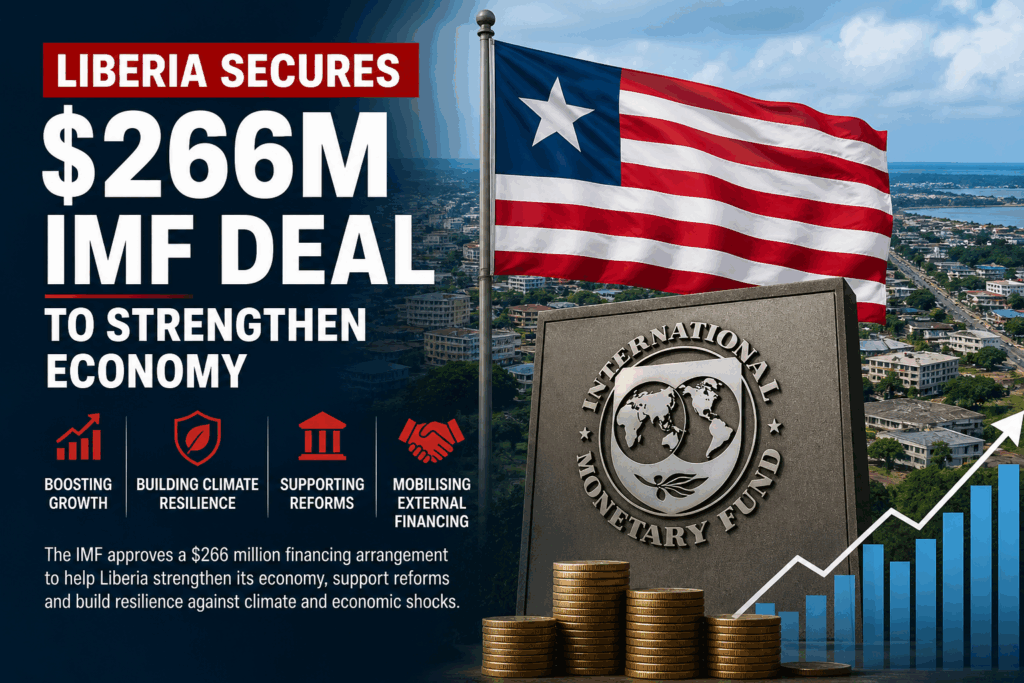
has secured a $266 million financing arrangement from the International Monetary Fund under a 21-month Resilience and Sustainability Facility, aimed at strengthening the country’s ability to withstand climate-related economic shocks and reinforce long-term stability.
The agreement marks a significant step in Liberia’s ongoing efforts to stabilise its economy and build resilience against both environmental and external financial pressures. The funding is expected to support policy reforms while helping the government respond more effectively to climate vulnerabilities.
China-Africa Summit Calls for Deeper Trade and Development Ties
Liberia’s economy grew by 5.1 percent in 2025, driven largely by the mining sector, which continues to play a central role in the country’s recovery. Strong performance in this sector has provided momentum, even as global economic conditions become more uncertain.
Despite this growth, Liberia remains exposed to external shocks, including rising global oil prices and declining bilateral financial assistance. These factors continue to put pressure on public finances and highlight the need for sustained economic reforms.
As part of the broader IMF engagement, Liberia also secured an immediate disbursement of $26.49 million following the successful completion of the third review of its Extended Credit Facility programme. This brings total disbursements under the programme to nearly $106 million.
Government efforts to restore fiscal discipline and strengthen economic management have been noted as key achievements. Progress in implementing reforms has helped improve confidence in Liberia’s economic direction and created a foundation for continued stability.
Looking ahead, Liberia is focusing on increasing domestic revenue mobilisation, improving infrastructure and strengthening public financial management systems. These measures are seen as essential for reducing reliance on external support and ensuring sustainable growth.

Reforms in the financial sector are also a priority, including restructuring weaker banks and enhancing regulatory oversight. Strengthening governance and transparency will be critical to maintaining investor confidence and supporting long-term development.
The new IMF facility is expected to play a vital role in supporting Liberia’s climate adaptation efforts, mobilising additional external financing and reinforcing the country’s economic resilience as it navigates an increasingly complex global environment.