
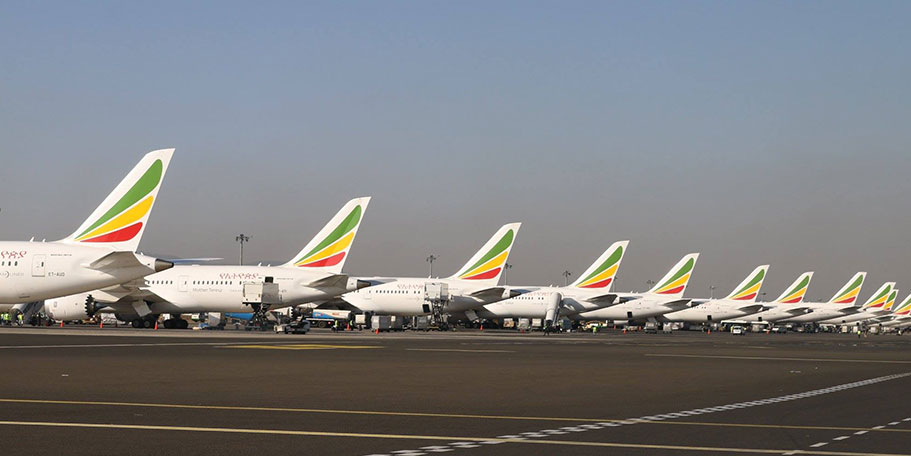
Ethiopia has begun construction on what it says will be the largest airport in Africa, a multibillion-dollar project that reflects the country’s determination to anchor itself at the center of the continent’s rapidly expanding air traffic and to strengthen its role as a global transit hub. Prime Minister Abiy Ahmed on Saturday laid a ceremonial plaque at the site in Bishoftu, a town about 45 kilometers southeast of Addis Ababa, formally marking the start of work on an airport that Ethiopian officials describe as the most ambitious aviation infrastructure project ever undertaken on the continent.
Ghana Clears $1.47 Billion Energy Debt, Restoring Power Sector Stability and Investor Confidence
The decision to build a new airport follows mounting pressure on Bole International Airport, the capital’s main gateway, which authorities say is expected to reach full capacity within three years. Bole currently handles up to 25 million passengers annually, a figure that has climbed steadily alongside the expansion of Ethiopian Airlines, Africa’s largest carrier. Urban development around the airport has limited further expansion, prompting the government to pursue a new site with room to grow.
The Bishoftu airport is intended to meet that long-term demand. When fully completed, it is expected to handle up to 110 million passengers a year, placing it among the world’s largest airports. In its initial phase, the airport will be capable of serving 60 million passengers annually and accommodating 270 aircraft at any given time. The facility will include four runways, a scale unmatched in Africa, and is designed to support both passenger traffic and large cargo operations.
The project carries a price tag of $12.5 billion, up from an initial estimate of $10 billion, reflecting inflation and changes to the project’s design. Ethiopian Airlines will finance 30 percent of the construction costs, underscoring the central role the carrier plays in Ethiopia’s economic strategy. The remaining 70 percent is expected to be covered by international lenders.
The African Development Bank has already approved a $500 million loan and is leading efforts to raise an additional $8.7 billion. Financial institutions from the Middle East, China, Europe and the United States have expressed interest in supporting the project, signaling broad international engagement, even as analysts note the risks associated with large infrastructure investments of this scale.

To ensure the new airport remains closely linked to the capital, the project includes a multi-lane motorway connecting Bishoftu to Addis Ababa and a 38-kilometer high-speed railway, which the prime minister has said will operate at speeds of up to 200 kilometers per hour. Officials argue that strong transport links will be essential to the airport’s success, particularly as it sits well outside the city center.
Ethiopia’s move comes amid growing competition among African countries to develop modern aviation hubs capable of capturing transit traffic and supporting economic growth. From Nairobi to Casablanca, governments are investing heavily in airports as symbols of national ambition and as tools to attract trade, tourism and foreign investment. With construction now underway, Ethiopia is placing a significant bet on the continued expansion of air travel across Africa and beyond. If successful, the Bishoftu airport could reshape travel patterns on the continent and cement Ethiopia’s position as a leading player in global aviation. If not, it risks becoming one of the most expensive infrastructure gambles in the country’s history.