
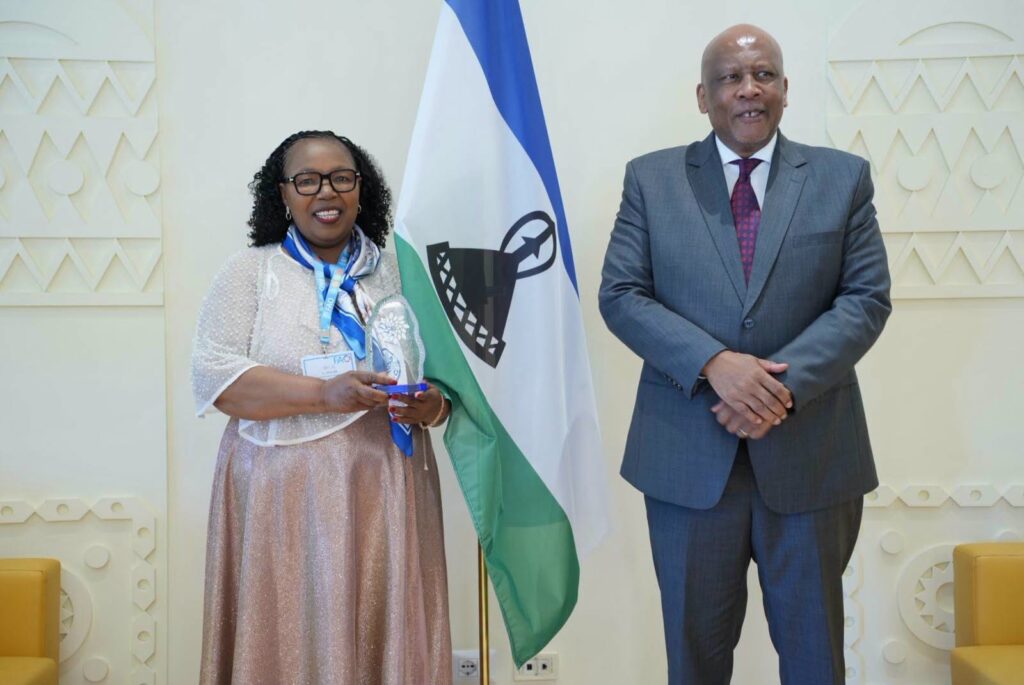
Malerato Khoeli of Lesotho has been named among the recipients of the inaugural Food and Agriculture Organization of the United Nations (FAO) 100 Women Heroes Awards, earning international recognition for her contribution to agriculture and food production.
AFC Appoints Nigeria’s Central Bank Governor Yemi Cardoso as Board Chairman
The award ceremony took place at FAO headquarters in Rome on the sidelines of the World Food Forum 2026. It honours women farmers who have moved beyond subsistence agriculture to develop enterprises that contribute to food systems and economic activity.
Khoeli’s recognition highlights the potential of women-led agricultural businesses to strengthen local production, create economic opportunities and support food security. Her journey began with a small-scale poultry layers project before expanding into commercial pig farming and large-scale grain production.
Speaking after the ceremony, Khoeli said she was deeply humbled by the international honour, reflecting on the determination and hard work required to build her agricultural businesses. She dedicated the award to the people of Lesotho, with particular appreciation for the community of Khanyane, whose partnership has played an important role in her farming journey.
She also called on women in Lesotho to persevere in agricultural entrepreneurship and encouraged efforts to make agribusiness more attractive to younger generations.
“Children, families, communities and the world need [women’s] leadership and efforts to make agrifood businesses fashionable to younger girls and children across the world,” Khoeli said.
Her message reflects a wider challenge facing African agriculture: ensuring that farming is seen not only as a means of subsistence, but also as a viable business opportunity for young people and women. Commercial farming can create opportunities across production, processing, distribution and other parts of the agricultural value chain, although access to finance, land, technology and markets remains important to the success of these enterprises.
Congratulating the award recipients, FAO Director-General Qu Dongyu described the honourees as “women of substance”, recognising their contribution to the production and supply of food at local, national and international levels.
He noted that many of the women selected had started as smallholder farmers and overcome significant economic hardship to establish themselves as important agricultural producers. Their experiences, he said, demonstrate the value of supporting women’s participation and leadership throughout agrifood systems.
Qu also highlighted the economic and social benefits of closing the gender gap in agriculture. According to figures cited during the ceremony, achieving greater gender equality across farming and food systems could increase global gross domestic product by US$1 trillion and help lift 45 million people out of food insecurity.
The ceremony was attended by King Letsie III of Lesotho, who was leading a high-level national delegation. The monarch serves as Head of State, African Union Champion for Nutrition and Food Security, and FAO Special Ambassador for Nutrition.
His participation placed Khoeli’s achievement within Lesotho’s broader engagement with food security and nutrition initiatives. The recognition also provided an opportunity to highlight the contribution of Basotho farmers to agricultural production and the importance of supporting local enterprises.
The award ceremony coincided with the World Food Forum 2026, which brings together stakeholders working on global food security, sustainable agriculture and agrifood systems. King Letsie III was scheduled to deliver an address at the World Food Day celebrations and the forum’s closing ceremony on October 16.

Khoeli’s achievement offers an example of how agricultural entrepreneurship can grow from modest beginnings into diversified commercial activity. For Lesotho and other African countries seeking to strengthen food production and rural livelihoods, supporting women farmers through better access to resources, markets, training and business opportunities remains an important part of building more resilient food systems.