
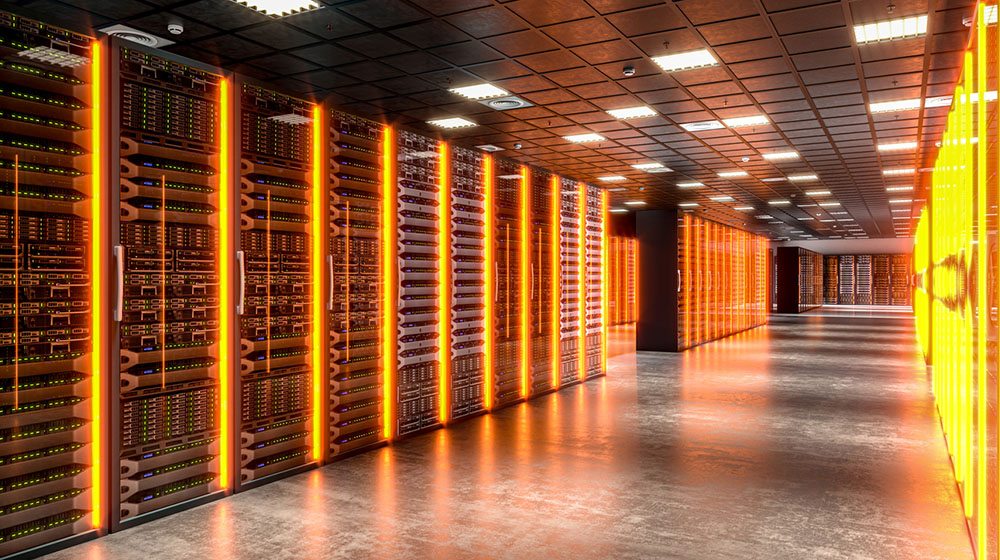
The rapid expansion of artificial intelligence is transforming the architecture of data centers worldwide, forcing operators to confront new challenges in power delivery, cooling systems, and energy resilience. As AI workloads grow more intensive and widespread, the infrastructure supporting the digital economy is undergoing a fundamental redesign.
These shifts are at the center of Vertiv’s latest Vertiv Frontiers report, which explores the technological trends and macro forces reshaping next generation data centers. The report outlines how innovations in power systems, liquid cooling, energy autonomy, and digital twin technology are becoming essential to sustaining the performance and reliability required by AI driven operations.
Clea Launches After $4 Million Pilot in African Cross-Border Payments
According to Scott Armul, Vertiv’s Chief Product and Technology Officer, the industry is responding to unprecedented demands created by what he describes as AI factories. These facilities require higher power density, faster deployment timelines, and scalable infrastructure capable of supporting gigawatt level operations. To meet these demands, data center design is moving beyond traditional models toward more integrated and intelligent systems.
The report identifies several macro forces driving this transformation. One is extreme densification, as AI and high performance computing workloads push rack power requirements far beyond historical norms. Another is the rapid pace of deployment, with operators now planning and building facilities at gigawatt scale to keep up with accelerating demand. At the same time, data centers are increasingly treated as unified compute systems rather than collections of independent components, requiring tighter integration between power, cooling, and IT infrastructure.
Silicon diversification is also reshaping infrastructure requirements. As organizations deploy a broader mix of processors and accelerators, data centers must be flexible enough to support a wide range of computing architectures without compromising efficiency or reliability.
From these forces, Vertiv highlights five major trends shaping the future of the sector. Power architecture is evolving as traditional hybrid AC and DC systems struggle under AI workloads. Higher voltage DC designs are gaining traction because they reduce conversion losses, centralize power management, and support higher rack densities. On site power generation and microgrids are also becoming more common as operators seek greater control over energy availability.
Distributed AI is another growing trend. While large centralized facilities continue to expand, many organizations are deploying AI inference closer to users and data sources. Highly regulated sectors such as healthcare, finance, and defense are increasingly relying on private or hybrid AI environments, supported by high density power systems and advanced liquid cooling in both new and retrofitted facilities.

Energy autonomy is emerging as a strategic priority. Power availability constraints are pushing operators to invest in extended on site generation, including natural gas turbines and other resilient energy solutions. Long term strategies increasingly include self supplied power and cooling to ensure uninterrupted operations for AI intensive workloads.
Digital twin technology is also playing a growing role in data center design and operations. AI driven virtual models allow operators to simulate performance, optimize layouts, and accelerate deployment. Prefabricated modular designs informed by digital twins are helping reduce build times significantly, making large scale expansion more feasible.Liquid cooling has become critical as AI hardware generates far more heat than traditional servers. Advanced liquid cooling systems, enhanced by AI based monitoring and optimization, are improving reliability and protecting high value computing assets while maintaining operational efficiency.
Operating in more than 130 countries, Vertiv provides integrated solutions for power management, thermal management, and digital infrastructure across data centers, communication networks, and industrial facilities. The company’s approach reflects a broader industry shift toward holistic system design, aimed at ensuring continuous operations, scalable growth, and long term performance in an increasingly AI driven digital economy. As artificial intelligence continues to reshape global computing needs, the evolution of data centers is no longer optional. It is a defining requirement for sustaining innovation, economic growth, and digital resilience in the years ahead.