
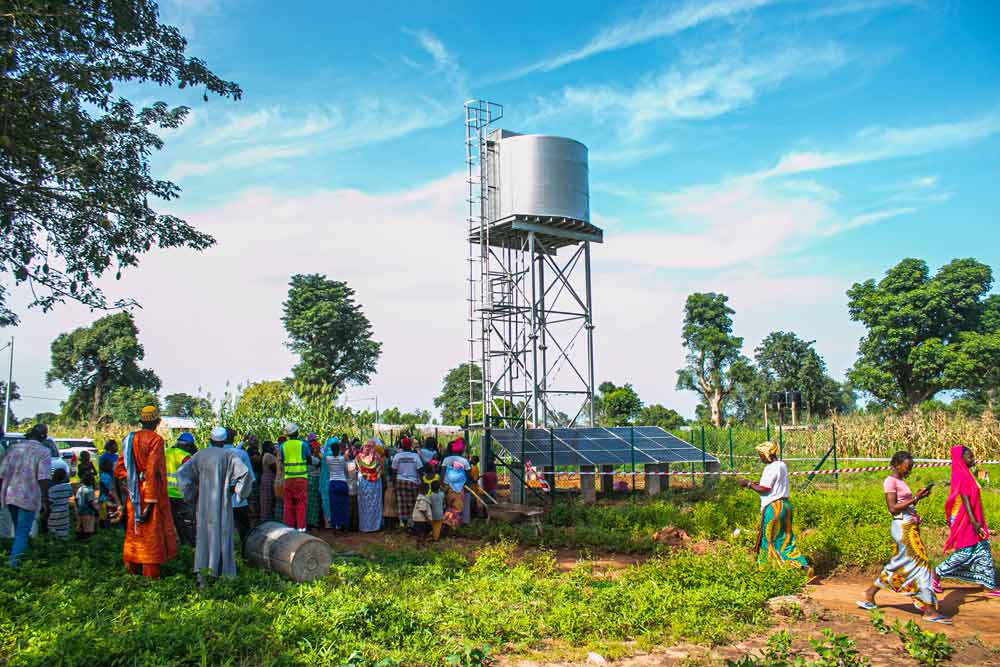
For generations, life in Jarra Madina revolved around one daily struggle: finding water. At dawn, women and girls would set out on long treks—sometimes up to five kilometers—to reach open wells dug by their ancestors more than a century ago. The water was often muddy and contaminated, a constant source of waterborne diseases. “Before, we used to beg each other for drinking water,” recalls Sarjo Jallow, head of the local women’s group. “Pregnant women carried heavy containers on their heads and risked injuries. It was painful to watch.”
Today, that reality has changed dramatically. Thanks to the Climate-Smart Rural Water and Sanitation Development Project, co-financed by the African Development Bank (AfDB) with $10 million and the Global Environment Facility (GEF) with $9 million, clean water now flows directly into the community. Solar-powered water systems pump safe, drinkable water to homes, schools, and livestock troughs, benefiting more than 110,000 people in 144 rural and peri-urban communities, including Jarra Madina.
DRC: Maluku, the new industrial zone driving resilience
Implemented in partnership with the Ministry of Fisheries and Water Resources of The Gambia, the project is building climate-resilient water infrastructure in some of the country’s most remote areas. Solar-powered boreholes feed elevated tanks supplying 120 public taps and 50 institutional facilities, drastically cutting down the long, dangerous walks women once endured.
The initiative has also built sanitation facilities in more than 30 schools, improving hygiene for hundreds of children, and planted over 10,000 trees to protect the environment and strengthen local climate adaptation. “This project was designed to improve water availability and build community resilience,” explains Olusola Ikuforiji, from the Global Environment Facility. “Thanks to solar-powered systems, people have easy access to water, livestock are better cared for, and trees are restoring the local environment.”

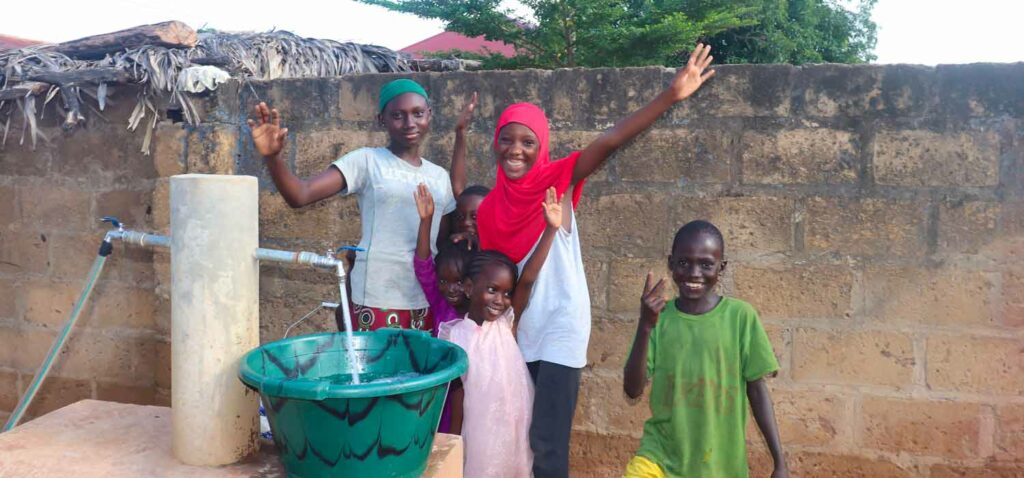
The impact is far-reaching. Girls are now attending school more regularly instead of spending hours collecting water. Women have more time to engage in farming and small businesses, boosting household income and community development. “Our lives have changed,” says Mustapha Gikineh, a villager. “Before, water was like oil—hard to find and often dirty. Now it’s clean, and our children no longer get sick.”
For The Gambia, one of Africa’s smallest and most climate-vulnerable nations, such initiatives are essential. Rising temperatures, erratic rainfall, and prolonged droughts are putting pressure on water resources and threatening food security.

By linking water access with climate adaptation, the AfDB–GEF initiative aims to strengthen the resilience of over 200,000 people by 2030. According to Bocar Cisse, the AfDB’s project manager, “This infrastructure goes beyond water. It’s a model of collaboration between the Bank, the GEF, and the Government of The Gambia—to empower women, deliver humanitarian support, and protect the environment.”
As clean water gushes from the village tap, surrounded by newly planted trees, Sarjo Jallow smiles with relief. “We no longer walk for hours to fetch dirty water,” she says. “We have water at our doorstep. Our children are healthy and go to school. This project has restored dignity and hope to our community.” The transformation of Jarra Madina stands as a powerful reminder of how climate-smart investments in water and sanitation can uplift rural life, advance gender equality, and secure a sustainable future for generations to come.