
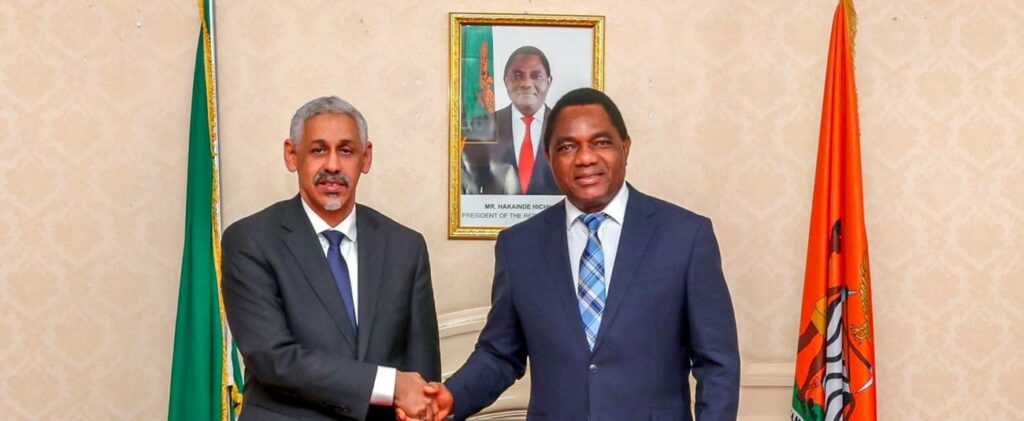
Zambia is reinforcing its role as a leading force in Africa’s economic transformation. President Hakainde Hichilema expressed strong support for the African Development Bank (AfDB) initiative, led by Dr. Sidi Ould Tah, to strengthen Africa’s financial sovereignty and reduce reliance on external capital.
Following the third meeting of the 17th replenishment cycle of the African Development Fund (ADF-17), Dr. Ould Tah praised Zambia’s $5 million contribution and highlighted the country’s leadership as a model of resilience, inclusion, and self-determination. President Hichilema emphasized that global credit ratings often underestimate Africa’s potential, resulting in higher capital costs.
Republic of Congo strengthens Ebola preparedness as DR Congo faces new outbreak
A major focus is the Mission 300 project, a joint AfDB and World Bank initiative to bring electricity to 300 million Africans by 2030. Zambia has committed to universal electricity access, achieving 33% non-hydro renewable energy, and mobilizing $11.9 billion in investments, primarily from the private sector. “Energy access drives industrialization,” Hichilema said, highlighting plans to extend this model across regional value chains.

The AfDB also supports Zambia’s structural transformation, with the country projected to grow its GDP by 6.2% in 2025, driven by energy, agriculture, and record copper production. The AfDB National Strategy 2024-2029 focuses on energy, transport, agriculture, skills development, and private sector growth.
The partnership between Zambia and the AfDB reinforces four strategic pillars: financial sovereignty, regional integration, industrialization, and human capital development, positioning Zambia as a leading example of economic leadership and sustainable development in Africa.