
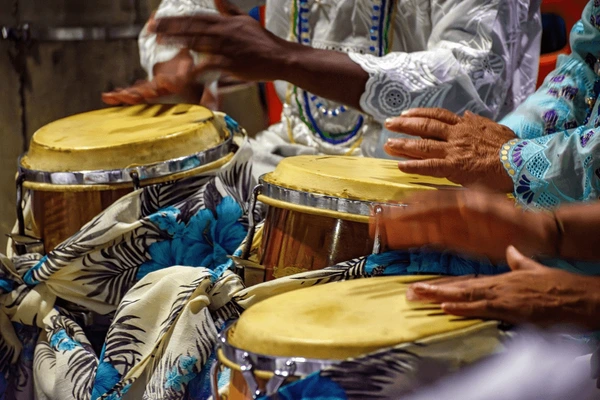
Each year in Ouro Preto, an Afro-Brazilian festival transforms the former colonial capital into a living testament to Africa’s enduring presence in the Americas.
The celebration honors Our Lady of the Rosary, Saint Ifigênia, Saint Benedict, and Chico Rei—a figure rooted in African history and memory. According to oral tradition, Chico Rei was a Congolese king captured and enslaved by the Portuguese, who later bought his freedom and that of others, becoming a symbol of African leadership, resistance, and spiritual continuity in Brazil.
Clea Launches After $4 Million Pilot in African Cross-Border Payments
As drums thundered through the city’s baroque streets, participants sang and danced in processions that blend Catholic rituals with African musical structures, rhythms, and communal symbolism. At the heart of the festival is the Reign of Our Lady of the Rosary, a tradition created by enslaved Africans and their descendants as a way to preserve identity, hierarchy, and collective dignity under colonial oppression.
“This rebirth of the Kingdom is a source of strength,” said Kedison Guimarães, captain of the Mozambique Guard of Our Lady of the Rosary and Saint Ifigênia. “It brings joy, culture, and faith to our entire city.”

For many Afro-Brazilian families, the festival is more than remembrance—it is continuity. “It is the manifestation of an ancient, ancestral culture that remains alive,” said Cristina Simão, a retired resident of Ouro Preto.
Recognized today as intangible cultural heritage of Ouro Preto and Minas Gerais, the festival reflects the resilience of African traditions carried across the Atlantic and reshaped in the diaspora. Through faith, music, and kingship symbolism, it reclaims African presence in a landscape once defined by enslavement. In honoring Chico Rei and the saints, the festival affirms a deeper truth: Africa was not erased in Brazil—it survived, adapted, and continues to speak through rhythm, ritual, and resistance.