
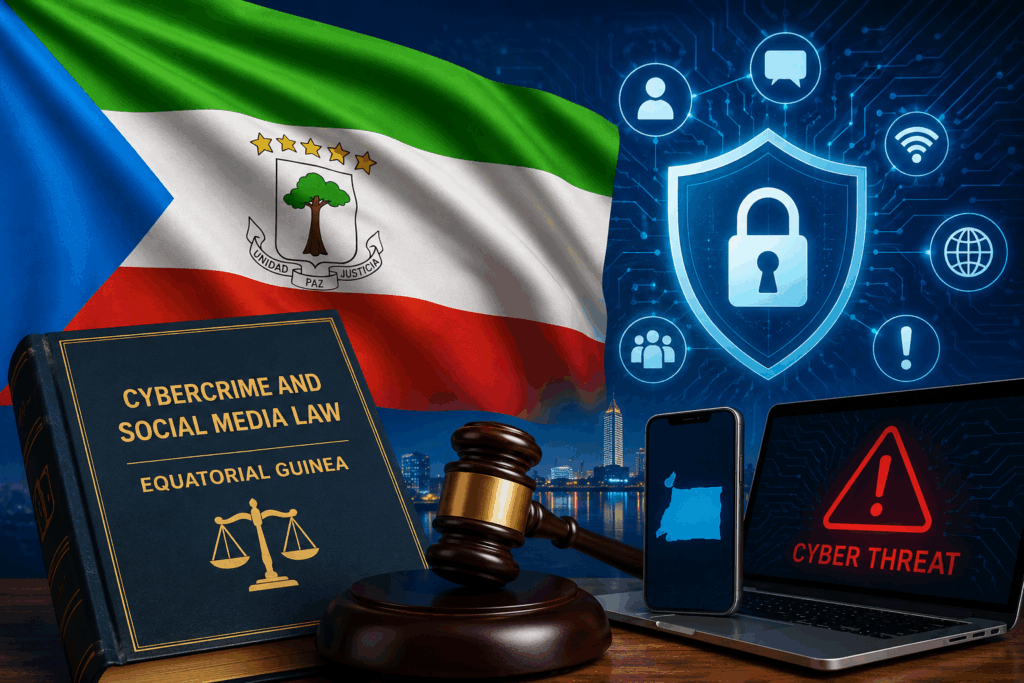
The Government of Equatorial Guinea has enacted a new law regulating the use of social media, cybercrime, and digital offenses, introducing a comprehensive legal framework aimed at strengthening cybersecurity, protecting citizens’ rights in the digital environment, and promoting the responsible use of Information and Communication Technologies (ICTs). The legislation establishes criminal and financial penalties for a wide range of offenses committed through digital platforms, including the dissemination of false information, cyber harassment, online threats, unauthorized disclosure of private information, and other cyber-related crimes.
Morocco Secures €200M to Expand Skills and Youth Employment
The new legal framework comes in response to the increasing use of social media and digital communication platforms, which have transformed how information is shared while also creating new challenges related to privacy, misinformation, cyber abuse, and online security. According to the Government, the law is intended to enhance the prevention, investigation, prosecution, and punishment of crimes committed through Information and Communication Technologies while safeguarding the fundamental rights of individuals in the digital space.
One of the key provisions addresses the unlawful disclosure of private information. Under Article 46 of the law, any individual who, without the consent of the owner, reveals, distributes, or shares private data—including photographs, videos, audio recordings, written communications, or other digital files obtained through ICTs—may face prison sentences ranging from three to six years, in addition to fines ranging from CFA 1 million to CFA 10 million. The legislation also criminalizes online threats. Individuals who use digital platforms to threaten another person or members of their family with acts constituting criminal offenses may face prison terms of one to three years, together with financial penalties ranging between CFA 5 million and CFA 15 million, where the threats are considered credible.
Among the law’s most significant provisions are measures targeting the deliberate dissemination of false information through digital platforms. Under the legislation, any person who publishes or circulates false or manipulated information through Information and Communication Technologies that causes public alarm, fear, panic, or social unrest may be sentenced to between two and four years in prison and fined between CFA 5 million and CFA 50 million. Government officials say these provisions seek to promote greater responsibility in the digital ecosystem while discouraging the spread of misinformation capable of undermining public order, institutional credibility, or social stability.
The law also introduces specific measures against cyber harassment. Article 53 provides penalties for individuals who use digital platforms to harass, intimidate, insult, humiliate, repeatedly disturb, or engage in behavior that negatively affects another person’s psychological or emotional well-being. Offenders may receive prison sentences ranging from two to four years alongside fines of between CFA 2 million and CFA 25 million. Where the victim is a child, adolescent, or person living with a disability, the legislation provides for enhanced penalties, increasing prison sentences to between four and six years, accompanied by fines ranging from CFA 5 million to CFA 50 million. Officials say these enhanced protections reflect the Government’s commitment to safeguarding vulnerable groups from online abuse and cyber exploitation.
Beyond establishing criminal sanctions, the legislation seeks to encourage a culture of responsible digital citizenship by promoting ethical behavior, respect for privacy, and greater accountability in the use of social media platforms and digital communication technologies. Authorities have emphasized that the rapid growth of digital connectivity presents both opportunities and responsibilities. While online platforms have become essential tools for communication, education, business, innovation, and civic participation, they also require legal safeguards capable of addressing emerging cyber threats.
The Government believes the new legal framework will strengthen national cybersecurity, improve confidence in digital platforms, and contribute to creating a safer online environment for individuals, businesses, and public institutions. The legislation also aligns with broader efforts to modernize Equatorial Guinea’s legal and digital governance systems as the country continues expanding access to information technologies and digital public services.

By establishing clearer legal standards governing online conduct, the Government aims to balance technological progress with the protection of individual rights, public security, and the responsible use of digital technologies. The enactment of the law represents a significant milestone in Equatorial Guinea’s evolving digital regulatory framework and reflects growing recognition of the importance of cybersecurity, digital responsibility, and the rule of law in an increasingly connected