
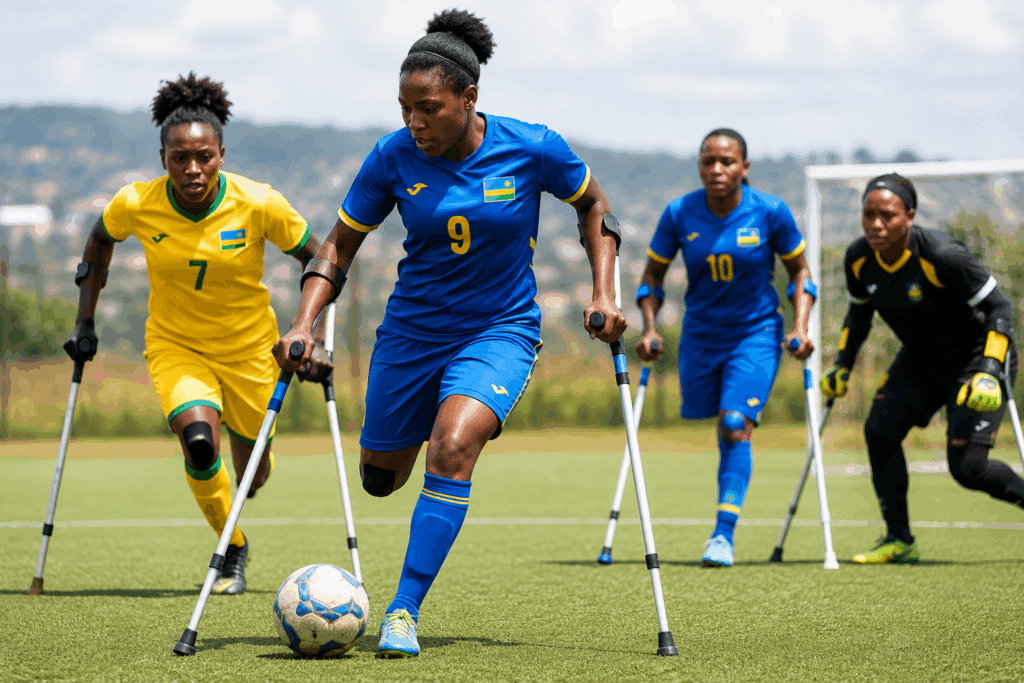
In Rwanda, amputee football is giving women more than an opportunity to play sport. For many participants, it has become a source of confidence, freedom and social inclusion. The sport, a seven-a-side version of football played with crutches by outfield players and goalkeepers with one arm, has grown steadily in Rwanda over the past decade. What began as a niche activity is increasingly becoming a space where women with disabilities can challenge stereotypes and rebuild self-esteem.
Dreams Hub Pursues Innovation Partnerships During China Visit
Many players say they once struggled with fear and isolation because of how disability is perceived in society. Joining the sport has helped them feel more accepted and confident in public spaces.
Nyiraneza Solange, one of the players, said she used to avoid appearing in public without her prosthetic leg because she feared judgment from others. Through football, she said, she has learned to accept herself more fully and no longer worries about negative reactions from strangers.
On the field, players adapt to demanding physical challenges while developing teamwork, discipline and resilience. Goalkeeper Nikuze Angelique said one of her biggest difficulties is defending shots directed toward the side of her weaker arm, but training has helped her improve and gain confidence in her abilities.
Supporters of amputee football say the sport’s impact extends well beyond competition. Advocates argue that participation can improve mental well-being, encourage social integration and create a stronger sense of belonging for women who are often marginalized.
Fred Sorrels, manager of Haiti’s women’s amputee football team, said the game provides players with an opportunity to regain confidence and experience a sense of wholeness. He described the sport as beneficial both psychologically and emotionally for women living with disabilities.
As amputee football continues to expand in Rwanda, it is becoming a powerful symbol of resilience and empowerment. For many players, the sport represents more than a game. It is a chance to reclaim confidence, build community and redefine perceptions of disability both on and off the pitch.