
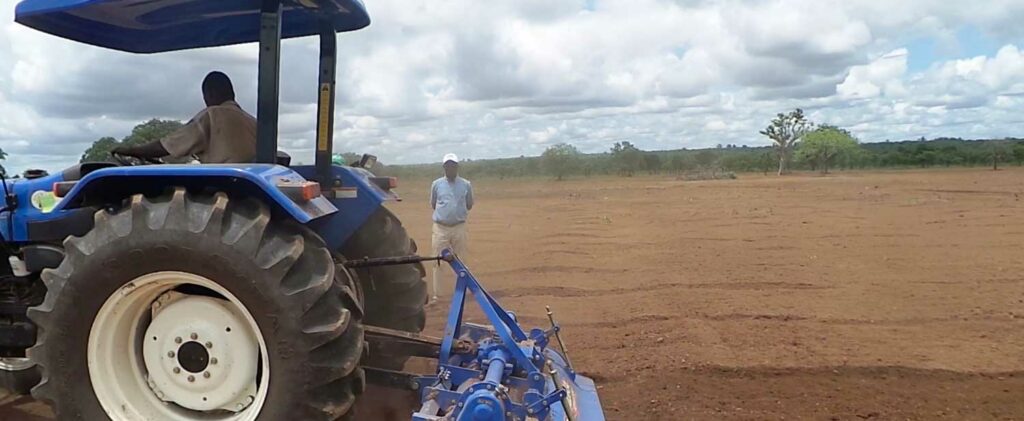
“I don’t believe that investing only in agricultural trade is enough if we truly want to strengthen Ghana’s food security.” Joshua Toatoba delivers this statement with the calm assurance of someone who speaks from experience, not theory. He is not the kind of expert who observes agriculture from a distance; he is the kind who can quote agronomic studies while standing ankle-deep in the fields. A graduate in Agriculture from the University for Development Studies, Toatoba could have chosen an air-conditioned office and a predictable career path. Instead, he took the unlikely route for a university graduate: he returned to the land—not as a nostalgic gesture, but as a strategic move to spark a quiet agricultural revolution in northern Ghana.
Between 2008 and 2014, he worked with World Vision, travelling from village to village and supporting smallholder farmers who struggled to produce more with less. It was during these years that he learned a lesson no textbook teaches clearly: agriculture cannot be transformed if farmers lack the basics. “You can’t talk about markets unless you first talk about seeds, techniques, tools and knowledge,” he recalls. And he was right.
Carmen Ismelda: Miss Universe Equatorial Guinea is ‘La Sensación’ in Thailand
Guided by this conviction, Toatoba founded Rujo Agri-Trade in Tamale in 2014. The company began without fanfare, but with a clear purpose: to prove that agriculture in Ghana can be efficient, profitable and socially transformative. His 20-hectare rice nucleus farm quickly evolved into much more than a commercial plot. It became an open-air classroom—a training ground where smallholder farmers learned to plant better, measure better and, above all, believe in their own potential. One hundred smallholder farmers joined the initiative as outgrowers. Rather than treating them as suppliers, Toatoba treated them as partners. He provided training, quality inputs, modern practices and something often rarer than fertilizer: consistent, hands-on support. The farm soon became a rural incubator for agricultural skills, not just a business.

This innovative model captured the attention of the Savannah Agricultural Value Chain Development Project (SADEP). Once SADEP saw the results, it moved quickly to scale them up—providing land development support, mechanization services, input credit and stronger commercial linkages. If Rujo Agri-Trade was a spark, SADEP became the wind that amplified it.
The impact was immediate. Rice and maize production increased significantly across the region. Household incomes rose. Farming practices diversified and improved. What had once been subsistence plots grew into small, dynamic family enterprises. More than improving crops, Toatoba was reshaping mindsets. “My education taught me the science of agriculture. Experience taught me the business. But working with farmers taught me that sustainable impact requires both—it means developing people, not just producing crops,” he reflects. Coming from him, the words sound less like a slogan and more like a truth earned under the sun.
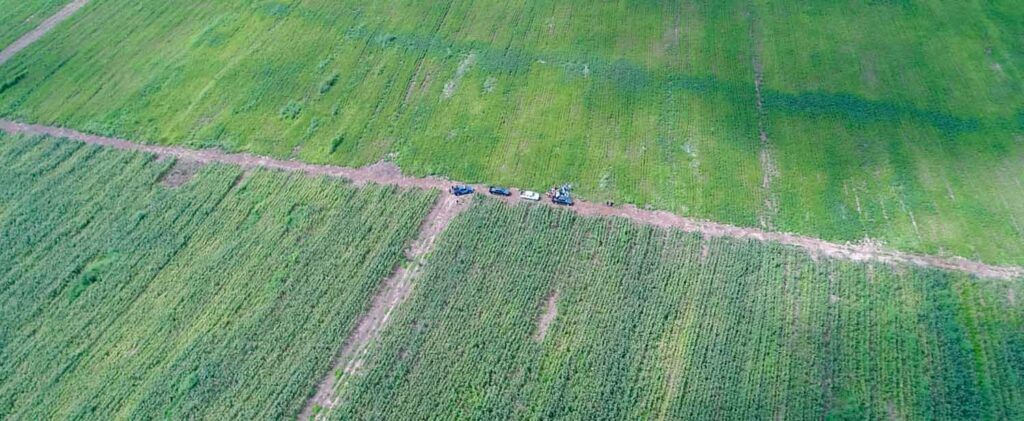
His journey also challenges a stubborn misconception: the idea that agriculture is a backup plan for those who failed to “find something better.” Toatoba is living proof that agriculture is perhaps the only sector where science, economics, innovation and community converge in the very place where a nation grows—its soil.
For SADEP, supporting Toatoba was a strategic decision: empower one commercial farmer who, in turn, empowers dozens of smallholders. A simple equation with powerful outcomes. And for many young Ghanaians, seeing a university graduate succeed in modern agriculture is reshaping the narrative of what it means to work the land. Today, in the rice fields of Tamale, Joshua Toatoba is cultivating far more than food. He is cultivating new ideas, new opportunities and a new vision for the future—one where Ghana’s agriculture is modern, profitable, dignified and deeply human. Walking between perfectly aligned rows, it is impossible not to see that in these green fields, Ghana’s next great success story is already taking root.