
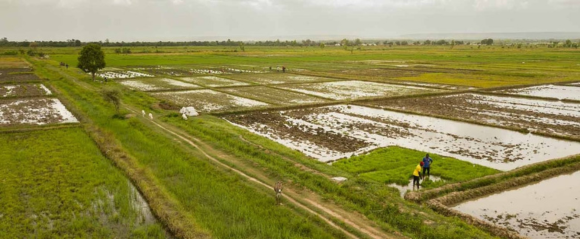
Once reliant on imported rice to feed its population, Sierra Leone is rewriting its agricultural story. The country is harnessing fertile land, skilled hands, and strategic investment to transform farming into a cornerstone of sustainable development. The African Development Bank (AfDB) has approved a $2.25 million financing package for the FOSTER project (Fostering Africa’s Agricultural Productivity through Fertilizer Value Chain Financing), a bold initiative designed to boost productivity and strengthen food security across Sierra Leone. Implemented by the German organization Welthungerhilfe, FOSTER aims to modernize the fertilizer value chain, expand access to credit, and attract private investment, benefiting over 126,000 smallholder farmers, including 40% women and 10% youth.
FOSTER is not starting from scratch. Sierra Leone has made significant strides in modernizing rural infrastructure and adopting innovative farming practices. The project seeks to consolidate these gains, creating a sustainable, equitable, and resilient agricultural model.
“The FOSTER project represents a strategic and timely intervention to tackle one of the most critical barriers to agricultural development in Sierra Leone. By mitigating risks and strengthening the enabling environment, we are laying the foundation for sustainable growth,” said Halima Hashi, AfDB Country Manager.
The funding package combines a $1.5 million partial credit guarantee from the Africa Fertilizer Financing Mechanism (AFFM), $700,000 in grants for soil health management, and $50,000 in-kind support from Welthungerhilfe. The initiative is expected to mobilize an additional $9 million in private financing and distribute 9,500 metric tons of fertilizer across the districts of Bo, Kenema, Pujehun, and Kono, while training thousands of farmers in sustainable farming techniques, soil management, and efficient input use.

Despite its agricultural potential, Sierra Leone currently applies only 12.8 kg of fertilizer per hectare, far below the 131 kg recommended under the Nairobi Declaration, resulting in low yields and the need to import over 351,000 tons of rice in 2021. FOSTER aims to increase fertilizer usage to 35 kg per hectare and boost key crop yields—including rice, onions, tomatoes, and soybeans—by up to 30%.
Beyond the numbers, FOSTER underscores Sierra Leone’s commitment to food self-sufficiency, rural economic empowerment, and gender-inclusive policies, with a strong emphasis on environmental sustainability. The project aligns with the AfDB’s vision of building resilient, self-reliant agricultural systems across Africa. Today, Sierra Leone is not only planting crops—it is planting the seeds of growth and independence, proving that the strength of its land can drive national transformation.