
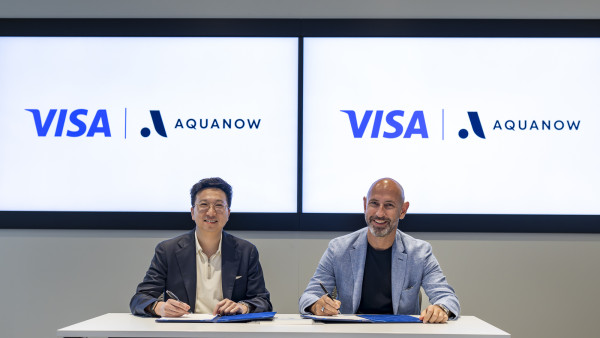
Visa has taken a significant step in modernizing the global financial system by integrating Aquanow’s digital asset infrastructure, enabling issuers and acquirers to settle transactions using approved stablecoins such as USDC. The move aims to reduce costs, cut intermediaries, and speed up cross-border payments with continuous operational availability—a sharp contrast to traditional banking models.
The payment network first tested stablecoins in 2023 through a pilot program that allowed institutions to meet settlement obligations in USDC. The results confirmed its viability: more than $2.5 billion in annual transaction volume is now flowing through this mechanism. For Visa, the integration represents not only transactional efficiency but also a natural transition toward a faster, more digital, and competitive financial infrastructure.
Carmen Ismelda: Miss Universe Equatorial Guinea is ‘La Sensación’ in Thailand
In emerging regions such as Africa, where digital commerce and remittances drive economic activity, the impact could be particularly significant. Faster, lower-cost settlements can enhance liquidity for fintechs and banks, facilitate international trade, and strengthen capital flow under frameworks like the AfCFTA. The stability of USDC compared to volatile cryptocurrencies positions it as an operational tool rather than a speculative asset.

Godfrey Sullivan, Visa’s Head of Products and Solutions for CEMEA, emphasized that the integration with Aquanow aims to modernize internal payment systems and reduce reliance on multiple intermediaries. Phil Sham, CEO of Aquanow, added that the partnership opens new pathways for institutions to fully participate in the digital economy. For the global financial industry, the message is clear: stablecoins are no longer an experiment—they are an expanding infrastructure. The shift toward money moving at internet speed is underway, and Africa could emerge as one of the main beneficiaries of this new economic architecture.