
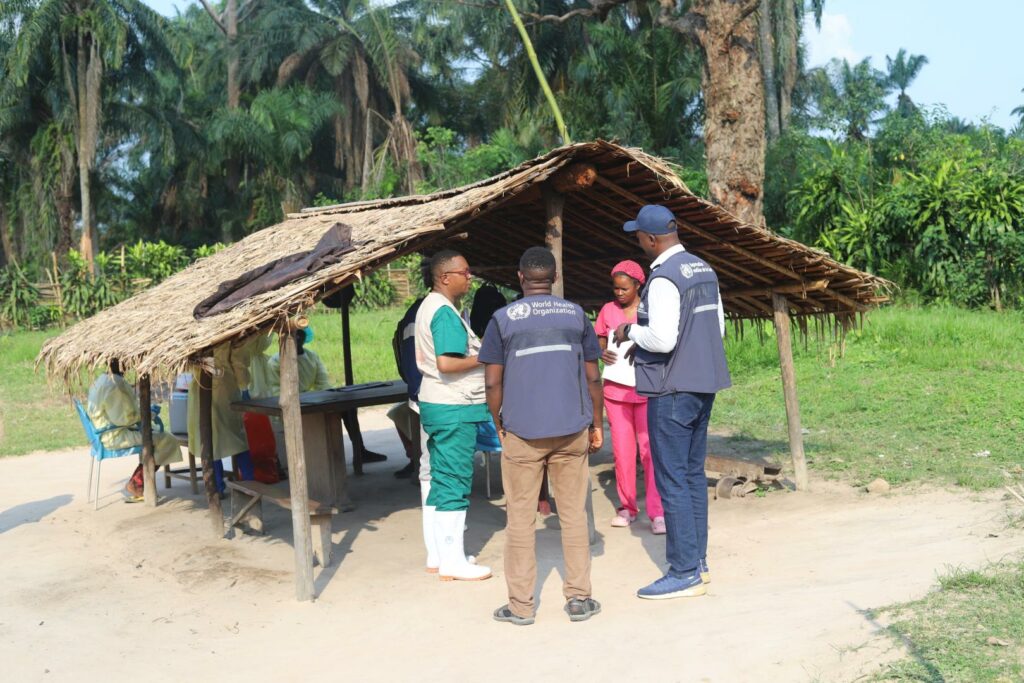
For the first time in weeks, Bulape is breathing a cautious sigh of relief. The latest figures offer a glimpse of hope for the medical teams working tirelessly in the heart of Kasai Province to halt the Ebola outbreak. New data show a clear downward trend — seven cases reported in the last week of September, compared with eleven the previous week. Since 30 September, not a single new infection has been detected — a silence that, in this context, sounds like progress.
Still, health authorities are urging vigilance. “Every day without a new case, and every patient who recovers, brings us closer to ending this outbreak,” said Dr. Mohamed Janabi, WHO Regional Director for Africa. His cautious optimism is well-founded: Ebola has ebbed before, only to resurge when least expected. As of 1 October, the outbreak total stands at 64 cases — 53 confirmed and 11 probable — with 42 deaths. The virus remains localized in Bulape, turning this small Congolese community into a powerful symbol of what coordinated public health action can achieve.
Sudan: Displaced women turn crisis into thriving agricultural ventures
Over the past three weeks, response operations have tightened with remarkable precision. More than 97% of the 1,000 identified contacts have been successfully monitored. Surveillance systems are now detecting and investigating alerts faster than ever, while the Bulape treatment center — the epicenter of the response — has expanded to 44 beds. Infection prevention and control measures have been strengthened, and local communities, the cornerstone of this fight, are more engaged than ever.

Vaccination efforts are also gaining ground. Over 8,000 frontline workers, contacts, and secondary contacts have already been immunized. A new mass vaccination campaign aims to deliver 18,000 additional doses across 19 localities in Bulape, protecting those most at risk and further breaking chains of transmission. This progress is the result of an extraordinary collaboration. The World Health Organization (WHO), Africa CDC, UNICEF, ALIMA, Médecins Sans Frontières, the Red Cross, and other partners are working hand-in-hand with the Congolese government to contain the virus. It is a powerful reminder that when international cooperation aligns with community action, results follow.
Yet, the response is far from over. Sustaining operations will require additional resources — about US$66.6 million are needed to fully implement the Regional Strategic Preparedness and Response Plan. Beyond curbing the current outbreak, the plan aims to strengthen the Democratic Republic of the Congo’s long-term health resilience through investments in water and sanitation systems, laboratory infrastructure, vaccine cold-chain logistics, and health workforce training. Bulape’s progress stands as a beacon of hope across Africa — proof that persistence, science, and solidarity can outpace even the most formidable diseases. For now, the fight continues, but the message is clear: with coordinated effort and unwavering resolve, Ebola can be contained, lives can be saved, and fear can turn into memory.