
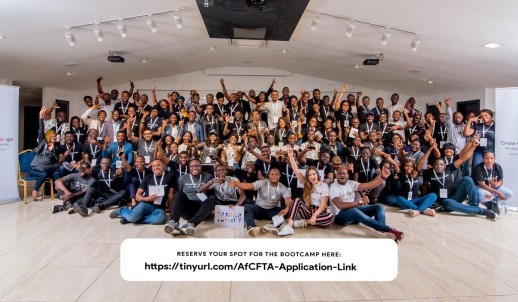
Small and medium enterprises—responsible for nearly 80% of Africa’s employment—are once again at the heart of an ambitious push for the continent’s digital future. Google and the AfCFTA Secretariat have launched a pioneering programme designed to bridge the digital skills gap that continues to limit the growth of thousands of entrepreneurs, building on the success of the Hustle Academy, which has trained over 18,000 SMEs since 2022.
During the announcement, Wamkele Mene, Secretary-General of the AfCFTA, stressed that the initiative “aligns with the transformative objective of the Protocol on Digital Trade and the Protocol on Women and Youth in Trade,” positioning MSMEs, women, youth and rural producers as strategic actors in Africa’s continental market. Charles Murito, Google’s Regional Director for Public Policy and Government Affairs, reinforced this vision: “Technology is a powerful equaliser. This partnership gives thousands of African entrepreneurs the practical tools they need to seize new opportunities and build a more connected, prosperous digital ecosystem.”
Clean water restores dignity to rural communities in The Gambia
Delivered in English, French, Arabic and Portuguese, the programme focuses on three decisive areas: cross-border digital trade, cloud technology and artificial intelligence applied to business growth. From identifying new markets beyond national borders to mastering Google Workspace, Google Cloud or Gemini to automate tasks and generate marketing content, the programme promotes hands-on learning tailored to real business needs.
The training will be implemented by UpSkill Universe, whose CEO, Gori Yahaya, highlighted the urgency of equipping entrepreneurs for the next economic shift: “African entrepreneurs are already driving change, but they need strong digital tools to compete in an economy where AI is redefining how business is done.”
Applications are now open for SMEs with at least six months of operation in selected AfCFTA member states, including Nigeria, Kenya, South Africa, Ghana, Cameroon, Rwanda, Senegal, Ethiopia, Tanzania, Morocco, Egypt and Mozambique, among others. Training will begin in November 2025 and run across 25 cohorts until June 2026, with the aim of equipping thousands of businesses with the skills they need to strengthen their position in Africa’s growing digital economy.