
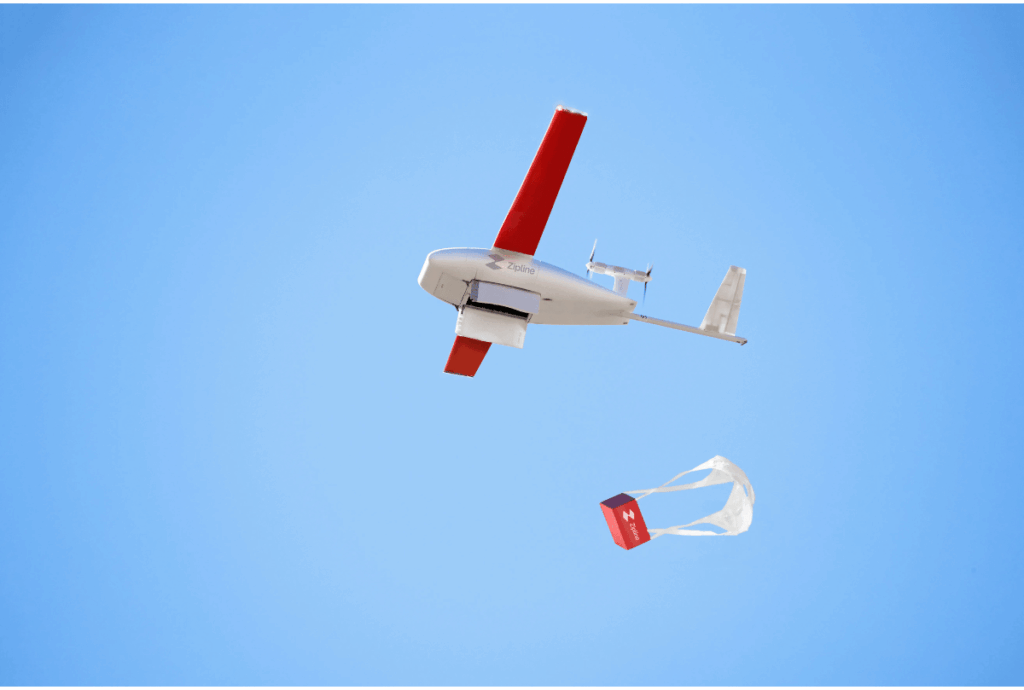
Rwanda has once again positioned itself at the forefront of global innovation by becoming Africa’s first country to achieve nationwide coverage of autonomous drone deliveries for healthcare. Through an expanded partnership with Zipline, the government is scaling a system that is transforming how essential medical supplies reach communities across the country.
The expansion follows a new agreement between the Government of Rwanda and Zipline, supported by a $150 million pay-for-performance award from the United States Department of State. The deal builds on Rwanda’s pioneering decision in 2016 to become the first country in the world to launch Zipline’s autonomous medical delivery service, a move that has since become a global reference point for technology-driven healthcare.
Cabo Verde Launches Skodji Digital Program to Open Global Tech Jobs to Youth
With the new phase, Rwanda will achieve full national autonomous logistics coverage, introduce Africa’s first urban drone delivery system, and host the continent’s first autonomous delivery testing center. Together, these milestones reinforce the country’s reputation as a leader in artificial intelligence, robotics, and practical innovation designed to serve public needs.
At the heart of the expansion is Zipline’s Platform 2 urban delivery system, which will be deployed in Kigali, where nearly 40 percent of Rwanda’s healthcare demand is concentrated. Designed for dense urban environments, the system enables fast, quiet, and highly precise deliveries to hospitals and health centers, reducing delays and easing pressure on traditional supply chains.
Rwanda will also establish a new long-range distribution hub in Karongi District, complementing existing Zipline centers in Muhanga and Kayonza. Strategically located near the border with the Democratic Republic of Congo, the Karongi hub will extend services to districts beyond the Nyungwe Forest and support approximately 200 health posts and 60 major health facilities. In total, the nationwide network is expected to serve more than 11 million people and support around 350 local jobs.
The financial model underpinning the expansion reflects Rwanda’s emphasis on sustainability and self-reliance. The U.S. government will provide upfront infrastructure funding, while Rwanda has committed to covering ongoing operational costs. Officials say this approach ensures the system is nationally owned, financially durable, and fully integrated into the country’s health strategy.
Beyond delivery operations, Zipline will establish its first overseas research and development hub in Rwanda. The new AI and robotics testing facility will focus on aircraft performance, safety systems, and next-generation logistics software, while also helping develop local technical talent and adapt technologies to diverse climate conditions.

Since its launch, Zipline’s network in Rwanda has enabled on-demand access to blood, vaccines, and essential medicines, significantly reducing waste and improving health outcomes. The system has been linked to a sharp decline in maternal deaths and has strengthened emergency response through real-time data integration with national health systems.
For Rwanda, the achievement goes beyond technology. It represents a model of how African governments can deploy innovation at national scale to address long-standing challenges. As other countries across the continent explore new ways to strengthen healthcare delivery, Rwanda’s experience is increasingly seen as proof that autonomous systems can work not just in pilots or trials, but as part of a government-led, nationwide solution.