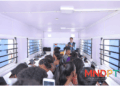

South Africa’s drive to expand digital education and prepare young people for a technology-driven economy took a local step forward this week with the opening of a fully equipped computer laboratory at Umdlamfe Secondary School in Esikhawini, near Richards Bay.
The facility was handed over as part of the government’s Back-To-School Programme and reflects a growing emphasis on digital literacy as a core component of modern education. The laboratory was established through a partnership between the Department of Home Affairs and HONOR South Africa, which supplied laptops and technical equipment for the center.
Dreams Hub Showcases Equatorial Guinea’s Creative Vision at FITUR
Officials involved in the initiative say the new lab is designed to help bridge the digital divide, particularly in communities that have historically lacked access to technology and digital learning resources. By providing learners with hands-on exposure to computers and digital tools, the project aims to improve academic outcomes while building skills relevant to the modern workplace.
The laboratory will give students access to online educational materials and introduce them to emerging technology fields, including artificial intelligence. Educators say this exposure is increasingly essential as digital skills become a prerequisite for higher education, employment and participation in the global economy.
Speaking at the handover, Deputy Minister of Home Affairs Njabulo Nzuza emphasized that access to digital learning is central to 21st-century education and to South Africa’s long-term economic development. He linked the initiative to the country’s broader Fourth Industrial Revolution strategy, which seeks to ensure that citizens are prepared for rapid technological change.
South Africa formally adopted this approach in 2019 with the establishment of the Presidential Commission on the Fourth Industrial Revolution, tasked with guiding national policy on technology, skills development and innovation. Government officials say initiatives like the Richards Bay laboratory translate those national priorities into practical action at the community level.
Beyond improving classroom learning, the facility is expected to help learners develop practical digital competencies, including navigating online platforms and exploring future career pathways. Supporters say such skills are increasingly important as job markets evolve and digital access becomes a gateway to opportunity.
HONOR South Africa said its involvement reflects a broader commitment by the private sector to support education and digital inclusion. The partnership highlights the role of public–private collaboration in expanding infrastructure and skills development across the country.
For learners at Umdlamfe Secondary School, the laboratory represents more than new equipment. It offers a connection to digital knowledge and opportunities that extend beyond the classroom, aligning local education with the demands of a rapidly changing technological landscape.