Between 2017 and 2021, Uganda spent over $8 million replacing degraded wooden poles, with 85% of failures caused by rot and termite damage. However, research conducted by Makerere University shows that Rot-Guard technology can virtually eliminate these losses, significantly extending the lifespan of poles while reducing maintenance expenses.Led by Dr. Paul Mugabi, this is the first study in East Africa to evaluate the effectiveness of Polesaver Rot-Guard™ sleeves under local conditions. The findings could reshape infrastructure management across the continent.
African Development Bank: Adesina bids farewell as Sidi Ould Tah takes the helm
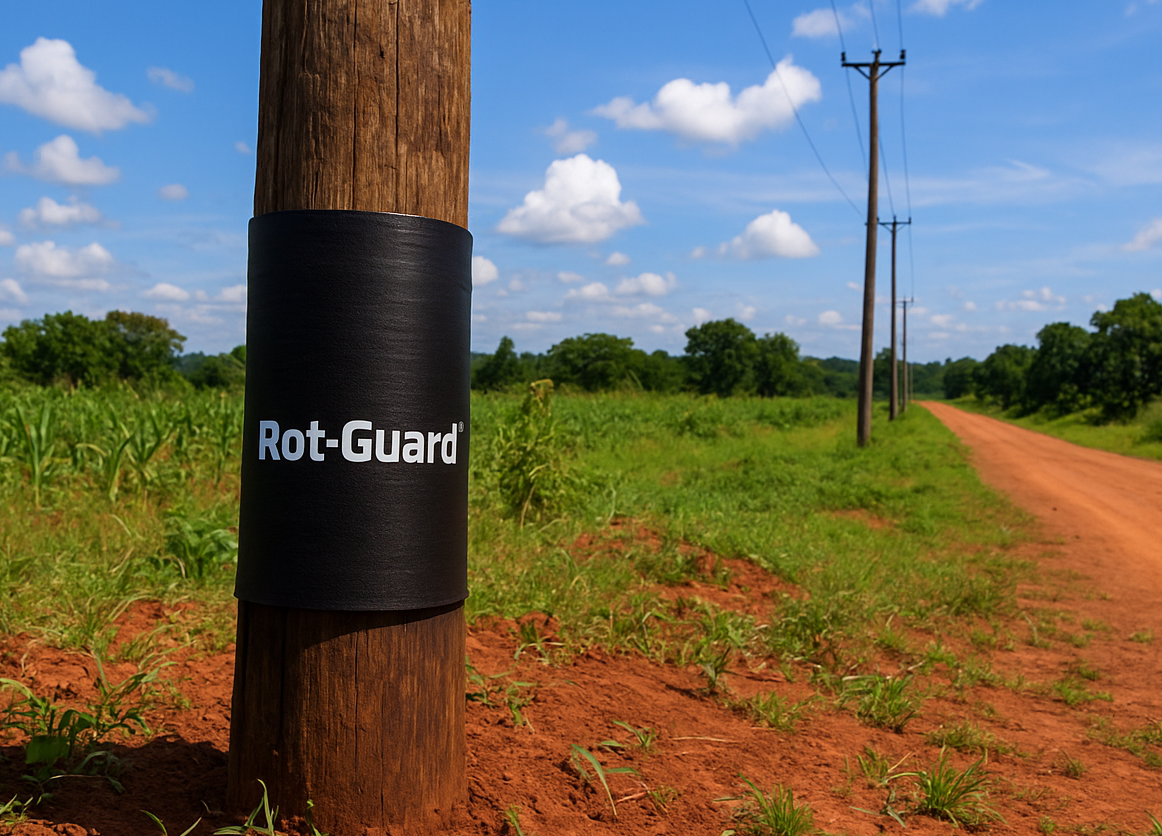
Rot-Guard™ sleeves are dual-layer heat-shrinkable barriers designed to protect the most vulnerable part of wooden poles: the ground-line, where contact with moisture, fungi, and termites accelerates degradation. The outer thermoplastic layer prevents water and oxygen infiltration, while the inner bituminous layer seals the wood, forming an impenetrable protective barrier. Despite the growing use of steel and concrete, wood remains preferred in many African regions due to its lower cost, ease of installation, and smaller environmental footprint. Yet its limited durability has long challenged utility companies.
The study monitored 200 poles in central Uganda over eight years: 113 protected with Rot-Guard™ and 87 untreated. The results are striking: 0% deterioration in protected poles versus 4.6% in untreated ones, and 0% termite attacks compared with 5.75% in unprotected poles. “This is a simple, proven technology that can transform electric network management,” said Richard George, CEO of Polesaver. “By extending pole lifespan, Rot-Guard™ sleeves dramatically reduce operational costs while improving grid reliability.” The findings come at a pivotal moment as the Mission 300 initiative aims to connect 300 million new electricity users across Africa by 2030. Experts agree that investing in advanced pole protection technologies will be crucial to optimize resources, strengthen grids, and accelerate electrification across the continent.