
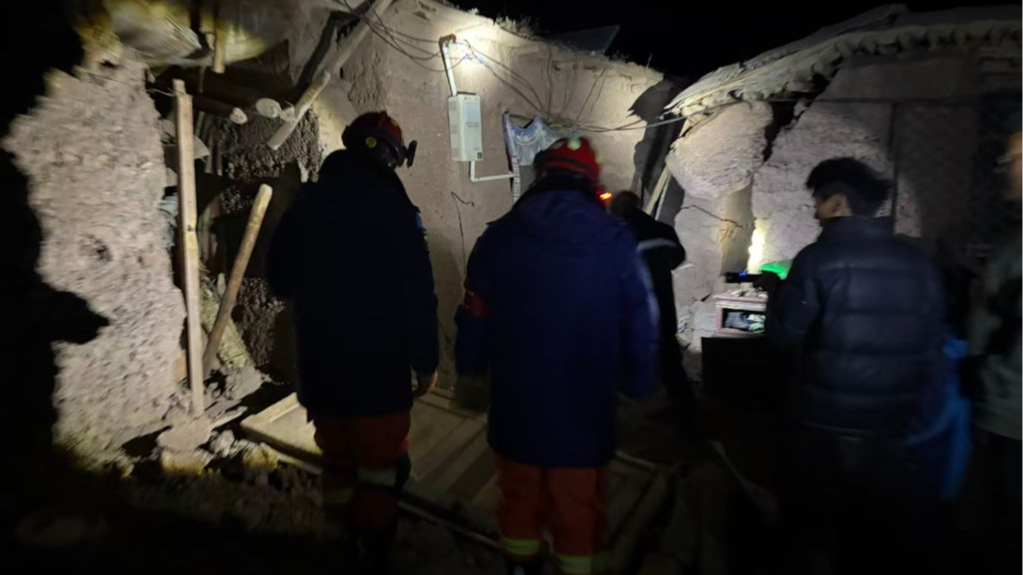
A powerful magnitude-7.0 earthquake struck Baqen County in Nagqu City, southwest China’s Xizang Autonomous Region, at 10:33 p.m. Beijing time on Thursday, October 22, killing 16 people and injuring 46 others, according to the local emergency management authorities. As of the latest update on Friday morning, 11 of the injured were reported to be in serious condition, while 35 had sustained minor injuries.
The Next Major Earthquake Is Not a Question of If, but When. Is Africa Ready?
The earthquake caused the collapse or damage of 339 houses and affected 20 livestock sheds, with authorities continuing to assess the full extent of the destruction. The China Earthquake Administration activated a Level-II emergency response, while Xizang’s regional authorities initiated a Level-III earthquake disaster emergency response to coordinate rescue and relief operations.
Emergency services were deployed rapidly to the affected area. More than 300 police officers were dispatched to the epicenter, while the regional fire and rescue corps mobilized 347 personnel to support search, rescue and relief efforts. The Chinese People’s Liberation Army’s Xizang Military Command and the People’s Armed Police Force Xizang Contingent also activated their emergency plans, deploying more than 300 personnel and over 20 vehicles to the disaster zone overnight.
A unit of the PLA Western Theater Command Air Force deployed an unmanned aerial vehicle to survey the affected area and transmit real-time footage to its base, supporting the assessment of damage and the coordination of emergency operations.
The regional fire and rescue corps dispatched 82 vehicles carrying more than 4,200 pieces of equipment and over 9,400 items of support supplies. Additional rescue teams from Lhasa and Shannan were placed on standby to reinforce operations if required.
Efforts also focused on providing shelter and essential supplies to residents affected by the earthquake. Emergency assistance coordinated by authorities at central, regional, municipal and county levels began arriving in the early hours of Friday. The supplies included 1,000 prefabricated housing units, 3,239 tents, 2,821 folding beds, 4,280 quilts, 200 stoves, 100 mattresses and 2,000 sets of winter clothing, alongside generators, lighting equipment and other essential materials.
Electricity restoration and infrastructure safety checks were also prioritized. State Grid Xizang Electric Power Company deployed 23 personnel, six vehicles, 49 sets of lighting equipment and two mobile low-voltage power generation units to support emergency operations and inspect electricity infrastructure.
Meanwhile, transportation authorities initiated overnight inspections of roads, bridges, tunnels, highway structures and unstable rocks on slopes to identify potential hazards and maintain safe access to affected communities.
Rescue operations remain underway as authorities continue to evaluate the damage, assist injured residents and deliver emergency support. The final impact of the earthquake remains uncertain, with further assessments expected as rescue teams reach additional affected locations.

The disaster once again highlights the importance of rapid emergency response, resilient infrastructure and coordinated disaster preparedness in earthquake-prone regions. For communities facing extreme seismic events, timely rescue operations and access to temporary shelter, medical care and essential supplies are critical to protecting lives and supporting recovery.
Source: CGTN, drawing on information from local emergency management authorities and regional rescue agencies.