
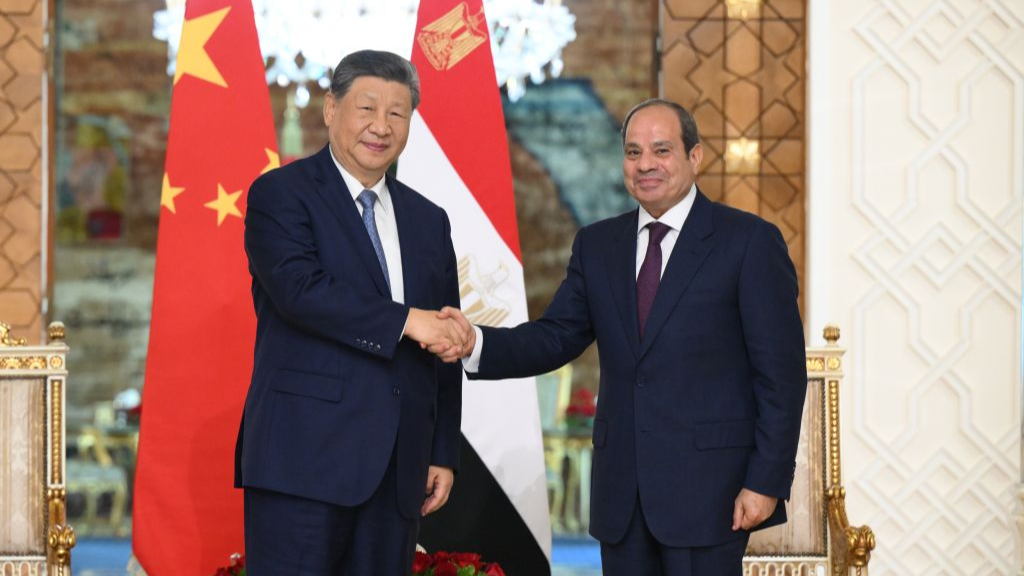
Chinese President Xi Jinping and Egyptian President Abdel Fattah El-Sisi held talks in Cairo as China and Egypt marked 70 years of diplomatic relations, highlighting the growing strategic importance of their partnership across Africa, the Arab world and the wider Global South.
Egypt established diplomatic relations with the People’s Republic of China in 1956, becoming the first Arab and African country to do so. Over the past seven decades, the relationship has expanded from diplomatic ties into a comprehensive strategic partnership covering economic development, infrastructure, trade, technology, energy and cultural cooperation.
Faster Customs Clearance Speeds African Exports to China
The latest engagement comes as both countries seek to strengthen cooperation at a time of major changes in global trade, investment and international relations. Egypt’s geographical position at the intersection of Africa, the Middle East and the Mediterranean gives it an important role in regional trade and connectivity, while China’s economic reach has made Beijing an important partner in infrastructure and development projects.
The two countries’ cooperation also extends beyond economic interests. China and Egypt have increasingly promoted exchanges involving education, culture, research and people-to-people relations, creating additional channels for closer ties between their societies.
Their partnership has also attracted attention in discussions about the role of developing countries in global governance. Both countries are part of the broader Global South, where governments have increasingly called for greater representation in international institutions and a stronger voice in decisions affecting developing economies.
Egypt’s position in Africa and the Arab world gives Cairo a significant diplomatic role, while China’s economic and diplomatic relationships across developing regions provide opportunities for cooperation on issues affecting emerging markets.
Potential areas for expanded cooperation include trade, infrastructure development, energy, digital technology, artificial intelligence, education and cultural preservation. Cooperation between universities, research institutions and cultural organisations could further strengthen institutional ties between the two countries.
Cultural and civilizational cooperation is also an important element of the relationship. China and Egypt are home to two of the world’s oldest civilisations, and exchanges involving archaeology, museums, universities, arts and heritage preservation provide opportunities to build stronger connections beyond government-to-government relations.
The two countries can also serve as a bridge for wider cooperation between Africa, Asia and the Middle East. Areas such as climate change, digital transformation, education, technological development and sustainable economic growth are increasingly becoming common priorities for developing countries.
Economic cooperation remains central to the relationship. Infrastructure, manufacturing, trade and investment are expected to continue playing an important role as Egypt works to strengthen its position as a regional economic and logistics hub and China expands commercial partnerships across Africa.
The growing relationship also comes as African countries seek greater participation in global value chains and more opportunities to attract investment, develop infrastructure and expand trade. Egypt’s links with both China and the wider African continent position it as an important channel for such cooperation.

People-to-people exchanges are expected to remain another important component of the partnership. Educational programmes, tourism, language learning, academic cooperation and cultural exchanges can contribute to deeper understanding between Chinese and Egyptian communities.
After seven decades of diplomatic relations, China and Egypt are positioning their partnership around both longstanding ties and new areas of cooperation. The relationship’s future is expected to increasingly focus on economic development, technological cooperation, regional connectivity and the role of developing countries in the international system.