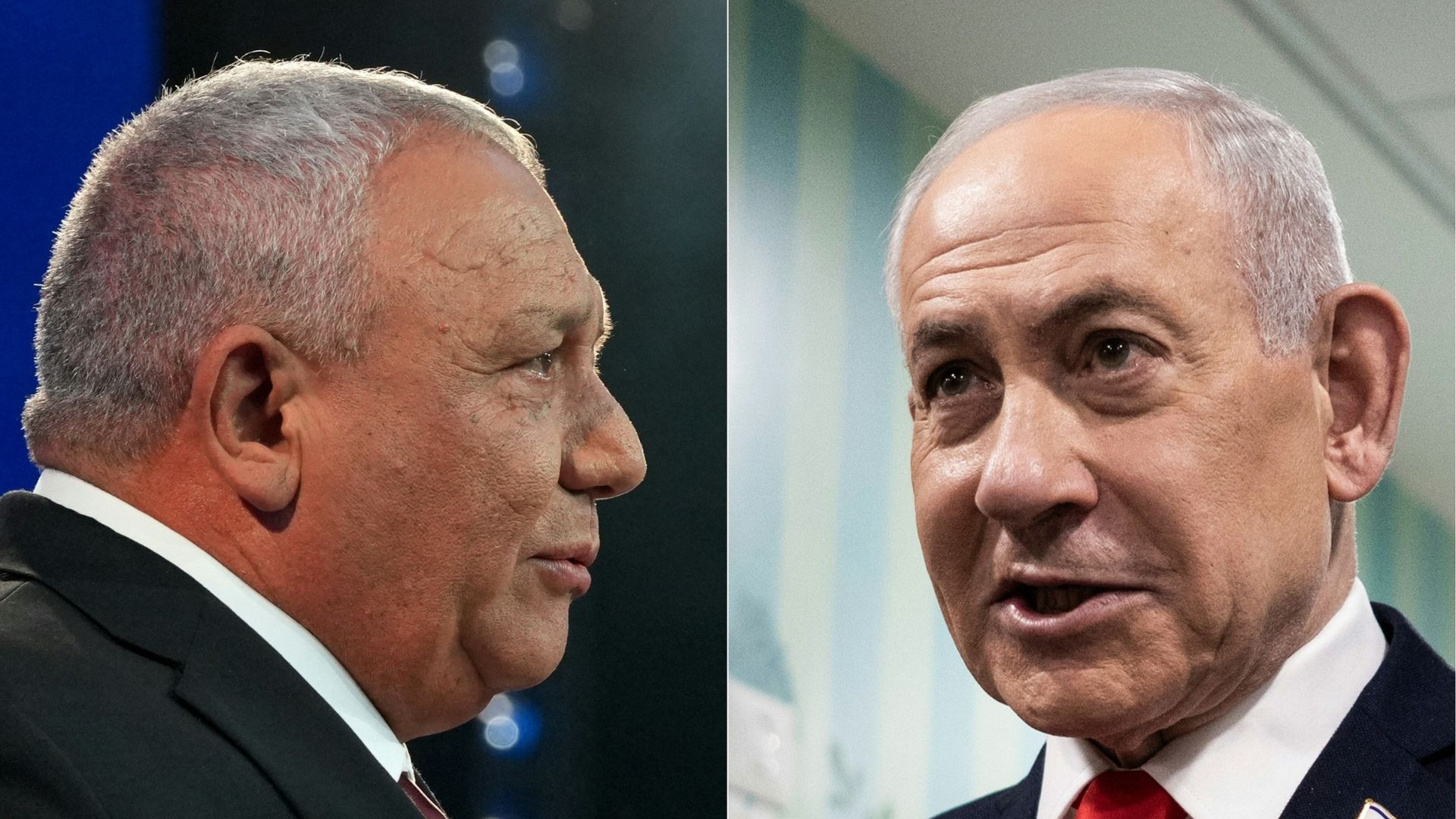
Israel’s opposition leaders have pledged to move swiftly to remove Prime Minister Benjamin Netanyahu from power and establish a new government, following an inconclusive parliamentary election that has left the country’s political future uncertain. However, despite their shared objective, divisions over the composition of a potential coalition are emerging as a major obstacle.
The opposition bloc, led by former military chief Gadi Eisenkot, held its first strategic meeting on Tuesday since the election results left neither political camp with enough seats to secure a parliamentary majority. The meeting brought together the leaders of five opposition parties at a hotel in Herzliya, north of Tel Aviv, where they discussed the next steps towards forming a government.
In a joint statement, the opposition leaders reaffirmed their commitment to establishing a new administration as quickly as possible, stressing that Israel should avoid another election. They also endorsed four principles previously outlined by Eisenkot, including the requirement that parties participating in the government recognise Israel as a Jewish state and condemn Hamas as a terrorist organisation.
The conditions, however, have raised questions about whether Arab-majority political parties could participate in the proposed coalition, despite their potential importance in securing a parliamentary majority.
The election produced a fragmented political landscape. Eisenkot’s opposition alliance secured 48 seats in the 120-member Knesset, while Netanyahu’s political camp obtained 53 seats, including 27 for his Likud party. Arab-majority parties won 19 seats, making their parliamentary support potentially decisive in determining which political bloc can form the next government.
The figures illustrate the central challenge facing the opposition: although it has united around the objective of ending Netanyahu’s premiership, it does not yet have a clear agreement on how to assemble the numbers required to govern.
Reports in Israeli media suggest that some opposition leaders are considering cooperation with ultra-Orthodox Jewish parties, traditionally aligned with Netanyahu, rather than relying on Arab political groups. Such an arrangement could offer an alternative route to a parliamentary majority, although negotiations would involve significant political compromises.
The question of cooperation with Arab-Israeli parties has exposed ideological differences within Eisenkot’s alliance. While some opposition figures consider their participation necessary, others remain firmly opposed to including them in a governing coalition.
Yousef Jabareen, head of the largest Arab-majority party in the next parliament, has urged the opposition to recognise the political reality created by the election results and work with Arab representatives to remove Netanyahu. Arab citizens account for approximately 20% of Israel’s population and are represented in parliament through parties that have increasingly become relevant to coalition negotiations.
Among the opposition leaders, Yair Golan, head of the left-wing Democrats party, has been the most explicit in supporting cooperation with Arab political groups. He has described their exclusion from government as discriminatory and argued that the Arab minority should have a meaningful role in the country’s political future.
Before the opposition meeting, Golan held discussions with Arab-Israeli leaders and highlighted issues affecting their communities, particularly high levels of crime. He pledged that his party would work towards improving security, expanding opportunities and promoting greater equality and prosperity for Arab citizens.
However, this position is not shared across the opposition alliance. Avigdor Liberman, a right-wing politician within Eisenkot’s bloc, has strongly rejected the possibility of forming a government with Arab parties, even as he supports efforts to avoid another election. His position reflects the ideological distance between the different political forces currently united against Netanyahu.
Former Prime Minister Naftali Bennett, whose party finished third in the election, has also called for urgent action. Although the opposition leaders differ on several political questions, they have all indicated their willingness to support Eisenkot in his attempt to form the next government.
Netanyahu, meanwhile, continues to argue that his Likud party deserves to lead the country despite the setbacks suffered by his broader political camp. On Monday, he called for a broad national unity government under his leadership, while continuing to reject cooperation with Arab-majority parliamentary lists.
During the election campaign, Netanyahu questioned the reliability of Arab parties and raised concerns about their positions on Palestinian statehood. He has accused them of supporting terrorism and denying the existence of Israel as a Jewish state. Arab political leaders, for their part, have unanimously condemned the Hamas-led attacks of 7 October 2023, although they have not all adopted the same language in describing the Palestinian Islamist movement.
The disagreement reflects wider tensions surrounding the relationship between Israel’s Jewish majority and its Arab minority. While the Arab-majority parties secured a significant parliamentary presence, their participation in a governing coalition remains politically controversial among sections of the Israeli electorate, particularly on the right.
The debate has also been shaped by the aftermath of the 7 October 2023 attacks and the subsequent war. Netanyahu’s opponents have criticised his leadership over the failure to prevent the attacks, the government’s handling of national security and the corruption charges against him. Opposition leaders have ruled out joining a unity government under his leadership, arguing that his continued premiership would undermine the possibility of political renewal.
The divisions were further illustrated by the intervention of Merav Svirsky, whose parents were killed by Hamas fighters during the 7 October attacks and whose brother was kidnapped and later killed. Presenting a petition to opposition leaders, she urged Eisenkot not to enter into a coalition with Netanyahu, arguing that any political cooperation with members of the current government would legitimise the abandonment experienced by victims and their families.
For Eisenkot, the immediate challenge is therefore not simply defeating Netanyahu politically, but building a coalition capable of surviving the competing ideological demands of its potential partners. The opposition must decide whether to pursue an alliance with Arab-majority parties, seek support from ultra-Orthodox groups or find another parliamentary arrangement that can deliver the required majority.
The coming negotiations will test the durability of an alliance whose members share a common objective but hold different positions on some of Israel’s most sensitive political and national questions. With another election something the opposition says it wants to avoid, the ability of its leaders to compromise could determine whether Netanyahu’s political era comes to an end or whether Israel remains locked in another period of uncertainty.