
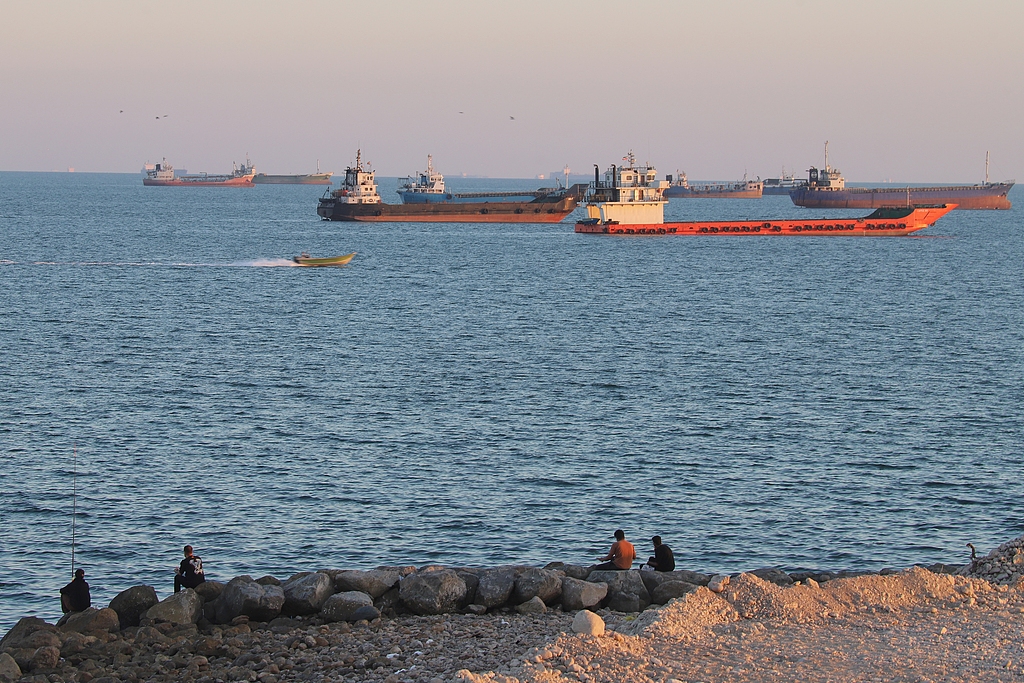
Tensions across the Middle East intensified on Sunday, November 23, after Iran reported shooting down another US military drone near the Strait of Hormuz, while two oil tankers reportedly caught fire after striking mines in the strategic waterway.The developments come amid renewed uncertainty over diplomatic efforts between Washington and Tehran, raising concerns about the security of regional shipping routes and the possibility of a broader military confrontation.
ENGIE reaches financial close on 900 MW wind farm project in Egypt
Iran’s Islamic Revolutionary Guard Corps (IRGC) said its air defence systems intercepted a US MQ-1 drone east of the Strait of Hormuz. According to the force, it was the fourth American drone brought down by Iranian air defences within a 24-hour period.
Iran’s navy separately reported that two oil tankers had caught fire after entering a restricted area in the eastern Strait of Hormuz. The IRGC Navy claimed the vessels ignored warnings, followed unauthorised routes and struck mines north of Qeshm Island, forcing them to stop sailing.The Iranian military said it maintained full control and surveillance of the strait, warning vessels to follow its instructions. The claims could not be independently verified from the information provided.
The confrontation has also extended to Bahrain, where the Interior Ministry said Iranian attacks carried out on Saturday injured one Bahraini citizen and one Pakistani national.
Bahraini authorities had earlier reported a fire at a civilian industrial facility following an Iranian attack. The country’s Defence Force also said its air defence systems intercepted several incoming attacks, with debris falling as a result.The IRGC claimed its aerospace force had targeted air-defence radars at two US military bases in Bahrain, located in Riffa and Awali, using missiles and drones.
The US Embassy in Bahrain issued a security alert on Sunday, warning that threats from Iran and Yemen’s Houthi forces against American government personnel and facilities in the region had increased. The alert also referred to reported attacks on US facilities in Kuwait and Bahrain, as well as Houthi attacks affecting civilian airports and critical infrastructure in Saudi Arabia.
Wang Jin, a professor at Northwest University’s School of Regional and Country Studies, said the attacks reflected Iran’s determination to resist pressure from Washington. He described strikes against US-linked targets in Bahrain as a way for Tehran to demonstrate its resolve.
Netanyahu reportedly weighs independent military action
Diplomatic efforts to ease the US-Iran confrontation remain uncertain, with no clear indication of when negotiations might resume or whether Washington could launch another major military operation against Iran.
Turkish Foreign Minister Hakan Fidan warned on Saturday that the prolonged conflict was imposing an increasingly heavy economic burden on countries and could have highly destructive consequences.
Fidan said an agreement between the United States and Iran was essential to restoring navigation through the Strait of Hormuz and easing pressure on the global financial system. He added that Türkiye was continuing to facilitate diplomatic contacts, despite difficulties in the negotiations.
Against this backdrop, Israeli Prime Minister Benjamin Netanyahu is reportedly considering a unilateral military strike against Iran without prior approval from Washington, according to Israeli media reports published on Sunday.Israeli sources cited in the reports said the country was examining several military options while awaiting a decision from US President Donald Trump.
However, Israel’s military intelligence directorate reportedly warned during a recent closed-door meeting that an independent attack could trigger simultaneous confrontations on several fronts, potentially involving Hezbollah in Lebanon and escalating tensions in Syria and the Gaza Strip.Avigdor Lieberman, leader of the Yisrael Beiteinu party, also cautioned against such a move. In a weekend interview, he argued that an attack without US approval or support would be politically motivated, strategically illogical and damaging to relations between Israel and the United States.

With military activity increasing around the Gulf and diplomatic efforts facing significant obstacles, the Strait of Hormuz remains a critical flashpoint. Any prolonged disruption to shipping through the waterway could have consequences for global energy supplies, trade and financial markets.