US Vice President JD Vance has attributed the Republican Party’s defeat in the 2026 midterm elections largely to the ongoing conflict with Iran, triggering a new political debate within the Trump administration over the consequences of the military campaign and Washington’s future approach toward Tehran.
In a statement published on Wednesday on social media platform X, Vance argued that the war had alienated voters who previously supported Republicans, suggesting that the conflict had become a decisive factor in the party’s electoral setback.
“The reason we lost is the war,” Vance wrote, adding that those who considered the military campaign worthwhile would have to justify whether its consequences were worth losing control of the Senate for the next six years.
His remarks represent a significant acknowledgment of the domestic political costs of the conflict, particularly as rising fuel prices and economic pressures have become increasingly important concerns for American voters.
US President Donald Trump appeared to partially agree with his vice president’s assessment, acknowledging that the war had contributed to higher gasoline prices. However, he defended his decision to confront Iran, insisting that military action remained necessary to prevent the country from developing nuclear weapons.
Trump told reporters that Vance’s position was not unexpected and that he had no objection to his public comments. Despite recognizing the economic consequences of the conflict, the president maintained that he would make the same decision again if faced with similar circumstances.
The exchange highlights the growing tension between the political and strategic considerations surrounding Washington’s Iran policy. While Vance has drawn attention to the electoral consequences of the war, Trump continues to prioritize what his administration considers a long-term national security objective.
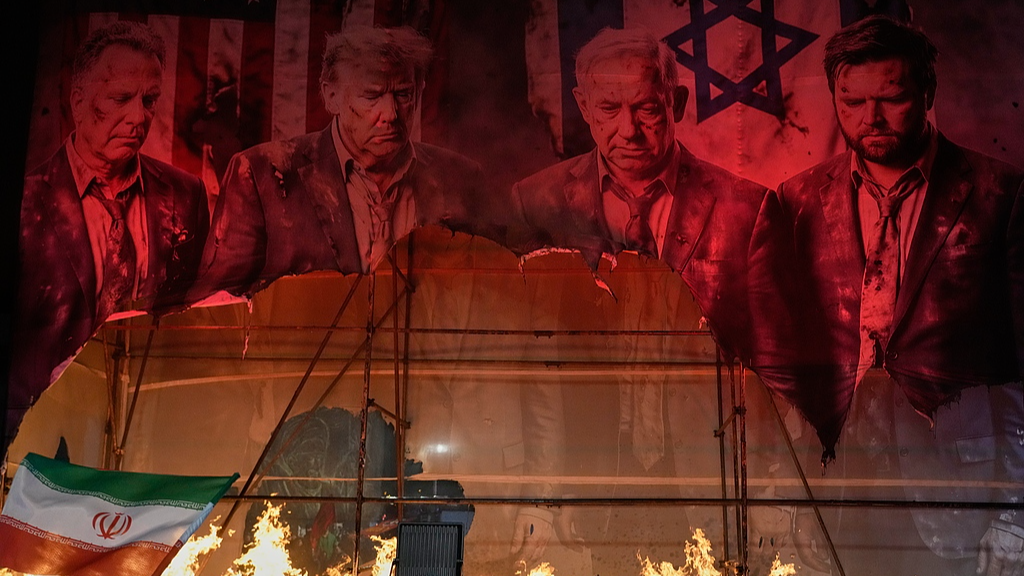
The developments have also attracted attention in Tehran, where the Republican election setback was met with symbolic demonstrations against the United States and Israel. On November 4, supporters of the Iranian government burned a large banner depicting Trump, Vance, Israeli Prime Minister Benjamin Netanyahu and US special envoy Steve Witkoff during an organized protest at Islamic Revolution Square.
Iranian Parliament Speaker Mohammad Bagher Ghalibaf, who leads Tehran’s negotiating team with Washington, also responded directly to Vance’s criticism. In a message on X, he accused the United States of behaving like a losing gambler unable to walk away from the table, arguing that Washington was preparing for another phase of confrontation rather than reconsidering its strategy.
Ghalibaf’s response reflects Tehran’s effort to portray the American administration as politically weakened by a conflict that has generated economic pressures and divisions within its own political establishment.
The disagreement comes at a particularly sensitive moment for US foreign policy. The Republican electoral defeat has strengthened Democratic influence in Congress, potentially increasing scrutiny of the administration’s military decisions and making future policy initiatives more difficult.
Beyond the immediate political consequences, the debate raises broader questions about the sustainability of Washington’s approach toward Iran. Rising energy costs, domestic political divisions and the risk of further military escalation could complicate the administration’s ability to maintain its current strategy.
As Washington and Tehran continue to exchange increasingly critical messages, the central challenge remains whether the United States will pursue further military action, reconsider its approach through diplomacy or seek a way to reduce its involvement in the conflict.