
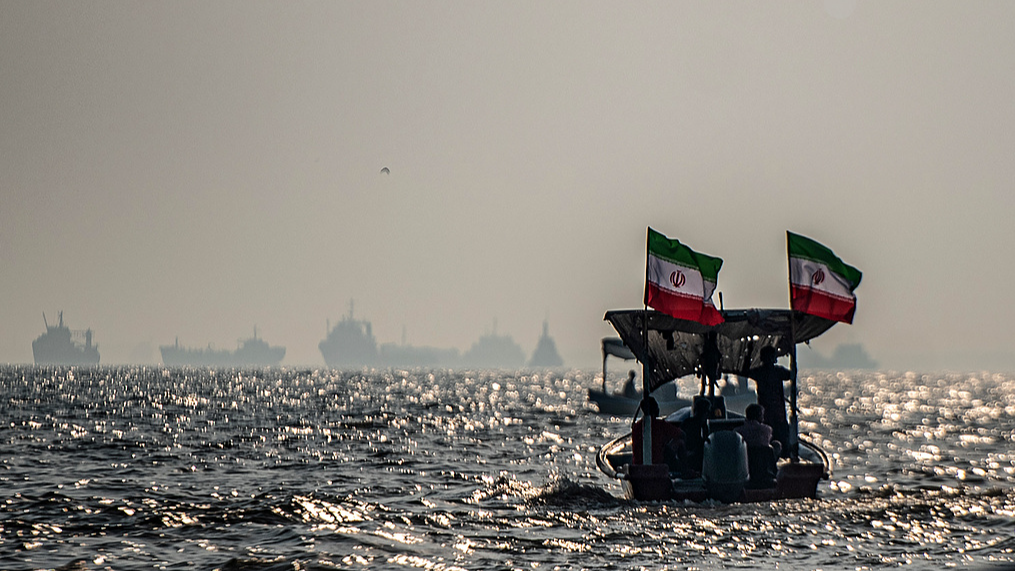
US President Donald Trump says the United States expects to hold further talks with Iran this week, despite his rejection of Tehran’s latest proposal for a truce, leaving diplomatic efforts underway alongside continued military tensions across the Middle East.
Trump told US news outlet Axios on Sunday that he expected more talks with Iran during the week. Regional sources cited by Axios said another round of indirect negotiations could take place as early as Monday, although it remained uncertain whether Washington and Tehran could overcome their differences.
Gabon Opens First Tier III Data Centre to Advance Digital Future
The latest diplomatic efforts follow indirect discussions held in New York last Tuesday on the sidelines of the United Nations General Assembly. US envoys Steve Witkoff and Jared Kushner met indirectly with Iranian Foreign Minister Seyed Abbas Araghchi as both sides explored possible avenues toward de-escalation.
According to Axios, Iran proposed reopening the Strait of Hormuz and restarting nuclear negotiations within a week, provided that the United States lifted its naval blockade, eased restrictions on Iranian oil exports and restored a regional ceasefire. Trump rejected the proposal on Saturday.
Iran, however, has continued to signal that diplomacy remains possible. Araghchi told NBC on Sunday that Tehran was still seeking a diplomatic outcome and was awaiting an official response through mediators.
“Although we heard from President Trump that he’s rejecting this deal, we are still waiting for an official response through the mediators,” Araghchi said.
The dispute over the Strait of Hormuz remains a central point in the negotiations. Iran has maintained its conditions for reopening the strategic waterway, while the United States has continued to consider its military options. Asked whether he was considering renewed strikes against Iran, Trump said he was “always thinking about it.”
Tensions also remain high at sea. Iran’s Islamic Revolutionary Guard Corps said Sunday that it had seized an American submersible drone in the Strait of Hormuz, alleging that the underwater vehicle was being used for espionage. The IRGC said the vehicle was being examined by its specialists for possible data recovery.
The developments come as fighting continues in Yemen, adding another layer to the broader regional crisis. Yemen’s Houthi movement said Saudi aircraft carried out 26 airstrikes across five provinces over a 24-hour period. The group said the strikes caused casualties but did not provide a detailed toll, while its broader claims could not be independently verified.
Yemeni government forces, meanwhile, said they had carried out hundreds of attacks against Houthi positions and military infrastructure over the previous three days. Government spokesperson Majid al-Nuzaili said the operations targeted vehicles, missile launchers, weapons depots and other military equipment, and claimed that 2,316 Houthi fighters had been killed or wounded. The claims had not received an immediate response from the Houthis.

With Washington and Tehran still publicly divided over the conditions for de-escalation, the prospect of renewed talks offers a diplomatic channel even as military activity continues across the region. The coming days are expected to show whether indirect negotiations can produce a framework for reopening the Strait of Hormuz, restarting nuclear discussions and reducing hostilities in Yemen.