
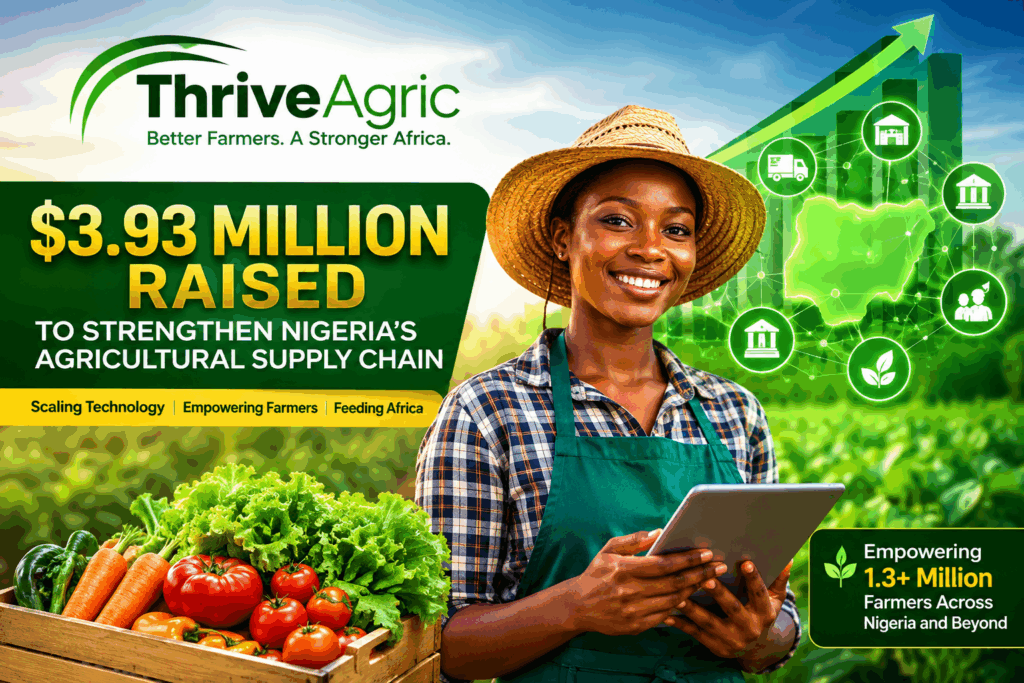
Nigerian agritech startup ThriveAgric has raised NGN 5.3 billion ($3.93 million) through the first series of a commercial paper programme that could ultimately reach NGN 50 billion ($37.09 million).
Founded in 2017 by Uka Eje and Ayodeji Arikawe and headquartered in Lagos, Nigeria, ThriveAgric uses technology and financial services to connect smallholder farmers with financing, agricultural inputs and markets.
Namibia Set to Host Major African Energy Summit in Windhoek
The oversubscribed Series 1 exceeded its initial NGN 5 billion target and represents ThriveAgric’s first entry into Nigeria’s debt capital markets.
The new financing will provide working capital for the company to purchase and aggregate agricultural produce from farmers before supplying it to food processors and fast-moving consumer goods companies. The funds are therefore focused on strengthening the agricultural supply chain rather than directly financing crop production.
ThriveAgric operates across Nigeria, Ghana, Kenya, Uganda and Rwanda, although Nigeria remains its largest market, accounting for approximately 90% of its business.
The company currently serves more than 1.3 million Nigerian farmers, giving it a significant position within Nigeria’s growing agritech and agricultural value-chain ecosystem.
The commercial paper programme could provide ThriveAgric with access to substantially more capital as it expands its operations and increases the volume of agricultural produce moving from smallholder farmers to commercial buyers. The fundraising comes as African agritech companies increasingly seek alternative financing mechanisms to support agricultural aggregation, logistics, market access and food supply chains.

For ThriveAgric, the NGN 5.3 billion raised in the first series provides additional financial capacity to deepen its relationships with farmers and buyers while supporting the movement of agricultural products into Nigeria’s formal food-processing and consumer-goods markets.