In Africa today, a quiet revolution is unfolding—not in government halls or corporate boardrooms, but in homes, on buses, through smartphones, and in unexpected conversations. It’s the rise of lifelong learning, and it may be the most powerful force the continent has to reimagine its future.
Read also: The Invention of Time: How Humanity Created the Clock That Rules the World
Somewhere along the way, society began to equate education with school—and school with an ending. A diploma. A graduation. A full stop. But across the African continent, a different and much more dynamic reality is emerging. In Kenya, women in rural communities are mastering digital skills through solar-powered tablets. In Nigeria, young entrepreneurs are turning to YouTube to understand blockchain and cryptocurrency. In Senegal, elders are reviving ancestral ecological wisdom to adapt to a changing climate. This is not formal schooling. This is real, continuous, and adaptive learning. And it is gaining momentum.
Read also: Nigerian Okra Soup
The 21st century is unforgiving. It no longer rewards degrees as much as it rewards agility, curiosity, and the ability to adapt. Africa’s youth are often painted with one of two tired brushes: either as a challenge to solve or a time bomb waiting to explode. Both views ignore a crucial reality—Africa’s young people are relentless learners. Not always through formal systems. Not always in English or French. But they are watching, decoding, building, failing, and trying again.
If this movement is recognized, supported, and scaled, Africa won’t just catch up with the rest of the world—it could lead it.
The truth is simple. Many school systems on the continent were designed for another era, and they are not evolving fast enough. But the new generation of African learners is not waiting. They are forming WhatsApp study groups. They are organizing local hackathons. They are teaching themselves to code, to design, to trade crypto, to farm smarter, and to tell stories that inspire and inform.
This grassroots, decentralized model of learning is messy. It is inconsistent. And it is absolutely revolutionary.
View also:
In an age where algorithms determine what we see, and artificial intelligence decides which jobs survive, becoming a lifelong learner is no longer a luxury—it is power. The power to reinvent careers. The power to reshape communities. The power to shift from being a “development case” to becoming a global innovator.
Africa does not need saviors. It needs servers of knowledge. And the good news? They are already here. What they need is not permission—but platforms.
Read also: Maternal Languages: The pillars of identity, at risk
The challenge ahead is cultural. Lifelong learning must become as embedded in African societies as storytelling, shared meals, or music. A learning culture where reading is seen as status. Where curiosity is celebrated. Where mentorship is normalized. Where making mistakes is part of mastery.
Because that is how powerful nations rise—not only with minerals or money, but with minds that never stop growing.
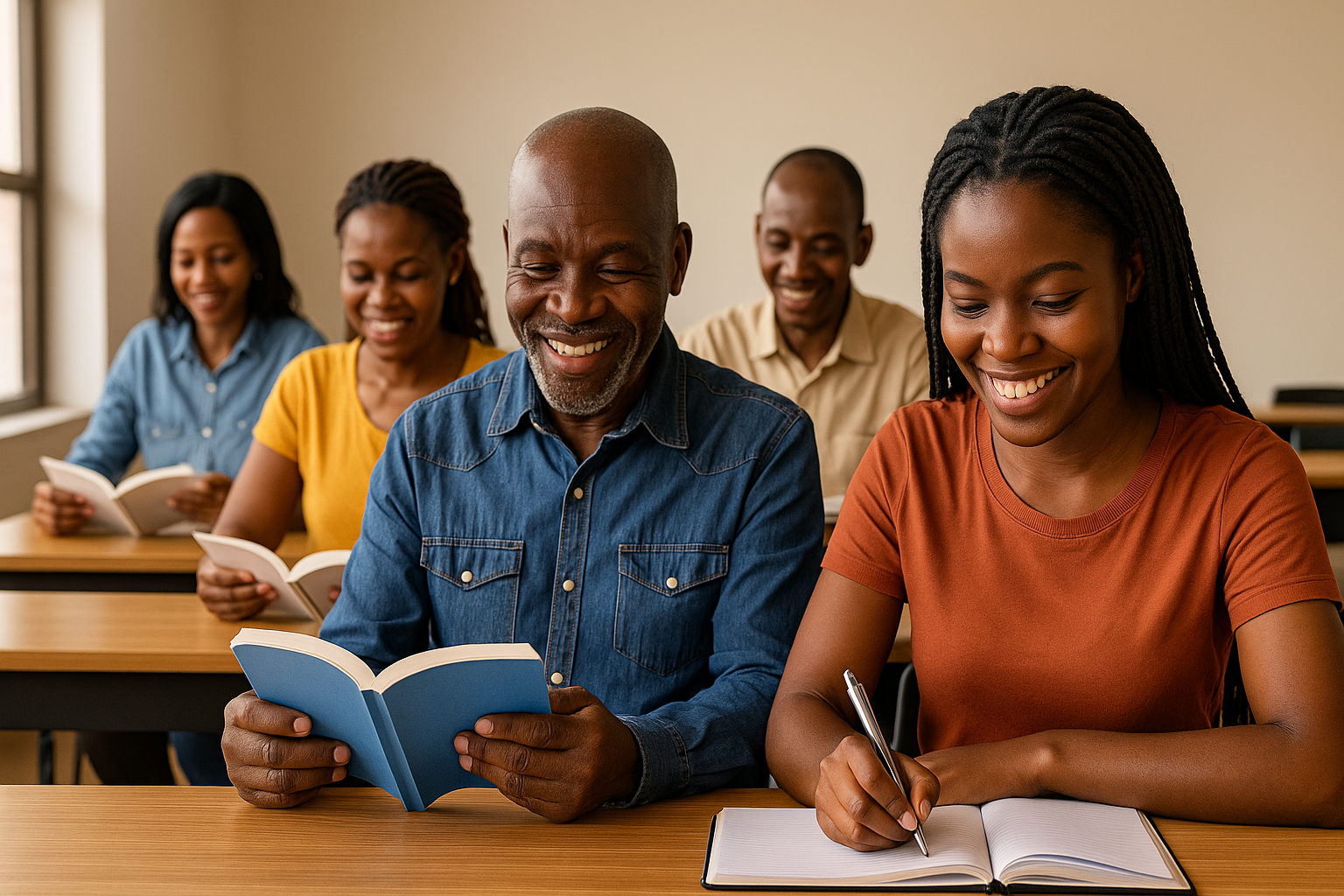
Africa is not waiting for a classroom. It has become one.
And the students? They’re everywhere. In villages. In cities. In marketplaces. In motion.
The future belongs to the learners—and Africa is wide awake.