
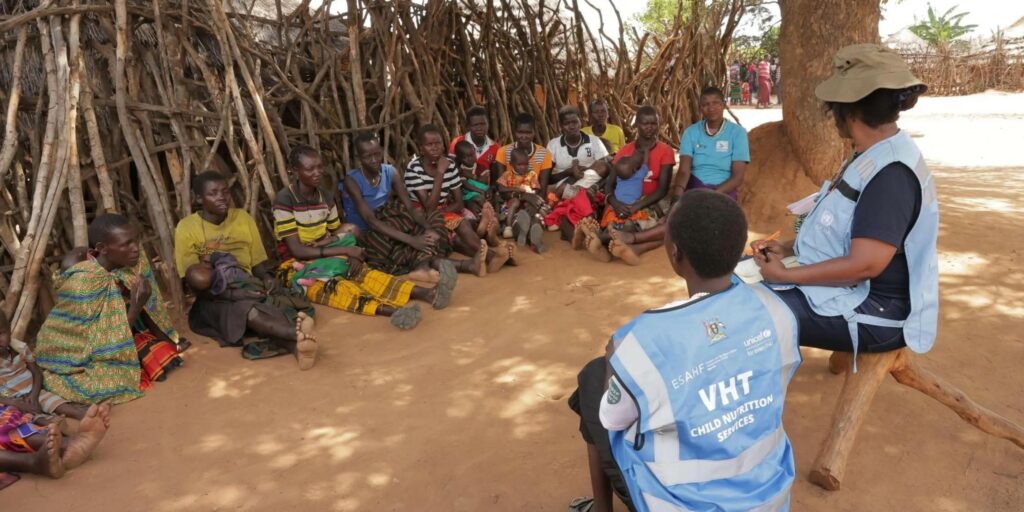
Women struggling to feed their families in Uganda’s Karamoja Region are turning to dangerous mountain quarries to search for gold, but health workers are now climbing the same mountains to bring essential services closer to them.
Food insecurity has been worsening across several districts in Karamoja, driven by recurring climate shocks, the pressures of the lean season and increasing household debt. Years of repeated shocks have weakened livelihoods and left many families vulnerable to further food and health crises.
More than 40,000 people in the region are currently classified in Phase 4 of the Integrated Food Security Phase Classification system, meaning they face emergency levels of food insecurity. A further 432,000 people are in Phase 3 and experiencing significant food-related challenges.
For women working at quarries on Mount Moroto, the search for income can come with difficult choices. Some mothers bring their breastfeeding babies with them because they cannot afford to leave them behind.
In Moroto, where one in five children under five is acutely malnourished, reaching vulnerable families with timely healthcare remains a major challenge. An estimated 122,000 children under five across Karamoja require treatment for acute malnutrition.
India-Liberia Exchange Advances Women’s Leadership and Governance
Instead of waiting for families to make the difficult journey to health facilities, a nutrition outreach team from Kakingol Health Centre III climbed to the quarry in June 2026. With support from UNICEF and the Uganda Humanitarian Fund, managed by the United Nations Office for the Coordination of Humanitarian Affairs, the team worked alongside Village Health Team volunteers to provide services directly at the site.
During one morning of outreach, more than 60 children were screened and vaccinated, including the child of a mother working at the quarry.
Bringing healthcare directly to these communities is particularly important for mothers who cannot afford to lose a day’s income travelling to a health facility. By taking services closer to where people live and work, health workers are helping families access essential care while continuing to earn money for food and other basic needs.
The initiative forms part of wider humanitarian efforts across Uganda. Since April 2026, humanitarian partners have reached nearly 700,000 people in Karamoja and refugee-hosting districts with life-saving nutrition and health services.

Uganda’s experience in Karamoja highlights the difficult link between food insecurity, poverty, climate shocks and access to healthcare. For communities facing these pressures, bringing health services directly to vulnerable families is becoming an essential part of the humanitarian response.