
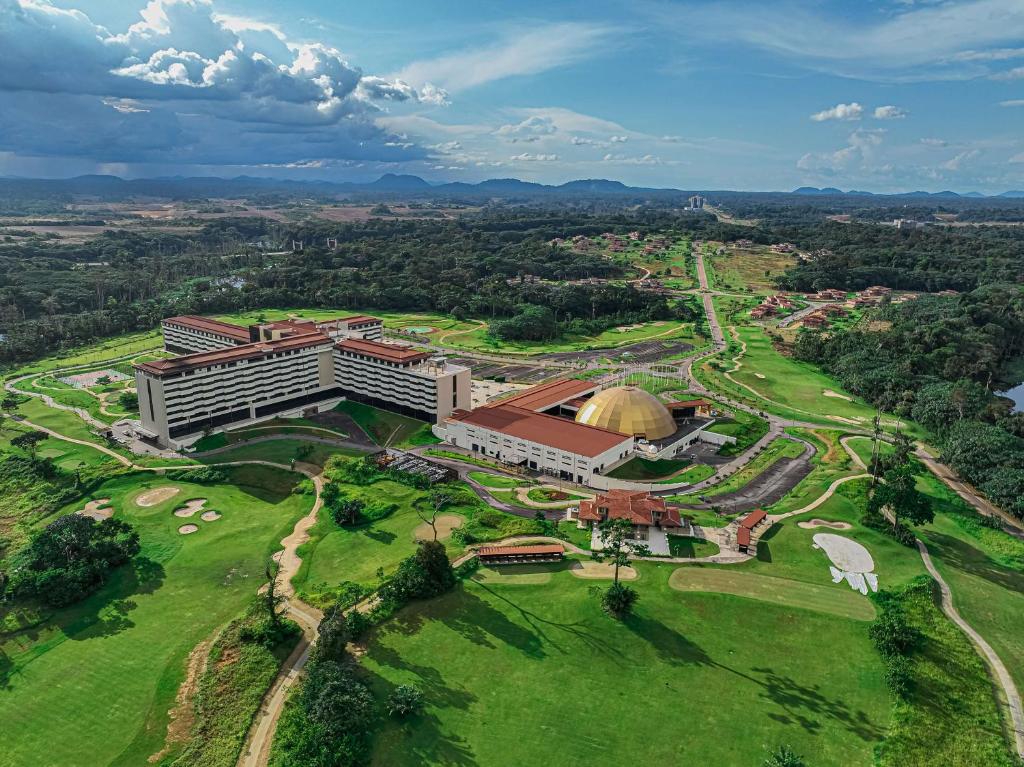
Equatorial Guinea has officially designated Ciudad de la Paz, located in the province of Djibloho, as the country’s new capital, marking a historic shift in its political and administrative geography. The announcement was made on Friday, January 2, 2026, by President Teodoro Obiang Nguema Mbasogo during a state ceremony held in Djibloho, attended by senior representatives of the executive, legislative and judicial branches of government. Among those present were the presidents of both chambers of Parliament and the head of the Supreme Court.
The decision formalises a process that had been taking shape for nearly two decades, following the creation of Djibloho as a strategic administrative region. Government officials say the move reflects Equatorial Guinea’s sovereign vision of territorial organisation and seeks to move beyond colonial-era administrative structures. In a national address, President Obiang said relocating the capital to the geographic heart of the country would strengthen political stability, improve administrative efficiency and promote more balanced development across regions. He described the decision as essential to bringing public administration closer to the population, particularly rural communities.
Africa’s Power Women Shine on Forbes 2025 List.
The Vice President, Teodoro Nguema Obiang Mangue, welcomed the announcement as a milestone, saying the new capital would help generate employment and fully utilise Ciudad de la Paz’s modern infrastructure, designed to host state institutions, public services and related economic activity.
The change was enacted through Decree-Law No. 1/2026, published in the Official State Gazette, granting Ciudad de la Paz constitutional status as the capital. The law provides for a transition period of up to one year for the relocation of the presidency, state powers, constitutional bodies and public institutions.
Malabo, which has served as the capital since independence 57 years ago, will remain an important political and economic centre. But officials say the new capital’s central location offers strategic advantages for national cohesion, security and long-term administrative reform. The move places Equatorial Guinea among a small group of African nations that have opted to establish purpose-built capitals as part of broader state-building and decentralisation strategies.