For years, Zambia’s agricultural ambitions were constrained by a quiet but decisive vulnerability: fertilizer. The country depended heavily on imports, leaving farmers exposed to volatile prices, supply delays, and limited access during crucial planting seasons. When global disruptions tightened supply chains and costs surged, the weakness became impossible to ignore. What followed was not a retreat, but a strategic reset.
Today, Zambia stands on the verge of fertilizer self-sufficiency, offering a case study in how African countries can convert structural fragility into long-term resilience through targeted investment, institutional reform, and local production.
Nigeria Advances 31 Places in Global AI Readiness Ranking by 2025
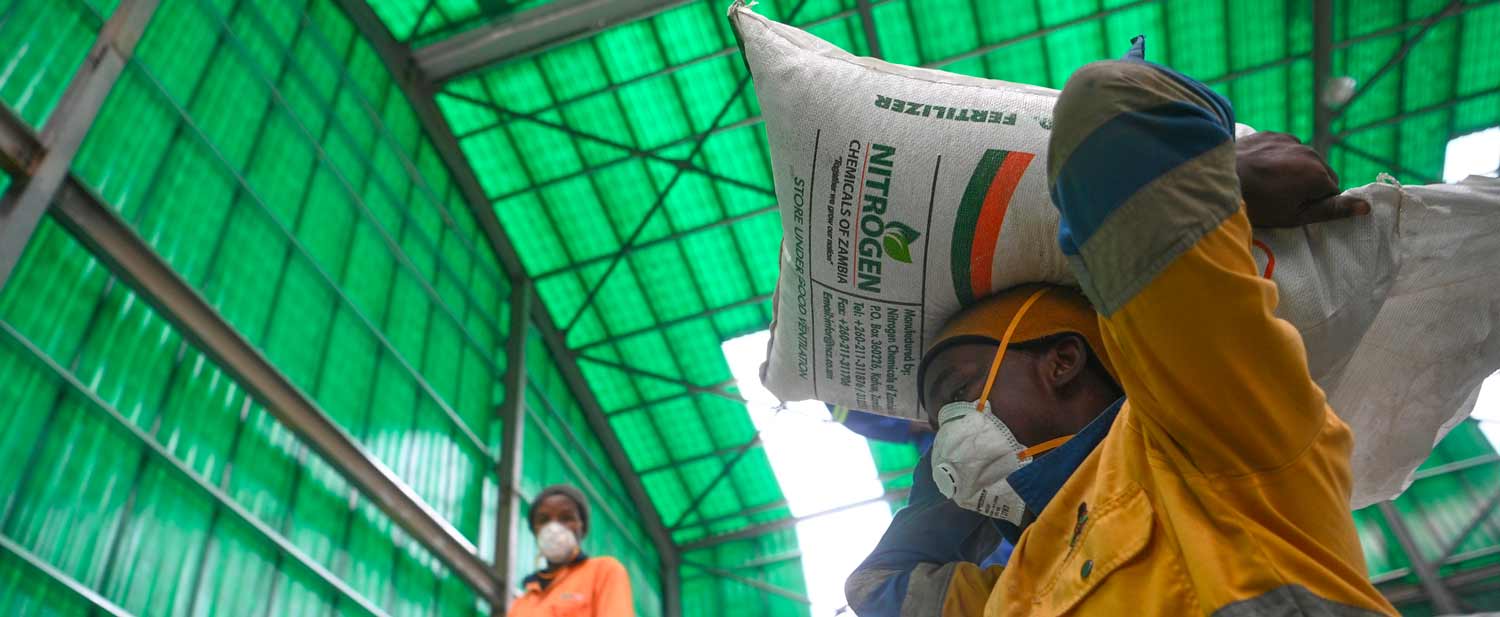
At the center of this transformation is Nitrogen Chemicals of Zambia, the state-owned fertilizer producer long viewed as a relic of another era. For decades, its aging infrastructure limited output to about 70,000 metric tonnes per year, far below national demand. The gap between what Zambia needed and what it could produce widened with every farming season, reinforcing dependence on external suppliers.
That trajectory shifted in 2022, when the African Development Bank Group, through the African Development Fund, approved financing under the Zambia Emergency Food Production Facility. Rather than focusing solely on short-term imports, the intervention prioritized domestic capacity. A relatively small grant, $1.25 million for raw materials, unlocked production at a newly built blending and granulating plant valued at $5.5 million, turning dormant infrastructure into an operational asset. “The timing was decisive,” said Chanda M. Mongo, Chief Executive Officer of Nitrogen Chemicals of Zambia. “This support allowed us to commission a modern facility that changes what is possible for farmers and for the country.”
The results have been swift and measurable. By 2025, national fertilizer production capacity reached 432,880 metric tonnes, a sixfold increase in just three years. With additional private-sector plants coming online, Zambia is expected to meet domestic demand by 2026, while fertilizer prices are projected to fall by as much as 40 percent.
Yet the strategy extended well beyond factory gates. Recognizing that fertilizer alone does not guarantee productivity, the program invested in the wider agricultural ecosystem. The Zambia Agriculture Research Institute received advanced soil-testing equipment, enabling precision analysis that tailors fertilizer blends to specific crops and soil conditions. More than 300 agricultural extension officers were trained and equipped with motorbikes and digital tools to reach farmers more efficiently and promote climate-smart practices.
“We now understand exactly what these soils need,” said Brian Gondwe, head of soil chemistry at the institute. “That knowledge translates directly into higher yields and lower waste.”
Access to finance proved equally critical. A pilot Sustainable Agriculture Finance Facility was launched with $5.6 million and later expanded by the government to $30 million. Through the program, over 18,000 smallholder farmers secured loans, while 1,700 agro-dealers were integrated into the supply chain, supporting more than 5,000 jobs. For farmers like Grace Nyirongo Phiri, the changes have been tangible. With financing, she installed drip irrigation, a borehole, and solar-powered pumps, cutting water use while increasing yields by 35 percent. “You control the water, and the crops respond,” she said. “It changes everything.”
The gains are now visible at the national level. Maize production has climbed to 3.7 million metric tonnes, exceeding domestic consumption and generating a surplus of 1.2 million metric tonnes. Zambia is no longer simply feeding itself; it is emerging as a regional supplier, strengthening food security beyond its borders.
For development economists, the lesson is clear. Strategic financing, when paired with local ownership and institutional capacity, can produce outsized results. Rather than relying on emergency imports, Zambia invested in production, skills, and systems, creating resilience that endures beyond any single shock. “This is more than an increase in capacity,” Mr. Mongo said. “It is about reach, impact, and dignity for farmers.”
As African governments confront rising populations, climate pressure, and uncertain global markets, Zambia’s experience offers a replicable model. Build locally. Invest in people. Align finance with production. The path from vulnerability to self-reliance, it suggests, is not only possible but already underway. Zambia’s fertilizer shift is no longer just a national story. It is a continental signal of what African-led solutions can achieve when urgency meets vision.