
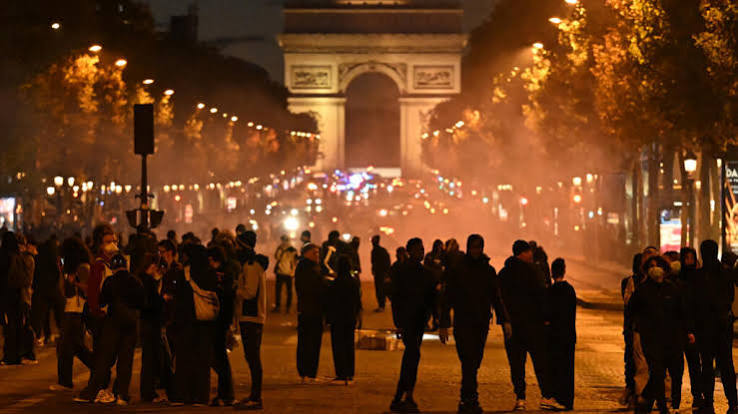
France is facing renewed social unrest as thousands of people take to the streets to protest the rising cost of living, deteriorating public services and worsening conditions in the education system. What began as a movement demanding better living conditions has been overshadowed in several cities by episodes of violence, arson, looting and clashes with security forces, reigniting debate over the boundaries between peaceful protest and criminal activity.
Traditional Medicine Meets AI as SCO Forum Opens New Global Health Dialogue
According to figures attributed to France’s Ministry of the Interior, approximately 550,000 people participated in demonstrations across the country, including around 110,000 in Paris. Organisers, including the General Confederation of Labour (CGT) and youth groups, put the estimated turnout at approximately 800,000.
The movement brought together secondary school and university students, trade unions, farmers, remnants of the Yellow Vests movement and other groups dissatisfied with the country’s economic and social conditions. Their main grievances include the rising cost of living, fuel prices, social inequality and what they consider insufficient investment in education and public services. The demonstrations follow several weeks of earlier student-led mobilisations.
However, the protests have highlighted a fundamental distinction between the right to demonstrate and criminal acts committed under the cover of social unrest. While many marches reportedly remained peaceful, serious incidents were recorded in cities including Paris, Marseille, Lyon, Lille and Limoges, where groups of violent demonstrators were accused of setting fires, damaging public buildings, attacking businesses and looting shops.
Among the reported incidents were fires affecting the historic town hall in Limoges and the tourist office in Lyon. The destruction has raised concerns about public safety, the protection of public infrastructure and the economic consequences for local businesses caught in the unrest.
Police responded with tear gas and water cannons to disperse violent groups. Approximately 400 arrests were also reported, most involving adults.
Prime Minister Sébastien Lecornu blamed what he described as the “far left” and criminal elements for the violence, insisting that the government would not be intimidated. The unrest adds pressure to an already sensitive political environment as France looks towards its next presidential election.
Beyond the participation figures and confrontations, the events raise a question that extends well beyond France: how can democratic societies address economic hardship and public frustration without allowing violence to undermine legitimate civic demands?
Rising living costs, difficulties accessing essential services and perceptions of inequality can fuel public anger. Nevertheless, looting, arson and attacks on public property do not resolve these problems and may ultimately harm the very communities already struggling with economic pressures.
The distinction is essential. Peaceful protest is a fundamental civic right, while destroying property, attacking buildings and stealing from businesses are actions that must be addressed under the law. The presence of violence does not automatically invalidate the demands of peaceful demonstrators, just as social discontent cannot justify criminal acts committed during a protest.
For France, the challenge is to address the economic and social causes of public frustration, maintain public safety and protect fundamental rights. The authorities’ ability to listen to legitimate grievances, deliver concrete responses and hold those responsible for violence accountable will be crucial in preventing further unrest and deepening social divisions.

As the situation develops, the events serve as a reminder that addressing the root causes of social discontent requires more than restoring public order. It also demands credible policies that respond to citizens’ concerns about affordability, education, employment and the quality of public services.