
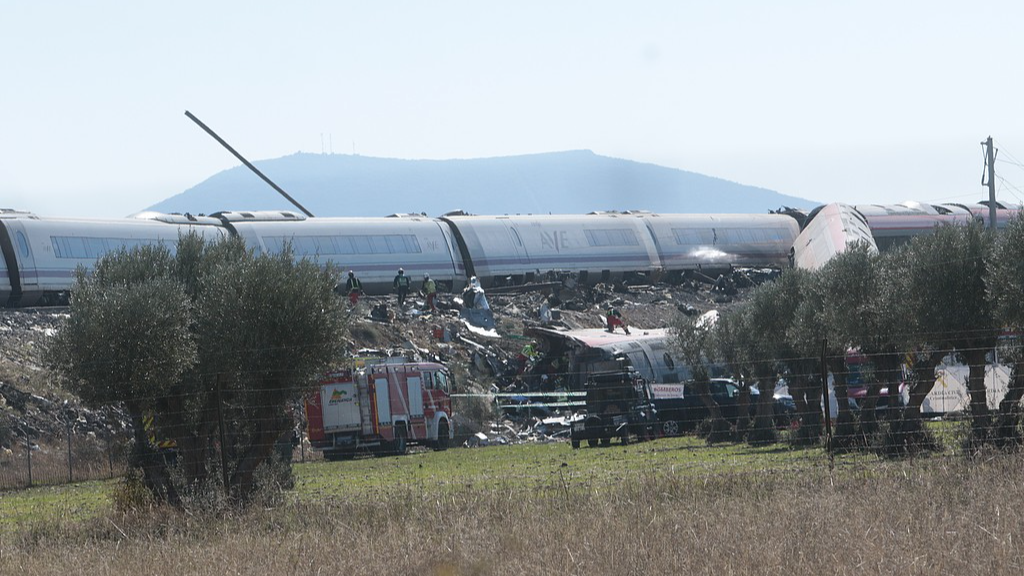
Spain’s high-speed railway network is facing renewed scrutiny following a reported deadly collision near Urda, in the central province of Toledo, raising questions about railway signaling, infrastructure maintenance and the effectiveness of automated safety systems.
According to information published by CGTN on October 29, the collision occurred on the Madrid–Seville high-speed railway line, just nine months after another fatal railway disaster near Adamuz, in the southern province of Córdoba. The latest incident reportedly involved two trains operated by Renfe and Iryo. Authorities in Castilla-La Mancha reported at least 68 fatalities and more than 180 injuries, although these figures require confirmation from official Spanish sources.
The reported circumstances have intensified concerns about how Spain’s railway system manages operational failures and prevents collisions when signaling or communication systems malfunction.
According to the account published by CGTN, a failure affecting the LZB train protection system led to disruptions across part of the railway line on Wednesday morning. The report states that a Renfe-operated AVE train was subsequently authorized to resume movement before colliding with a stationary Iryo train ahead.
Spanish Transport Minister Óscar Puente reportedly described the decision to authorize the train’s movement as inexplicable. Railway safety procedures generally require restrictive operating measures when train protection systems fail, including controls intended to ensure that drivers can stop before encountering an obstruction.
However, the precise sequence of events, the possible role of human error and the effectiveness of the safety systems involved remain matters for investigation. Establishing responsibility will require a detailed examination of signaling records, communications, operating procedures and infrastructure conditions.
The Spanish government reportedly pledged a comprehensive investigation and placed emergency response efforts, assistance to victims and support for affected families among its immediate priorities. A period of national mourning was also announced for October 29–31, according to the report.
The collision has prompted calls from opposition politicians and railway unions for greater transparency, accountability and an independent assessment of railway safety. Union representatives have also raised concerns about infrastructure maintenance, investment and the safeguards available to train drivers when automated systems are unavailable.
The latest reported disaster follows the January 18 accident near Adamuz, Córdoba, which CGTN says claimed 46 lives. Although investigations into both incidents remain separate, their proximity in time has intensified public debate about the reliability of Spain’s high-speed railway operations.
Experts cited in the original report have pointed to different possible issues in the two cases. The Adamuz accident was associated in preliminary commentary with potential infrastructure problems, while the Urda collision has raised questions about signaling and operational decisions. Neither explanation should be treated as a definitive finding before investigators establish the causes.
Spain has developed an extensive high-speed rail network that connects major cities and serves as an important component of the country’s transport infrastructure. The latest reported collision nevertheless highlights a broader challenge facing railway operators worldwide: ensuring that technological protections, infrastructure maintenance, staff training and operational procedures work together to prevent catastrophic failures.
Automated signaling and train protection systems are designed to reduce risks, but their effectiveness depends on reliable equipment, clearly defined procedures and appropriate responses when faults occur. Safety investigations must therefore examine not only the immediate cause of a collision but also whether organizational practices, maintenance arrangements or decision-making processes contributed to the incident.
For passengers, the consequences extend beyond the immediate loss of life and injuries. Repeated major accidents can undermine confidence in public transport, particularly when travelers question whether existing safety mechanisms are functioning as intended.
As Spain investigates the reported collision near Urda, the central questions will be what caused the trains to collide, whether established safety procedures were followed and what corrective measures are necessary to prevent another tragedy.

The findings will be critical not only for the victims and their families but also for the future management of Spain’s railway network. Until investigators establish the facts, the causes of the latest reported collision and the extent of any systemic failures remain unresolved.