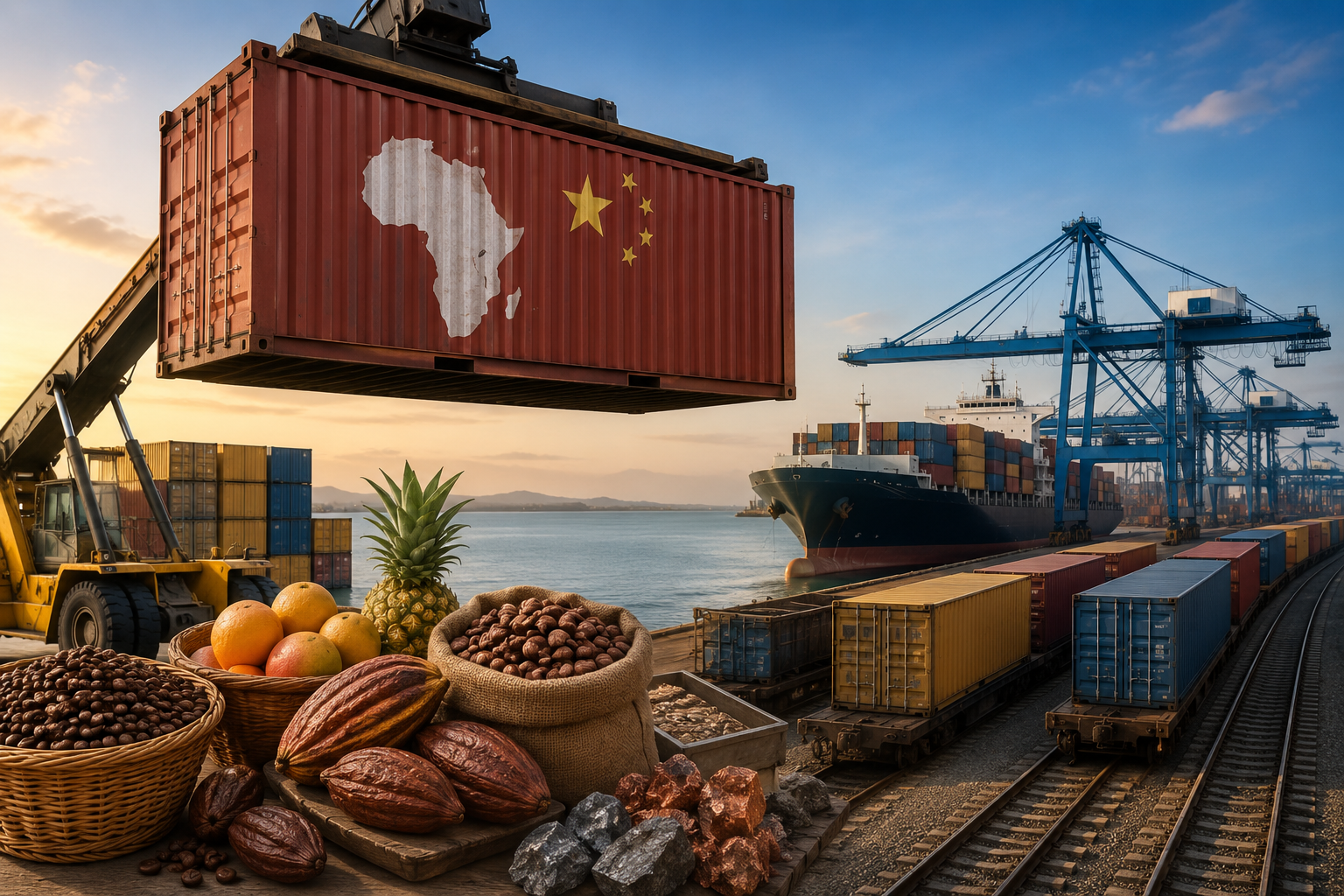
Trade between China and African nations is entering a new phase as Beijing expands tariff-free access for imports from 53 African countries and introduces faster customs clearance procedures aimed at accelerating the flow of goods into the Chinese market.
The measures are expected to strengthen commercial ties between China and Africa at a time when bilateral trade continues to grow rapidly. Trade volumes between China and African countries have already exceeded $348 billion, making China one of the continent’s largest trading partners.
China-Africa Summit Calls for Deeper Trade and Development Ties
Since May, dozens of shipments of fresh African products have arrived in Beijing through customs at Beijing Capital International Airport. Customs officials say the new procedures are designed to reduce delays for highly perishable imports while lowering operational costs for exporters.
Among the products benefiting from the accelerated system are live South African lobsters, which recently passed through customs inspection at the airport. Seafood importers say the combination of lower tariffs and faster clearance is helping products reach consumers in better condition and at more competitive prices.
Market analysts say the zero-tariff policy is already reshaping pricing dynamics for some African exports. For South African lobster, prices have reportedly fallen by between seven and ten yuan per catty, while products that previously remained in storage for up to 10 days are now selling within three to five days.
Dai Yunyun, general manager of a Beijing-based supply chain management company, said demand has increased noticeably since the policy changes took effect. According to Dai, the company has imported roughly 15 tonnes of seafood products since early May, representing a 50 percent increase compared with the same period last year.
“Our factory in South Africa has already seen the increase in orders,” Dai said. “There is real optimism around the tariff policy and the opportunities it creates for exporters.”
Once inspections are completed, shipments are rapidly distributed to seafood markets across central Beijing. To preserve freshness, customs authorities have simplified inspection and tax collection procedures while implementing an around-the-clock clearance system for imported perishable goods.
Tong Shubo, deputy director of the inspection department at Beijing Capital Airport customs, said officials now inspect shipments immediately upon arrival, regardless of the time of day. Even cargo arriving late at night is processed without delay to ensure efficient clearance and maintain product quality.
Analysts say the reforms reflect China’s broader effort to deepen economic cooperation with African countries while improving market access for African producers. By reducing logistical barriers and shortening delivery times, the measures could help African exporters become more competitive in one of the world’s largest consumer markets.
The changes are also expected to benefit Chinese consumers, who are gaining access to a wider range of imported products at lower prices. For African exporters, however, the reforms represent more than faster delivery. They offer an opportunity to strengthen long-term trade relationships and expand their presence in a rapidly evolving global marketplace.