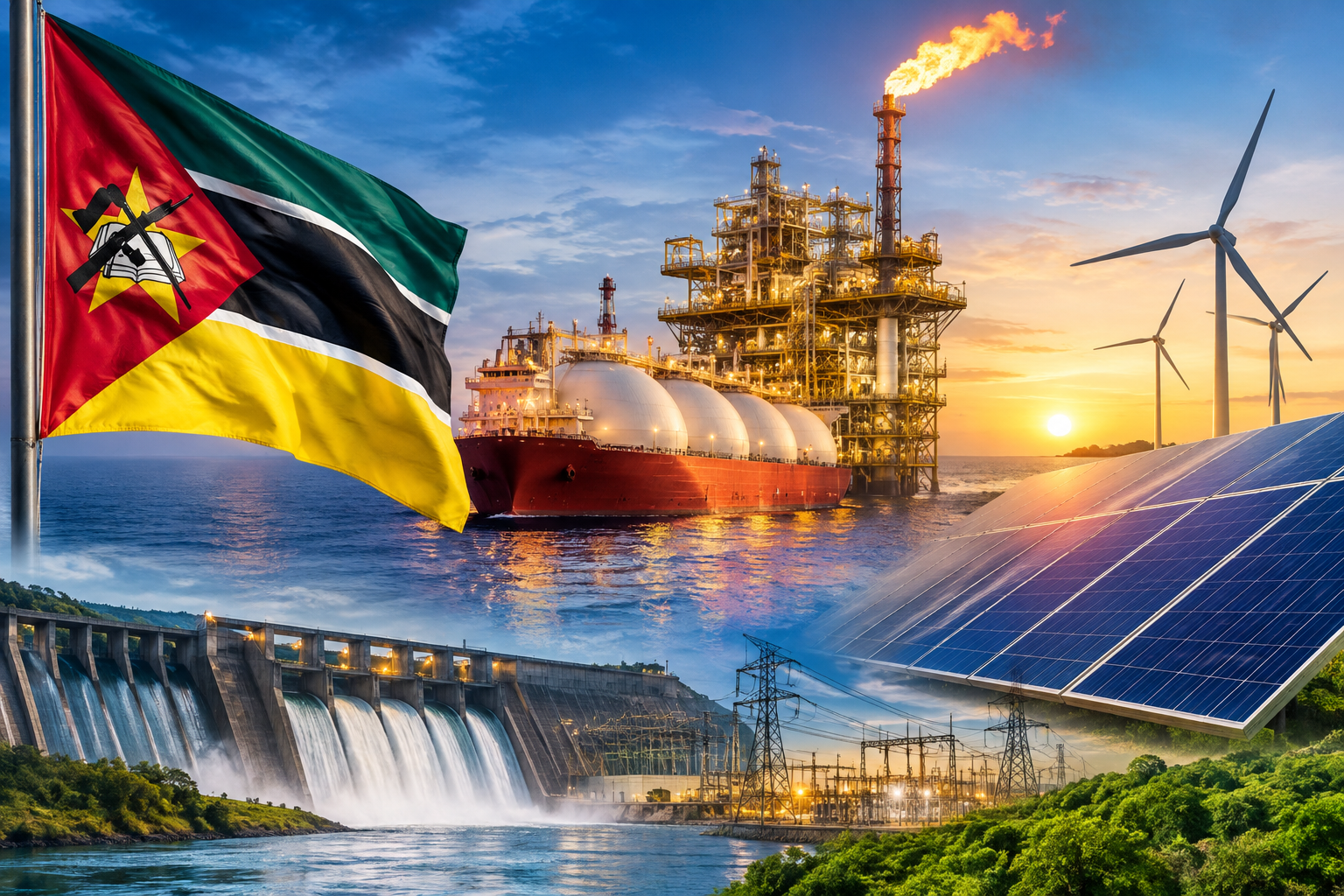
Mozambique’s energy sector is entering one of its most active periods in years, with renewed momentum in liquefied natural gas (LNG), domestic gas-to-power infrastructure and renewable energy development reshaping the country’s investment outlook.
The developments will take center stage at African Energy Week (AEW) 2026 in Cape Town, where industry leaders and investors will examine Mozambique’s growing role as one of Africa’s most important gas and upstream exploration markets.
The country’s LNG ambitions received a major boost in January 2026 when TotalEnergies announced the full restart of the Mozambique LNG project following an almost five-year suspension. More than 4,000 workers have been mobilized, while contracts worth $4 billion have been awarded to Mozambican companies. First LNG production is targeted for 2029.
Uganda Targets Global Tourism Boost Through 2026 Rwenzori Marathon
The Mozambique LNG project represents an investment of approximately $20 billion and is expected to produce 12.9 million tonnes per annum from Area 1 in the Rovuma Basin, placing the project among the largest energy developments currently advancing in Africa.
Mozambique’s LNG expansion extends beyond a single project. Eni reached a final investment decision in October 2025 on the $6 billion to $7 billion Coral North floating LNG project, which is expected to add 3.6 million tonnes per annum from 2028 alongside the operational Coral South facility.
At the same time, ExxonMobil’s $24 billion Rovuma LNG project has passed a front-end engineering milestone and is moving toward a final investment decision. If the major projects progress as planned, Mozambique could have combined LNG capacity exceeding 25 million tonnes per annum by the early 2030s.
The growing gas industry is also being linked to Mozambique’s domestic energy needs. Empresa Nacional de Hidrocarbonetos is working to strengthen pipeline and logistics infrastructure that would allow Rovuma Basin gas to support domestic electricity generation while continuing to serve international markets.
For the Mozambican government, the objective extends beyond LNG exports. The country expects its gas resources to contribute to industrialization, job creation, local supplier development and greater access to energy for households and businesses.
Renewable energy is also becoming an increasingly important part of Mozambique’s energy strategy. Hydropower already accounts for roughly 70% of the country’s electricity generation, supported by the 2,075-megawatt Cahora Bassa facility.
The government’s Just Energy Transition Strategy targets an additional 2 to 4 gigawatts of hydropower and 2 gigawatts of solar capacity by 2030. Utility-scale solar projects are advancing, while off-grid energy solutions are expected to play a significant role in Mozambique’s ambition to achieve universal electrification by the end of the decade.
The combination of LNG, gas-to-power, hydropower and solar is creating a broader investment story for Mozambique, with the country seeking to use its energy resources to support both export revenues and domestic economic development.
Speaking ahead of AEW 2026, African Energy Chamber Executive Chairman NJ Ayuk said Mozambique’s energy conversation had shifted from potential to delivery, pointing to the restart of Mozambique LNG, progress on Coral North and the movement of Rovuma LNG toward a final investment decision.
The Mozambique investment session, titled “Invest in Mozambique: Unleashing Africa’s Premier Gas and Upstream Exploration Frontier,” will form part of AEW 2026 in Cape Town from October 12 to 16.
For Mozambique, the renewed LNG activity represents more than a revival of major energy projects. It could mark the beginning of a new investment cycle in which natural gas, electricity infrastructure and renewable energy work together to support industrialization and expand energy access across the country.