
The Ouagadougou Partnership (OP) is marking its 15th anniversary with a review of progress in sexual and reproductive health and rights and family planning across nine West African countries, while setting out a renewed vision for the years leading to 2030.
Launched in February 2011 in Ouagadougou, Burkina Faso, the partnership brings together Benin, Burkina Faso, Côte d’Ivoire, Guinea, Mali, Mauritania, Niger, Senegal and Togo around a shared commitment to improving access to family planning and sexual and reproductive health services.
West Africa’s Startup Ambition Takes Centre Stage as ECOWAS Awards Draw 8,679 Registrations
Over the past 15 years, the partnership has supported stronger national policies, increased mobilisation of domestic and international resources, improved service delivery and sustained advocacy for sexual and reproductive health and rights.
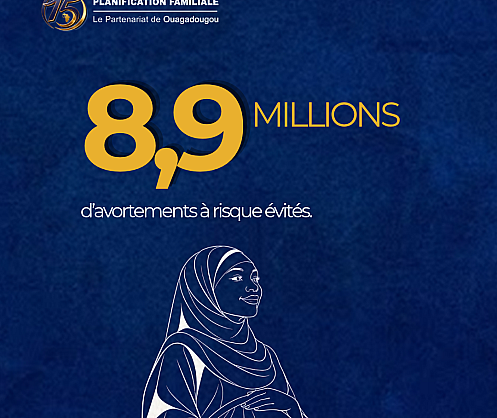
According to the partnership, the combined efforts of its nine member countries have helped avert approximately 30.3 million unintended pregnancies, 8.9 million unsafe abortions and 1.8 million maternal deaths. The region has also gained around four million additional users of modern contraceptive methods.
These achievements reflect sustained collaboration between governments, civil society organisations, young leaders, researchers, donors and implementing partners, with a particular focus on ensuring that women and young people can access information, services and choices concerning their reproductive health.
“These fifteen years show what can be achieved when countries, civil society, young leaders, researchers and partners work hand in hand,” said Marie Ba, Director of the Ouagadougou Partnership Coordination Unit. “Our responsibility today is to preserve these gains while accelerating our efforts so that the 2030 ambitions translate concretely into the lives of women and young people in West Africa.”
All nine member countries currently have national family planning action plans or broader national health plans covering reproductive, maternal, newborn, child, adolescent and older people’s health either under implementation or renewal.
Access to family planning services has also expanded through different national approaches. In Niger, Burkina Faso and Côte d’Ivoire, family planning methods are completely free of charge nationwide, while Guinea is considering similar measures. In the other member countries, services remain available at relatively controlled costs.
The partnership has also placed greater emphasis on research and evidence-based policymaking. In 2022, it adopted a regional research agenda designed to generate locally produced evidence for national authorities and development partners. Eight research projects led by West African institutions have already received funding, with their findings helping inform family planning policies and programmes.
Domestic financing has emerged as another important priority. At the 2023 Annual Meeting of the Ouagadougou Partnership in Côte d’Ivoire, the Ivorian Prime Minister announced an increase in the national budget for procuring family planning products from 400 million to 2.5 billion XOF. In Mali, an employers’ fund has also been established to support reproductive health and family planning.
As the region moves closer to 2030, the partnership says greater domestic financing will be essential to protect progress and ensure that political commitments are translated into sustainable public budgets and programmes.
The next phase of the partnership will focus on reaching 13 million users of modern contraceptive methods by 2030, while contributing to Sustainable Development Goal 3 and advancing equitable access to quality sexual and reproductive health services based on rights and informed choice.
The OP says family planning should be viewed not only as a health priority but also as an important driver of wider development. Access to reproductive health services can influence women’s and girls’ education, participation in economic life and social opportunities, while contributing to gender equality, poverty reduction and sustainable development.
The partnership’s priorities for the next five years include stronger mobilisation of domestic resources, maintaining access to services in all circumstances, responding more effectively to the needs of young people, supporting civil society organisations and expanding the use of research and data in public decision-making.
As the Ouagadougou Partnership enters its next chapter, its stakeholders are being called upon to strengthen cooperation so that women and young people across West Africa can exercise their reproductive rights and access quality services that respond to their needs and aspirations.