
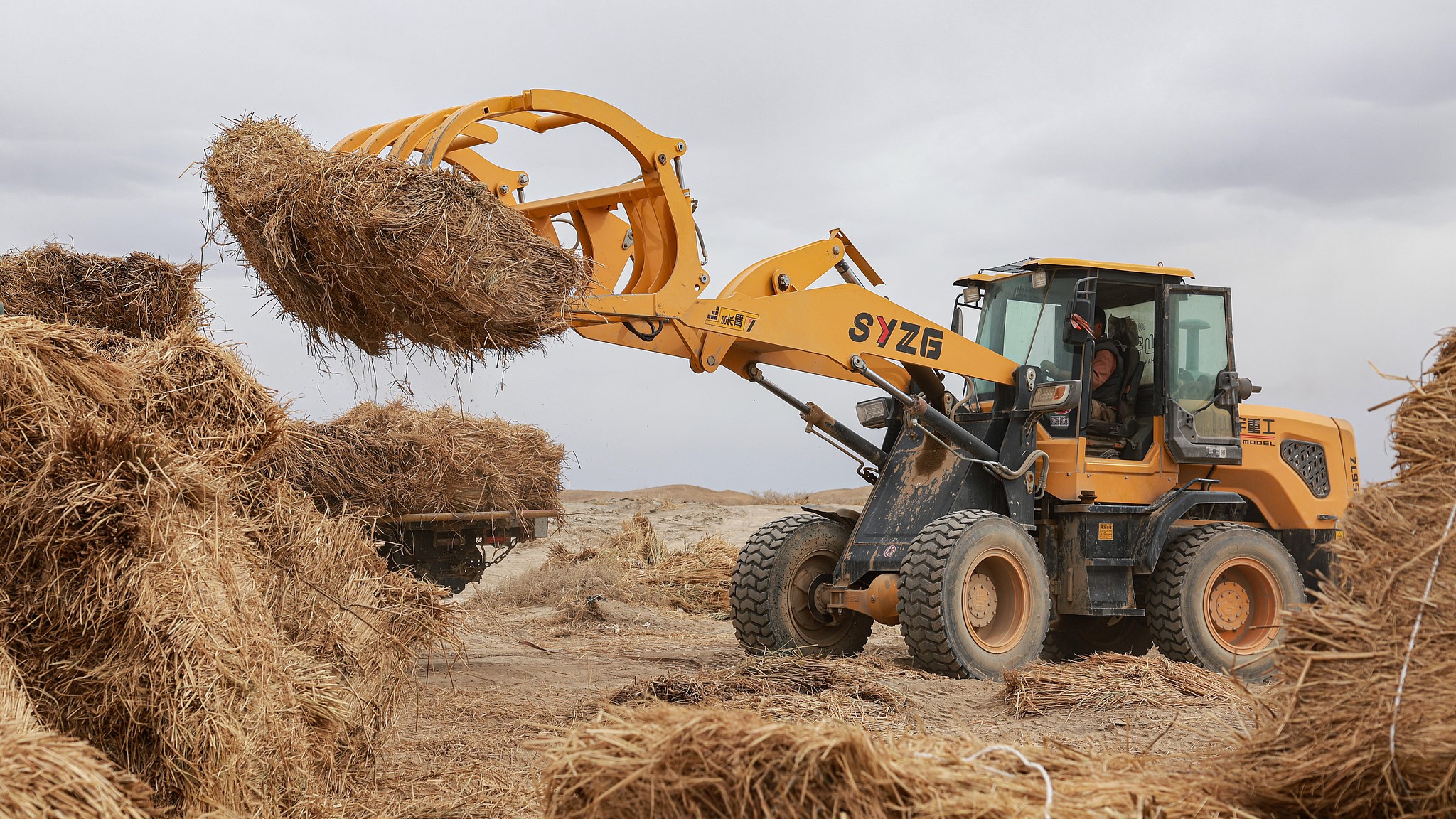
China’s decades-long campaign to combat desertification is being highlighted as a potential model for countries facing worsening land degradation and drought as the United Nations Convention to Combat Desertification (UNCCD) opens its 17th Conference of the Parties in Ulaanbaatar, Mongolia.
The conference, held under the theme “Restoring Land, Restoring Hope,” brings together representatives from 197 Parties to discuss practical responses to desertification, drought, rangeland degradation and growing pressure on water resources.
China’s experience has attracted particular attention because of its long-term approach to restoring degraded land. The country’s Three-North Shelterbelt Forest Program, launched in 1978 and still continuing, has combined large-scale vegetation restoration with policy measures, scientific monitoring and efforts to support agricultural and rural livelihoods.
UNCCD Executive Secretary Yasmine Fouad described China as one of the clearest large-scale examples of land degradation being reversed, pointing to the continuity of its policies and the integration of environmental restoration with farming, grazing and local economic activity.
China has reported successive reductions in desertified and sandy areas, while its experience has increasingly been presented as a source of lessons for regions including Africa, Central Asia and the Middle East, where drought and land degradation are placing growing pressure on communities and ecosystems.
At COP17, China has proposed the establishment of an International Grassland Day and is presenting desertification-control technologies and practices through a dedicated “China Corner” exhibition. The country is also hosting a series of side events focused on land restoration and has developed cooperation initiatives with Mongolia, Arab countries and Central Asian states.
The global challenge remains significant. According to the UNCCD, land degradation affects up to 40 percent of the world’s land, while rangelands that support approximately two billion people are under severe pressure. The conference is also addressing the substantial financing gap between current investment and the resources required to meet global land-restoration targets.
Annual investment linked to UNCCD-related objectives is estimated at about $77 billion, leaving an estimated funding shortfall of $278 billion. The third edition of the Global Land Outlook, the UNCCD’s flagship assessment, is expected to be released during the conference.
Mongolia is also pursuing large-scale restoration efforts, including its “Billion Trees” campaign and plans to rehabilitate 54,000 hectares of land affected by mining by 2030.
The conference is expected to focus on turning existing commitments into large-scale action, with discussions also advancing the Riyadh–Ulaanbaatar Action Agenda, which seeks to strengthen the connection between international policy decisions and practical restoration and drought-resilience measures.
As drought becomes more intense and degraded land threatens food security, livelihoods and ecosystems across regions, the experiences being discussed in Ulaanbaatar are increasingly relevant to African countries seeking solutions that combine environmental restoration with economic development and community resilience.