Africanian
  • Home
  • News
  • News 24/7
  • Business
  • Sports
  • World
    • US
    • Russia
    • Europe
    • Asia
    • America
  • Events
No Result
View All Result
Africanian
  • Home
  • News
  • News 24/7
  • Business
  • Sports
  • World
    • US
    • Russia
    • Europe
    • Asia
    • America
  • Events
No Result
View All Result
Africanian
Home News

RWANDA BREAKING NEWS: Possible Nyiragongo eruption poses limited risk to Rwanda

A recent revelation by scientists showed that there is a high possibility that Nyiragongo volcano, situated in the Virunga Massif between the Democratic of Congo and Rwanda, could erupt in the near future.

RWANDA BREAKING NEWS: Possible Nyiragongo eruption poses limited risk to Rwanda
Share on FacebookShare on TwitterShare via Whatsapp

Nyiragongo hosts within its crater the world’s largest continuously active lava lake, which scientists concluded in their observation that it was filling at an alarming rate.

This year in February, Dario Tedesco, a volcanologist at the Luigi Vanvitelli University of Campania in Italy, led a team to collect data from the volcano’s summit crater.

They concluded that since the February 2016 intra-crater event, the crater floor level has been rising much faster than during the 2010-2016 period.

The current activity, they said, is reminiscent of the 1970-1972 and 1994-1995 periods preceding the lava lake drainage events in 1977 and 2002.

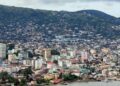
During the last event, the lava flowed within the city of Goma in DR Congo and caused major socioeconomic disruption by killing 250 people and destroying more than 80 per cent of the economic infrastructure.

It also left 120,000 people homeless, most of whom fled to Rwanda’s side of Gisenyi, which borders Goma in the Eastern Democratic Republic of Congo (DRC).

However, Jean-Claude Ngaruye, a geologist, says the predicted next eruption may not have a grave impact on Rwanda’s side.

“Based on past historical events, I don’t see the predicted eruption having any big impact on Rwanda. This is because Rubavu (which shares Nyiragongo with Goma) is situated in a valley,” he said.

The Mining Exploration Division Manager at the Rwanda Mines, Gas and Petroleum Board (RMB) added that the eruption, however, could affect Lake Kivu in one way or another.

“Still, past events do not show any evidence that Lake Kivu, specifically on Rwanda’s side, was affected,” he noted.

The last eruption occurred in 2002, and it began after an earthquake opened up cracks in the southern flank of the volcano.

The 200-meter-wide lava lake drained in a matter of hours, releasing low-silica, runny lava that flowed as fast as 60 kilometers per hour.

The lava then piled up in layers up to 2 meters deep in Goma and created a new delta 800 meters wide in nearby Lake Kivu.

As soon as the fissures healed, however, fresh lava began to bubble up and refill the Crater Lake. Activity accelerated in 2016 when a second vent began to fountain within the crater.

The prediction

In February, on their most recent inspection, Tedesco and his colleagues found the lake rising faster than ever.

The second hole was gushing an estimated 4 cubic meters of lava per second, enough to fill an Olympic swimming pool every 10 minutes.

They expect the lava lake to stop rising soon, in which case the period of peak danger for Goma would be from 2024 to 2027.

Dr Digne Rwabuhungu, another geologist and the Dean of University of Rwanda’s School of Mining and Geology, believes there are many implications of a possible eruption.

“Even the fact that it could create a wave of refugees from Goma city to Gisenyi city is a big implication. But the big impact could be when the lava reaches Lake Kivu,” he said.

During the last eruption in 2002, Rwabuhungu was pursuing his studies in Belgium. He and his colleagues were brought in to examine what could happen next.

“Our fear at a time and the big question we had was what would happen to Lake Kivu, because we knew that when the lava flowed to Lake Kivu it would destablise the stability of the lake,” he recalled.

However, the fluidity – the speed and temperature – of the lava at a time was not too rapid.

Rwabuhungu still fears that when the rising level of the lava lake on Nyiragongo creates a fracture it would allow the lava or magma to flow into Lake Kivu, which would cause a catastrophic event.

“That risk is not yet evaluated yet,” he told The New Times.

Currently, Goma Volcano Observatory (GVO) is the only monitoring station of Nyiragongo and the impact of eruptive activities in the region.

Source: newtimes.co.rw

RelatedPosts

Algeria: $2.8 Billion and 495 km to transform the Sahara

Algeria: $2.8 Billion and 495 km to transform the Sahara

November 20, 2025
Zambia accelerates its energy transition with a 20 MW solar power project

Zambia accelerates its energy transition with a 20 MW solar power project

November 3, 2025
80,000 tons of “Made in Africa” Titanium to redefine the continent’s Industrial future

80,000 tons of “Made in Africa” Titanium to redefine the continent’s Industrial future

October 31, 2025
Africa strengthens global gas leadership as Philip Mshelbila becomes GECF Secretary General

Africa strengthens global gas leadership as Philip Mshelbila becomes GECF Secretary General

October 27, 2025
Nigeria launches Oyo Agro-Industrial Hub to drive inclusive rural development in Africa

Nigeria launches Oyo Agro-Industrial Hub to drive inclusive rural development in Africa

July 31, 2025
Tunisia’s energy transformation: How natural gas is powering industry and cleaner living

Tunisia’s energy transformation: How natural gas is powering industry and cleaner living

July 30, 2025
Lifelong Learning in Africa: The Silent Revolution Shaping the Continent's Future

Lifelong Learning in Africa: The Silent Revolution Shaping the Continent’s Future

July 30, 2025
Angola: Clementina Artur will no longer walk to the river every morning with an empty container

Angola: Clementina Artur will no longer walk to the river every morning with an empty container

July 24, 2025
The Invention of Time: How Humanity Created the Clock That Rules the World

The Invention of Time: How Humanity Created the Clock That Rules the World

July 24, 2025
Africanian News Is a dedicated project aimed at amplifying the voices of the African Ecosystem and Diaspora. We actively collaborate with initiatives to improve access to education and digital inclusion, both in traditional schools and through digital platforms, for African children.

It’s crucial to emphasize that none of the articles or images featured on our platform are intended for copyright infringement, neither now nor in the future.
If you believe that any information, text, image, etc., may be subject to copyright and should be removed, please notify us by sending an email to: [email protected]

News Categories

  • America (39)
  • Asia (131)
  • Business (1,232)
  • Culture (227)
  • Destinations (210)
  • Europe (153)
  • Food and Drink (14)
  • Guides & Tips (20)
  • Health (629)
  • Hotels (5)
  • Meetings and Tech (349)
  • News (2,534)
  • Opinion Piece (12)
  • Russia (73)
  • Science (62)
  • Sports (311)
  • Style (4)
  • Travel (145)
  • US (107)
  • World (422)

Your dreams matter; your stories matter.

Feel free to explore collaboration opportunities with us. Share your articles, thoughts, interviews, experiments, or no-comment videos by reaching out to [email protected].

You can also subscribe to our mailing list to receive the latest updates from Africanian News.

Newsletter

© 2025 Africanian News.

Log In

Sign In

Forgot password?

Don't have an account? Register

Forgot password?

Enter your account data and we will send you a link to reset your password.

Back to Login

Your password reset link appears to be invalid or expired.

Log in

Privacy Policy

Accept

Add to Collection

  • Public collection title

  • Private collection title

No Collections

Here you'll find all collections you've created before.

No Result
View All Result
  • Home
  • News
  • Business
  • Sports
  • Meetings and Tech
  • World

© 2025 Africanian News.