Cultural heritage and people-to-people exchanges are emerging as important channels of engagement between China and the United States, as the return of historic artifacts coincides with growing efforts to connect younger generations across both countries.
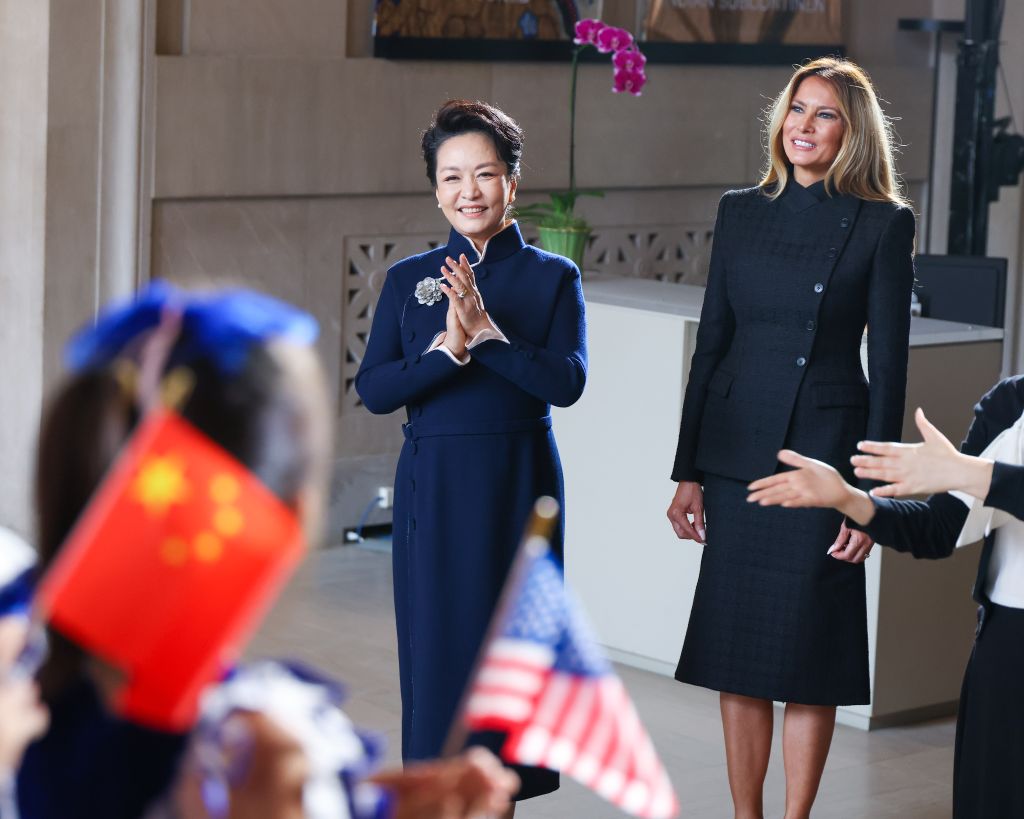
The latest example came in Washington, D.C., where Peng Liyuan, wife of Chinese President Xi Jinping, visited the National Museum of Asian Art on September 24 accompanied by Melania Trump, wife of US President Donald Trump.
Their visit followed the museum’s return of two volumes of the Zidanku Silk Manuscripts to China in May 2025, nearly eight decades after the ancient texts left the country.
Elon Musk Confirms Starlink Is Now Live in Equatorial Guinea
The manuscripts were discovered in 1942 at the Zidanku site in Changsha, in central China’s Hunan Province. They were taken to the United States in 1946 amid the turmoil surrounding the Second World War and remained overseas for almost 80 years.
Dating back more than 2,000 years to China’s Warring States period, the manuscripts are regarded as among the earliest known silk texts from China. Their return has become part of broader cooperation between Chinese and US institutions on cultural heritage protection and the repatriation of historical objects.
During her museum visit, Peng expressed appreciation for the return of Chinese cultural relics and called for continued cooperation in cultural exchanges and heritage protection.
The momentum continued in September, when the United States returned 64 cultural relics, works of art and paleontological fossils to China in two batches. The returned items included Buddhist sculpture fragments, figurines and dinosaur fossils that had been seized by US law enforcement agencies.
Chinese and US authorities worked together to facilitate the repatriation, highlighting how cultural heritage cooperation can continue even amid wider differences between the two countries.
But the Washington visit also placed the spotlight on a younger generation.
After touring the museum, Peng and Melania Trump watched American teenagers perform Chinese songs. Peng encouraged the students to continue learning Chinese and studying Chinese culture, describing young people as potential bridges of friendship between the two societies.
Youth exchanges have become an increasingly visible part of China-US people-to-people engagement.
During his visit to San Francisco in November 2023, Xi proposed inviting 50,000 young Americans to China over five years for study and exchange programmes. That target was reached in 2026, two and a half years ahead of schedule.
At a White House welcome ceremony on September 24, Xi announced a further goal of inviting 100,000 young Americans to China over the next five years for educational and cultural exchanges.
He also called for more direct flights between China and the United States, linking greater mobility with opportunities for people, businesses and institutions to develop closer connections.
Travel is another part of the expanding exchange. China currently provides a 240-hour visa-free transit policy for travellers from 57 countries, including the United States, allowing eligible visitors to spend more time experiencing the country before continuing their journeys.
These exchanges are taking place at a time when younger Americans appear to be developing somewhat different views of China compared with older generations. A March 2026 Pew Research Center survey cited in the report found that favorable views of China among Americans had increased for a third consecutive year, with younger Americans expressing more positive views than older age groups.
From ancient manuscripts and returned artifacts to students learning songs and languages, the latest developments illustrate how cultural heritage and personal encounters can create channels of connection between societies.
For China and the United States, the exchanges demonstrate that international relationships are shaped not only by governments and diplomacy, but also by museums, students, artists, educators and the younger generation that will inherit the relationship in the years ahead.