
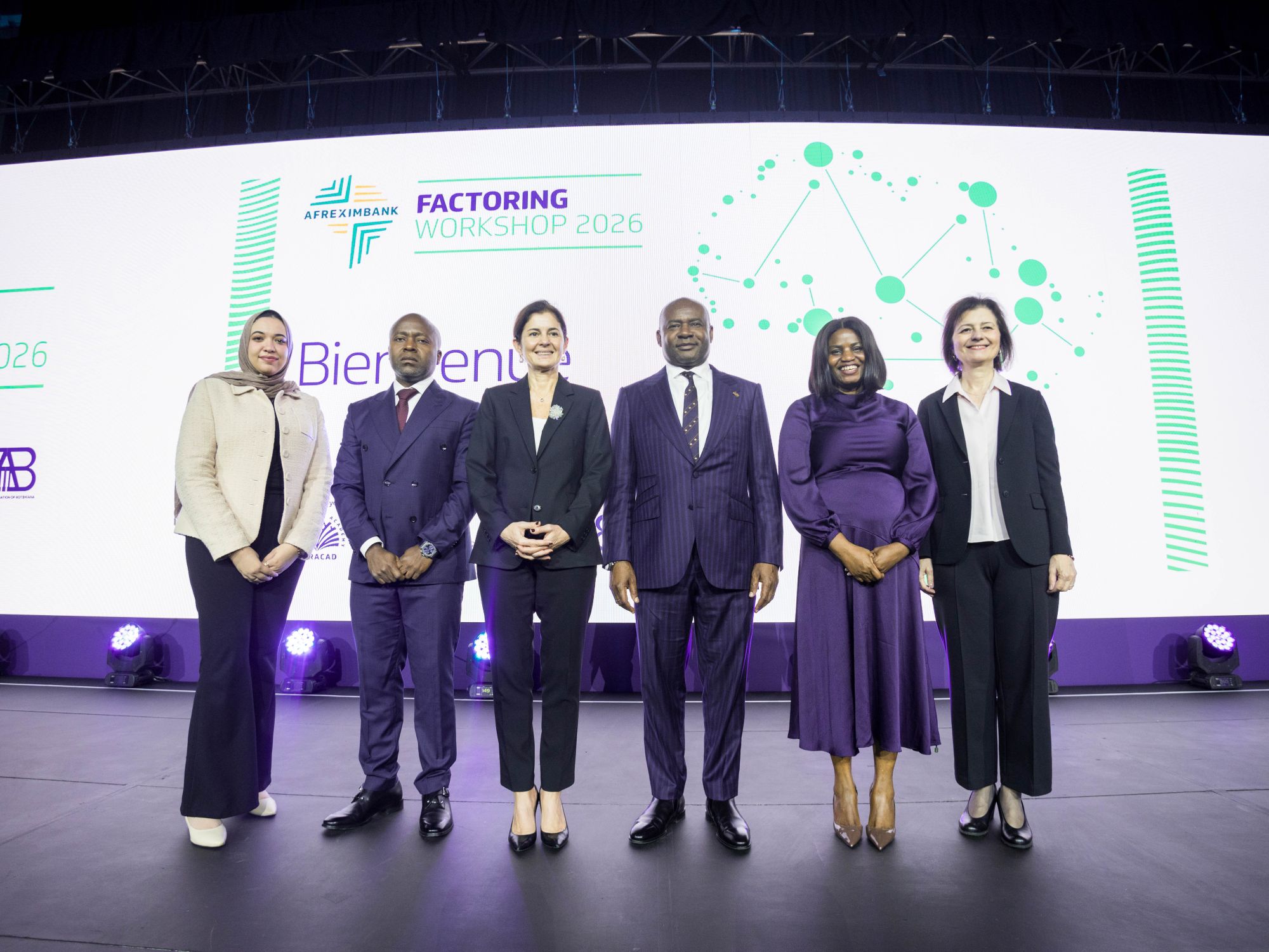
The African Export-Import Bank (Afreximbank) has called for increased investment in factoring and supply chain finance to help address an estimated US$300 billion annual financing gap facing small and medium-sized enterprises (SMEs) across Africa.
The appeal was made at Afreximbank’s annual Factoring Workshop in Gaborone, held under the theme “Unlocking Working Capital for Africa’s Growing Businesses through Factoring and Supply Chain Finance”. The bank highlighted the need for stronger partnerships, improved legal and regulatory frameworks, and greater institutional capacity to make alternative financing more accessible to businesses.
Africa’s Sports Economy Gets a New Development Push With Paulo J. Cruz at ACG
SMEs account for more than 90 per cent of businesses in Africa and contribute over 60 per cent of employment and gross domestic product, according to figures cited by Afreximbank. Despite their importance to the continent’s economies, many continue to struggle to secure financing through conventional banking channels.
Representing Afreximbank Executive Vice-President for Intra-African Trade and Export Development, Kanayo Awani, Eric Intong Monchu, the bank’s Group Managing Director for Client Relations and Chairperson of the FCI Africa Chapter, said factoring could play a significant role in easing these constraints.
Factoring allows businesses to sell or transfer their outstanding invoices to a financial institution or specialised provider in exchange for immediate funds. This enables companies to access working capital without waiting for customers to settle their accounts, helping them cover operating costs, manage cash flow and fulfil new orders. Combined with supply chain finance, the mechanism can also strengthen supplier relationships and support participation in domestic, regional and international trade.
“We cannot close the continent’s US$300 billion SME financing gap through traditional lending alone,” Monchu said, calling for diversified financing instruments and stronger legal and regulatory systems to support receivables-based financing.
He pointed to the expansion of the global factoring industry, with volumes rising from €3.1 trillion in 2021 to €3.9 trillion in 2025. African factoring volumes also increased over the same period, from €32 billion to €51 billion. Monchu separately noted that the continent’s factoring market had grown from €21.6 billion in 2017 to €51.4 billion in 2025, with nearly 200 factoring companies now operating across Africa.
FCI Secretary General Betül Kurtuluş said international cooperation would be important as African businesses expand into new markets. She stressed that financial institutions must be able to support companies beyond their domestic borders, with FCI’s international network offering a platform to facilitate cross-border financing linked to trade receivables.
Afreximbank has set an ambition to raise African factoring volumes to at least €240 billion, equivalent to approximately 10 per cent of the continent’s GDP. Reaching that level, the bank said, will require sustained financing for factoring institutions, stronger regulatory frameworks, technical expertise and closer cooperation across the financial services sector.
The bank reaffirmed its commitment to working with FCI and its Africa Chapter, financial institutions in Botswana and other stakeholders to develop a more inclusive factoring ecosystem. The initiative is intended to improve access to working capital for SMEs, strengthen regional supply chains and support the expansion of intra-African trade under the African Continental Free Trade Area (AfCFTA).
The push reflects a broader effort to address one of the persistent barriers to African business growth: the difficulty many smaller companies face in accessing the liquidity needed to operate, expand and compete in regional and international markets.