Equatorial Guinea has inaugurated three major road infrastructure projects in the Continental Region, marking a significant expansion of the country’s transport network and strengthening connections between Bata, Mongomo and surrounding economic areas.
The three projects the Bata-Mongomo highway, the rehabilitation of the Matransa roundabout to Bata-Mongomo highway section, and the Alep-Bikom road, Section A of Bata’s outer ring road — represent a combined investment of 924,867,050,218 CFA francs, according to information presented during the inauguration ceremony.
Kenya Equips 330 Young People With Digital Skills for the Next Economy
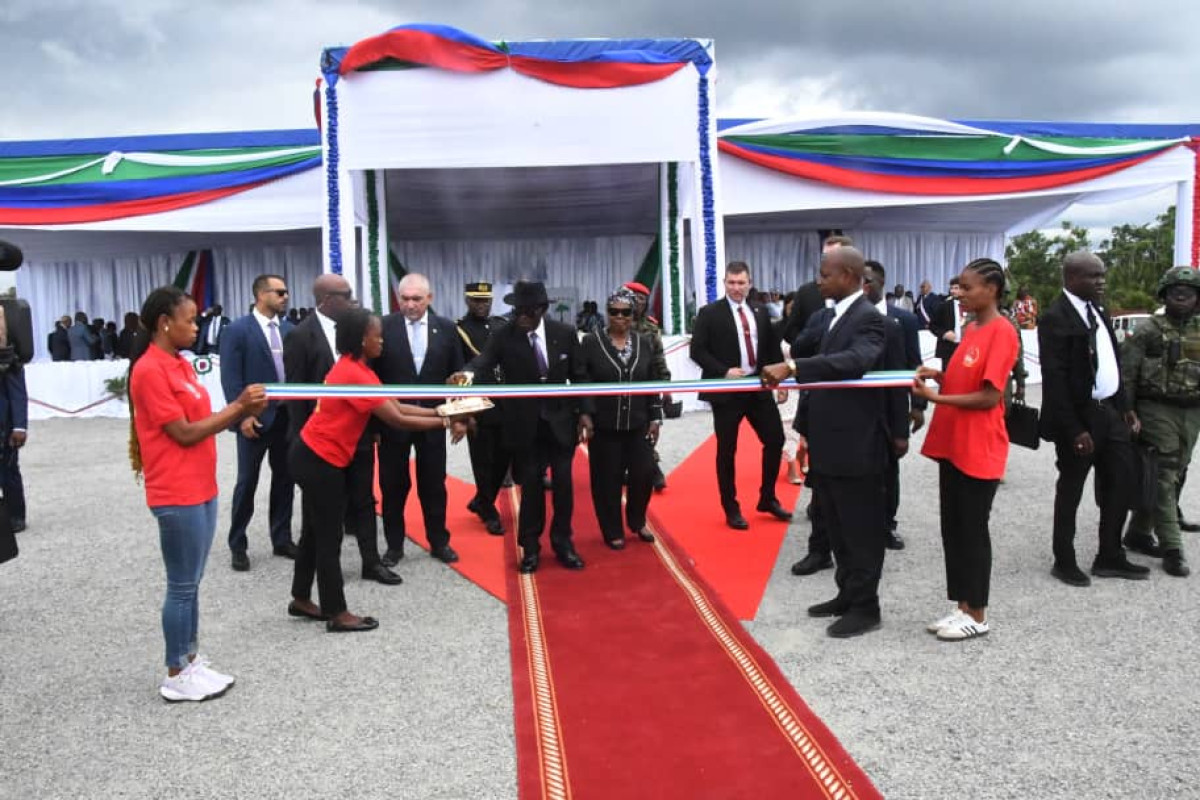
President Obiang Nguema Mbasogo presided over the official opening of the infrastructure on Sunday, September 27, in Bata. The ceremony brought together government officials, members of the country’s constitutional institutions, representatives from the Bata constituency, provincial and local authorities, traditional and religious leaders, members of the diplomatic corps and residents.
The largest of the three projects is the 204-kilometre Bata-Mongomo highway, which connects two important centres in Equatorial Guinea’s Continental Region. The government describes the road as the country’s largest civil-engineering project to date.
The highway has four traffic lanes, with each lane measuring 3.70 metres. It also includes a five-metre central median, three-metre emergency shoulders on both sides and one-metre verges. The infrastructure features three major bridges, 18 grade-separated crossings, drainage systems and road-safety and protection installations.
Beyond its physical dimensions, the highway provides a major transport connection between Bata, the country’s principal coastal economic centre, and Mongomo in the interior of the Continental Region. Its completion adds another major corridor to Equatorial Guinea’s road network and is intended to improve movement between communities and economic centres along the route.
The second project involves the 3.7-kilometre rehabilitation of the road between the Matransa roundabout and the Bata-Mongomo highway roundabout. The rehabilitation included a new bituminous concrete surface, pedestrian pavements, 1,080 metres of drainage works and new road signage.
The section is particularly important for Bata’s logistics network because it connects the Port of Bata, the city’s industrial area and the new highway. The upgraded connection is therefore positioned to improve access between the port and inland transport infrastructure while supporting the movement of commercial traffic through the city.
The third project, the Alep-Bikom road, forms Section A of Bata’s outer ring road. Designed as an urban boulevard, it has a 15-metre carriageway divided into two 7.5-metre directions, three-metre pedestrian sidewalks and a rainwater drainage system.
The project adds another component to Bata’s evolving urban road network, providing infrastructure designed to support traffic circulation while incorporating pedestrian space and drainage.
According to the government presentation, the three projects were financed entirely through state funds, without external borrowing. The combined investment figure presented at the ceremony was 924.867 billion CFA francs.
Minister of State for Public Works, Territorial Planning and Housing Clemente Ferreiro Villarino highlighted the complementary nature of the projects during the ceremony, presenting the roads as completed infrastructure rather than planned developments.
The inauguration forms part of a wider series of infrastructure openings during President Obiang Nguema Mbasogo’s recent working visit to the Continental Region. During the same period, the government also inaugurated the Provincial Court of Wele-Nzas in Mongomo and the Akurenam-Kogo road.
For Equatorial Guinea, the road projects come as the country continues to develop transport links between urban centres, ports and regional communities. Improved road connectivity can support the movement of people and goods while strengthening links between infrastructure, commerce and regional development.
At the Bata ceremony, the President called on residents to preserve the new infrastructure and maintain the facilities after construction. He also linked the projects to the country’s longer-term Horizon 2035 development objectives.
The opening of the Bata-Mongomo highway and the two complementary Bata road projects therefore represents a substantial addition to Equatorial Guinea’s transport infrastructure. With more than 200 kilometres of new highway capacity combined with upgraded urban and logistics connections, the projects place road connectivity at the centre of the country’s continuing infrastructure development in the Continental Region.
For Bata in particular, the combination of the major highway, improved access to the port and industrial area, and the outer ring-road section creates a connected network designed to support both regional mobility and the city’s expanding urban environment.